The following coins are featured in the 2026 ANA US Coins Signature® Auction #1396.
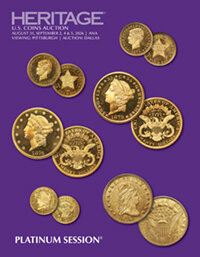
Images Courtesy of Heritage Auctions, HA.com
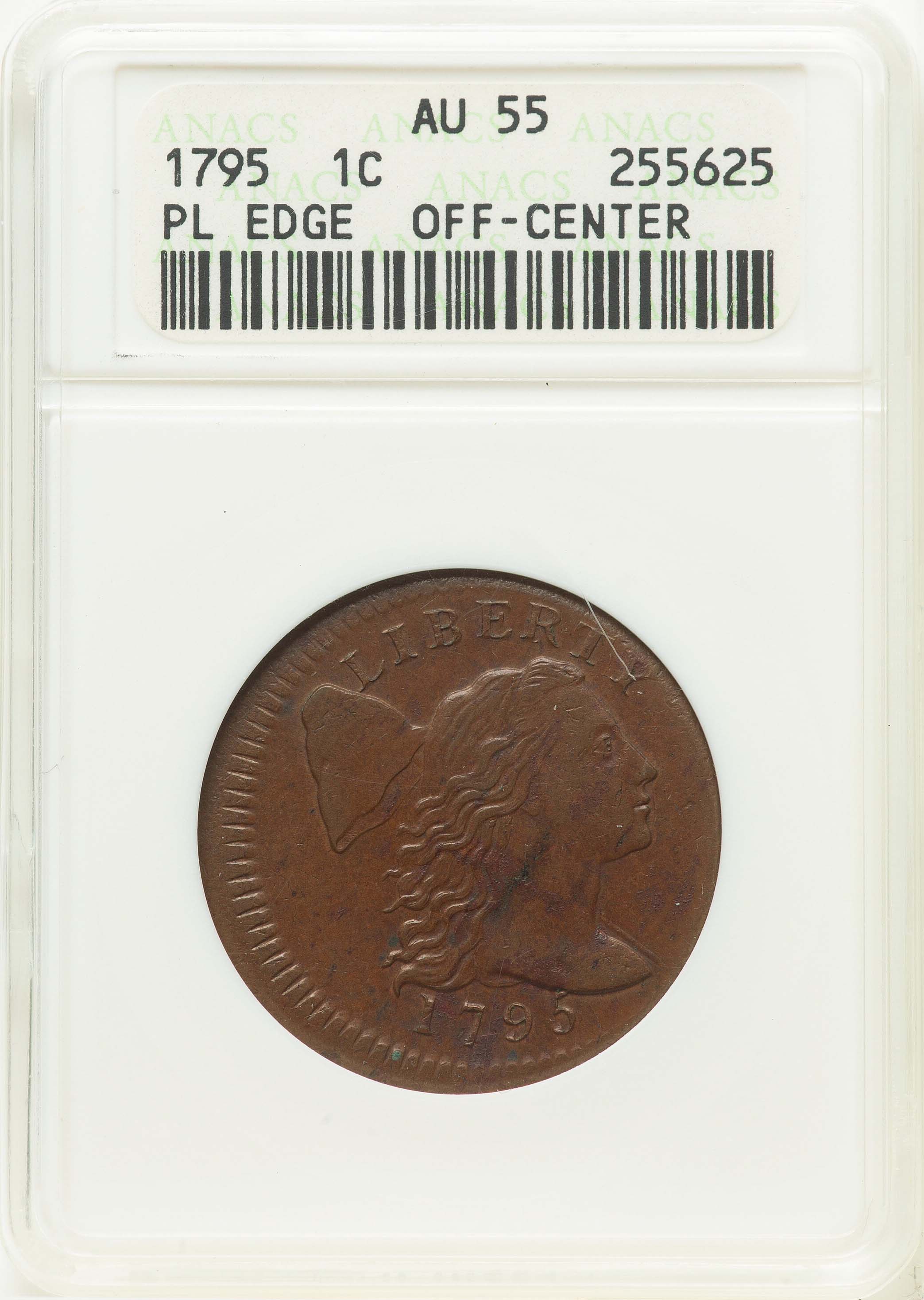
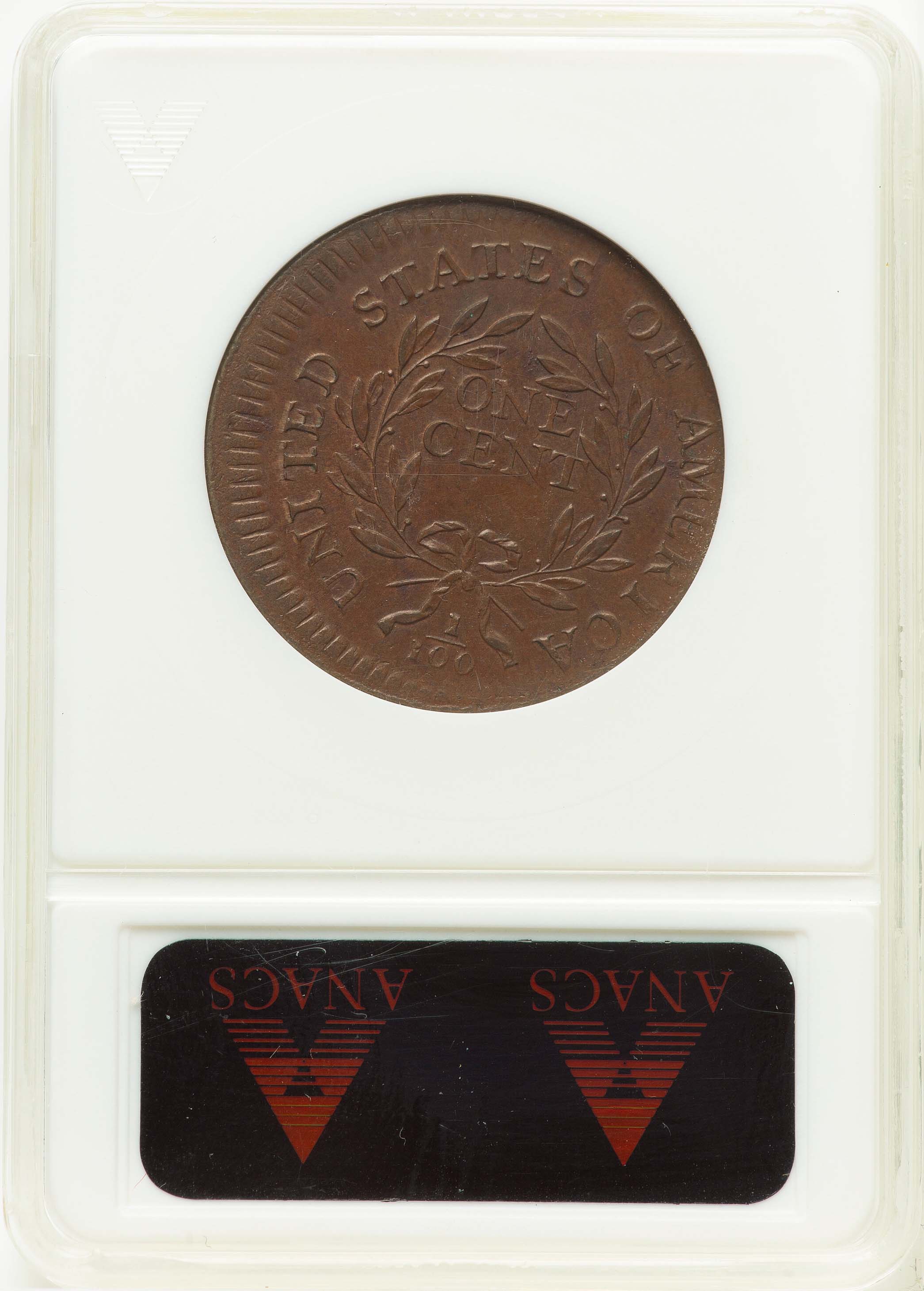
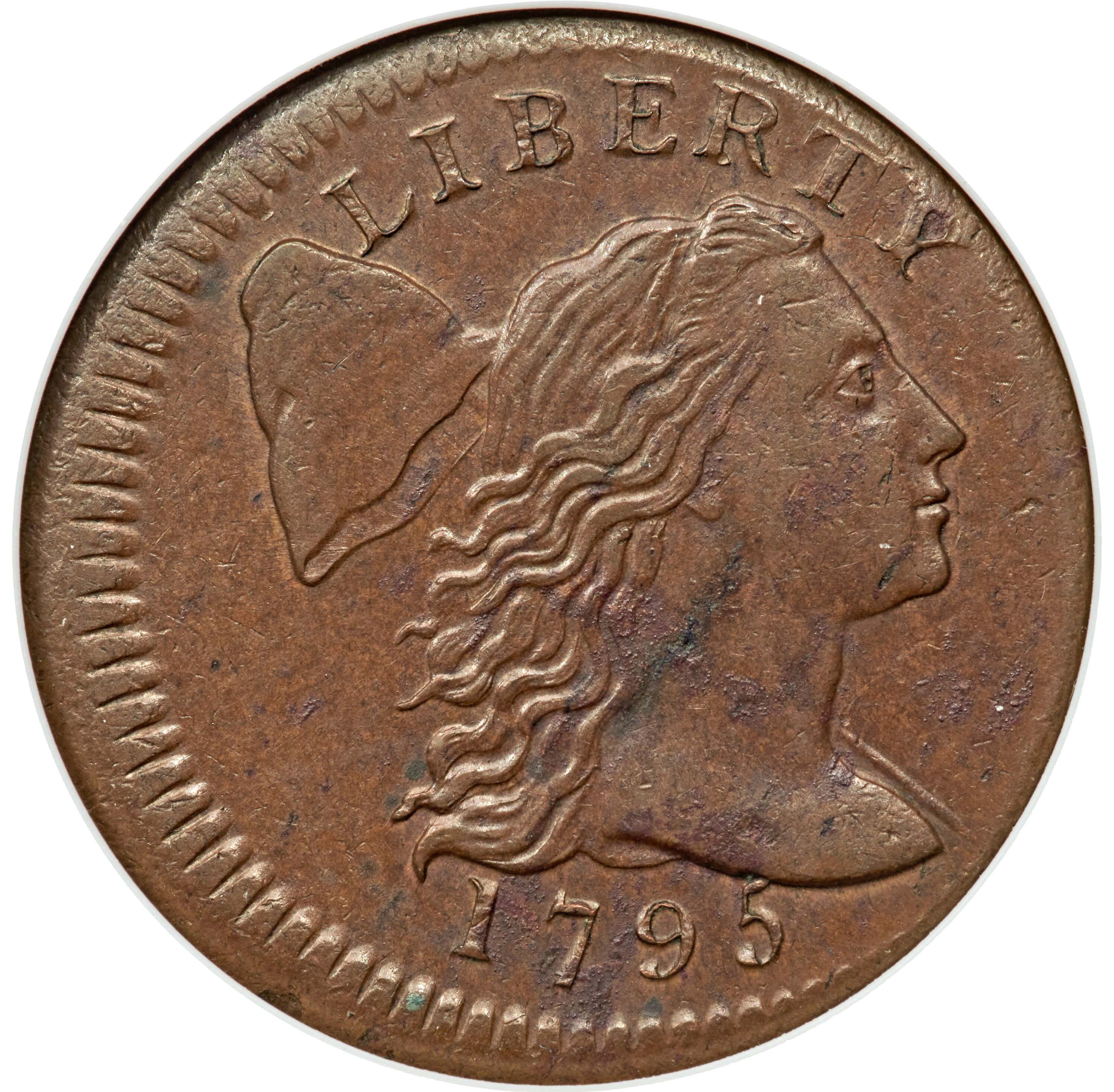
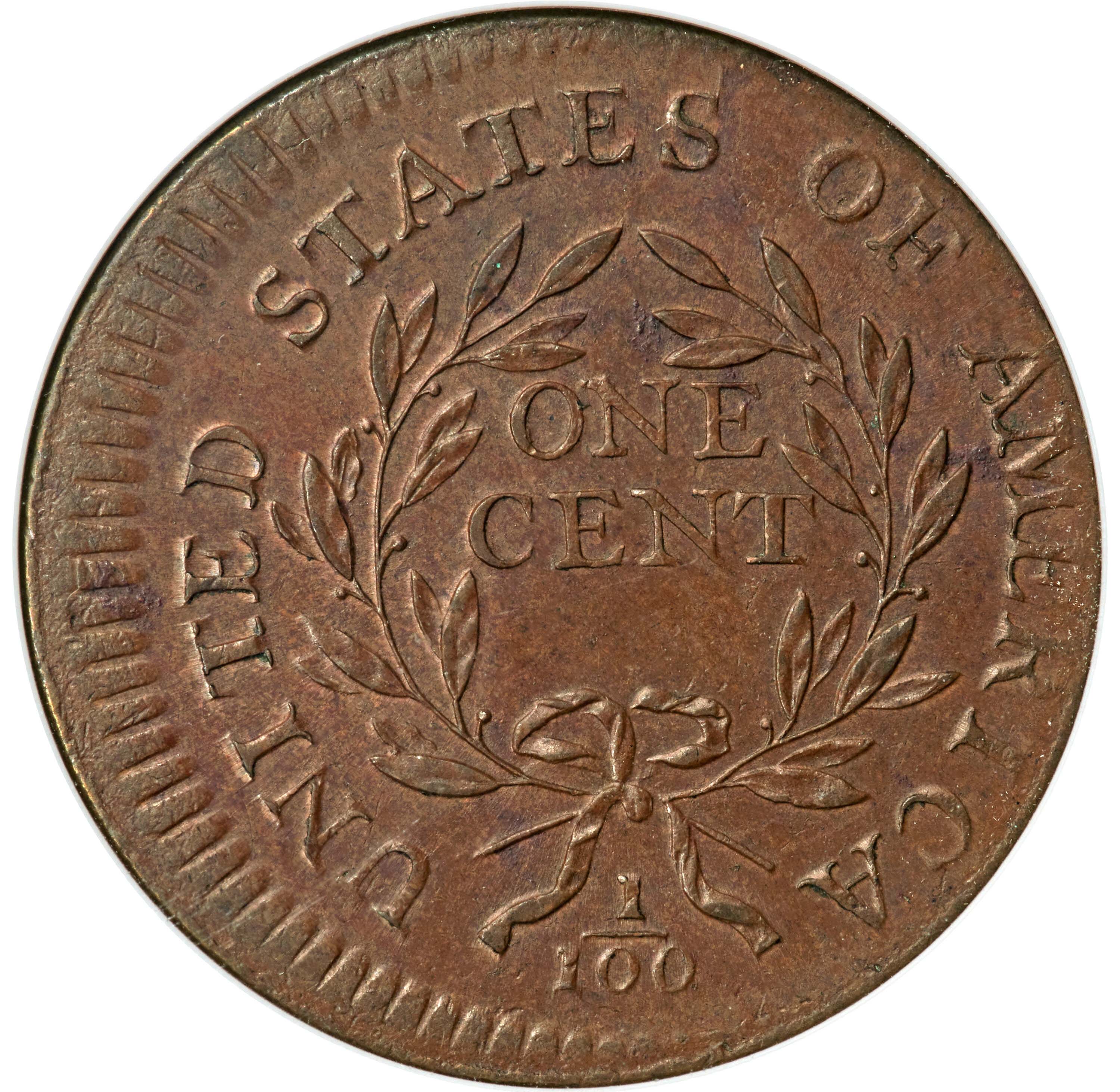
1795 S-76b Plain Edge Cent, AU55
Off-Center at 3 O'Clock
1795 1C Plain Edge, S-76b, B-4b, R.1 -- Off-Center -- AU55 ANACS. This example is struck a slightly off-center at 3 o'clock with wide opposing border denticles at 9 o'clock. Several 1795 S-76b Plain Edge cents were struck in error, including off-center strikes, double strikes, and others on incomplete planchets. An area of steel-blue corrosion on Liberty's neck along the hair line will identify this example. Slight wear is noted on the highest design points with traces of faded mint red in the protected areas of the reverse.
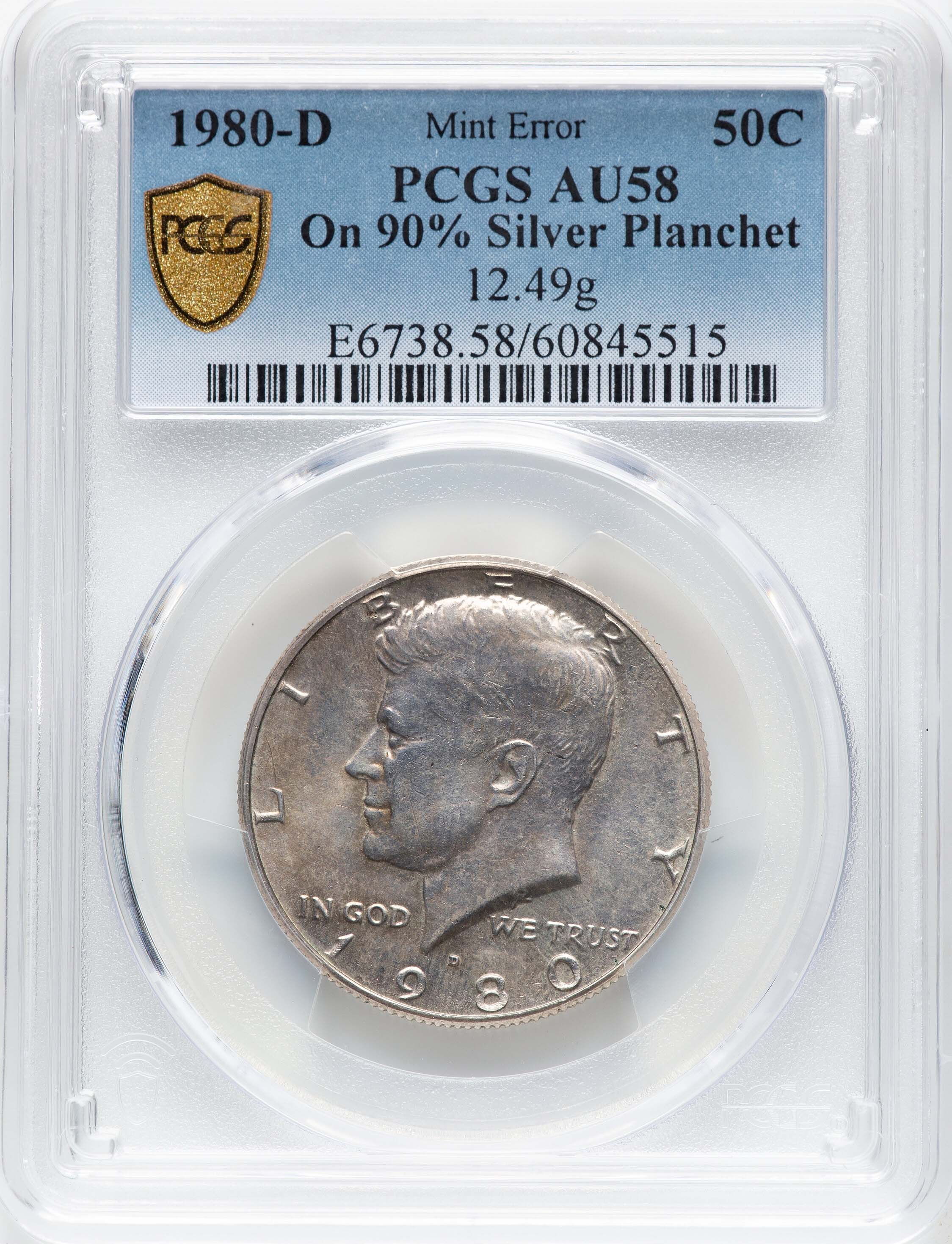
1980-D Kennedy Half Dollar, AU58
Struck on 90% Silver Planchet
Rare Mint Error Coin
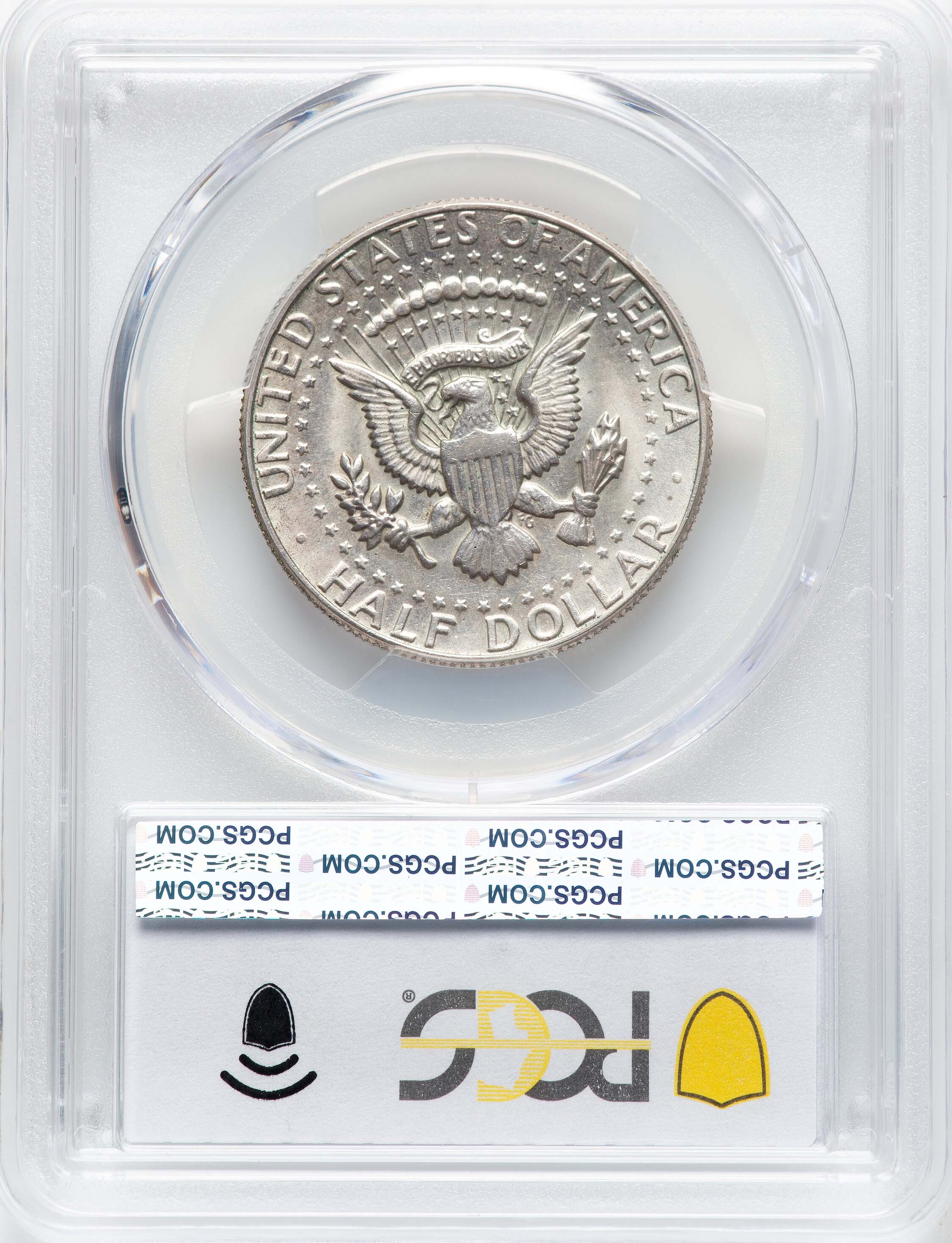
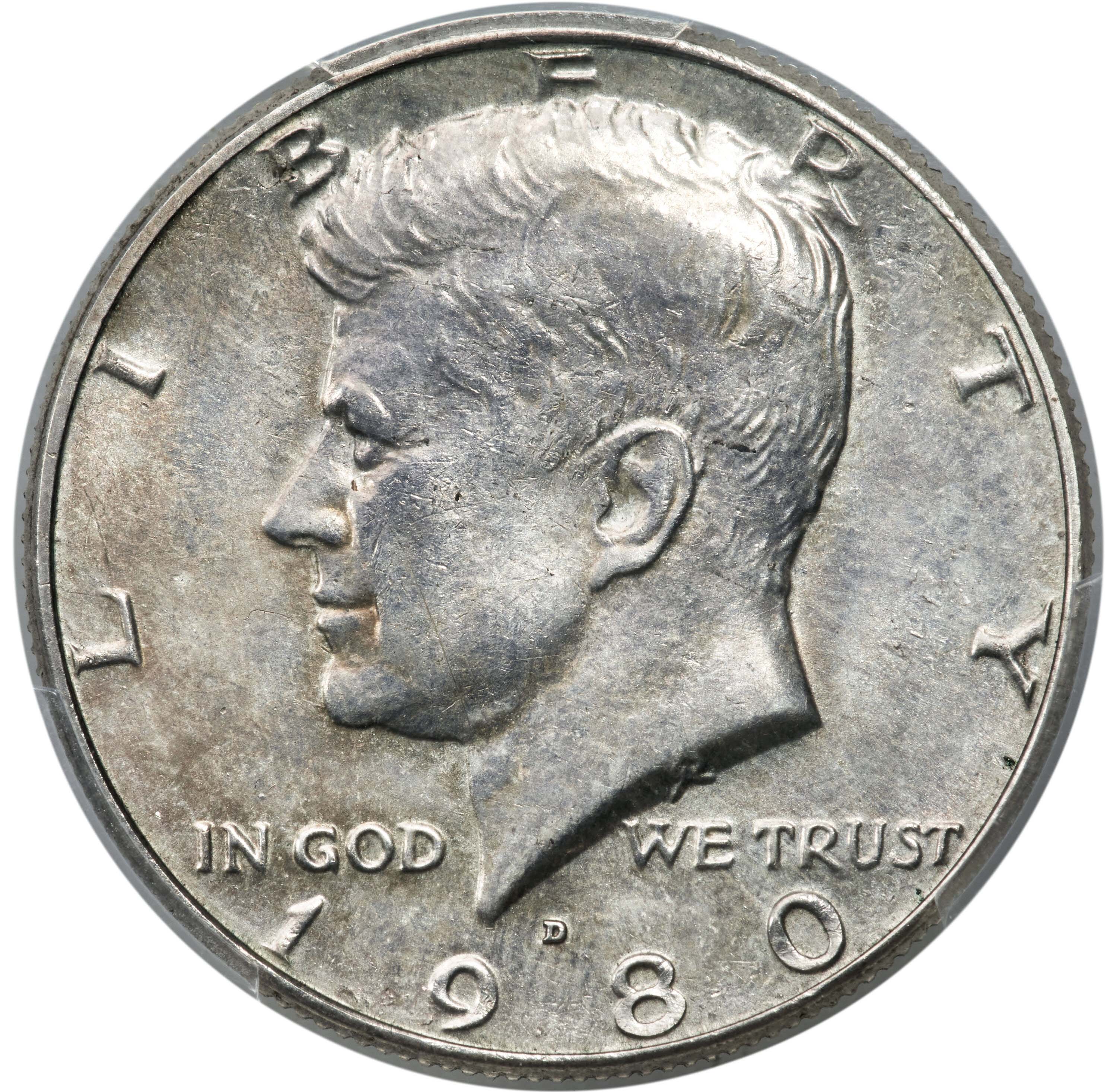
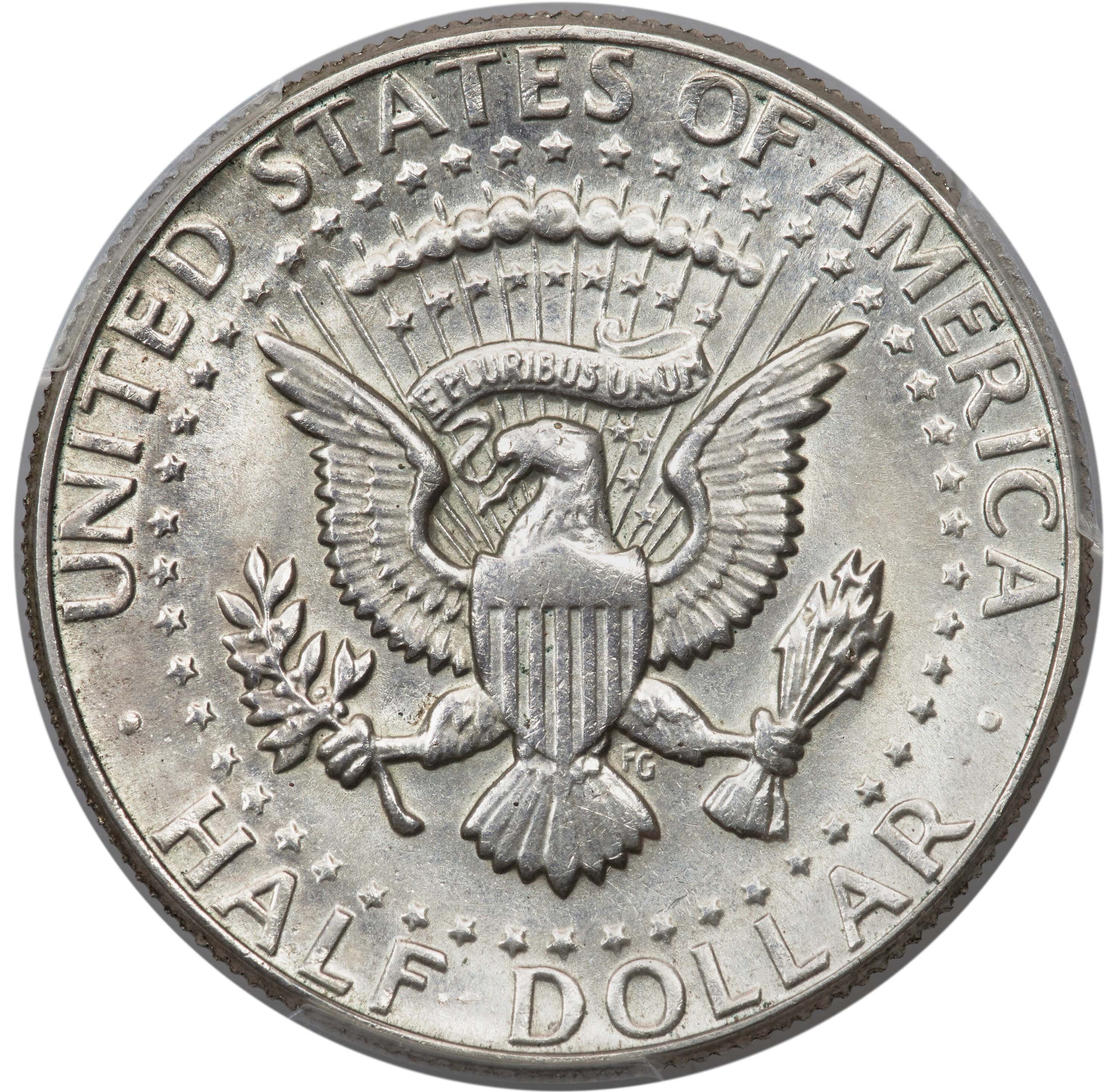
1980-D 50C -- Struck on a 90% Silver Planchet -- AU58 PCGS. 12.49 gm. This 1980-D is a remarkable mint error coin that was struck in 90% silver instead of the standard copper-nickel alloy. We have not seen any 1980-D half dollars with any silver content before, let alone handling one struck on a 90% silver planchet. A few examples of the 1977-D Kennedy half dollars were struck on 40% silver planchets that were presumably left over from the 1976 Bicentennial silver-clad halves struck in San Francisco. How the silver-clad planchets arrived in Denver remains in question and this 1980-D half dollar invokes even more questions, as 90% silver planchets were last used at the Denver mint for the 1964-D inaugural Kennedy half dollar.
With a hefty mintage exceeding 156 million pieces, it is conceivable (but highly unlikely) that a leftover 1964-D planchet survived in obscurity as inventory and somehow got mixed with the clad pieces for striking. No matter how it got there, a visible edge confirms the absence of a copper core and the weight is consistent with 90% silver pieces. This near-Mint example shows only slight signs of wear from brief circulation and just a thin vertical pinscratch is seen under magnification on Kennedy's cheek. The pleasing surfaces display lustrous silver-gray patina and exhibit only minor incompleteness of strike.
1860-O Half Dollar, MS63
Indented by Half Dime Planchet
Spectacular Mated Error Pair
The Subject of a Discovery Article in Coin World Magazine
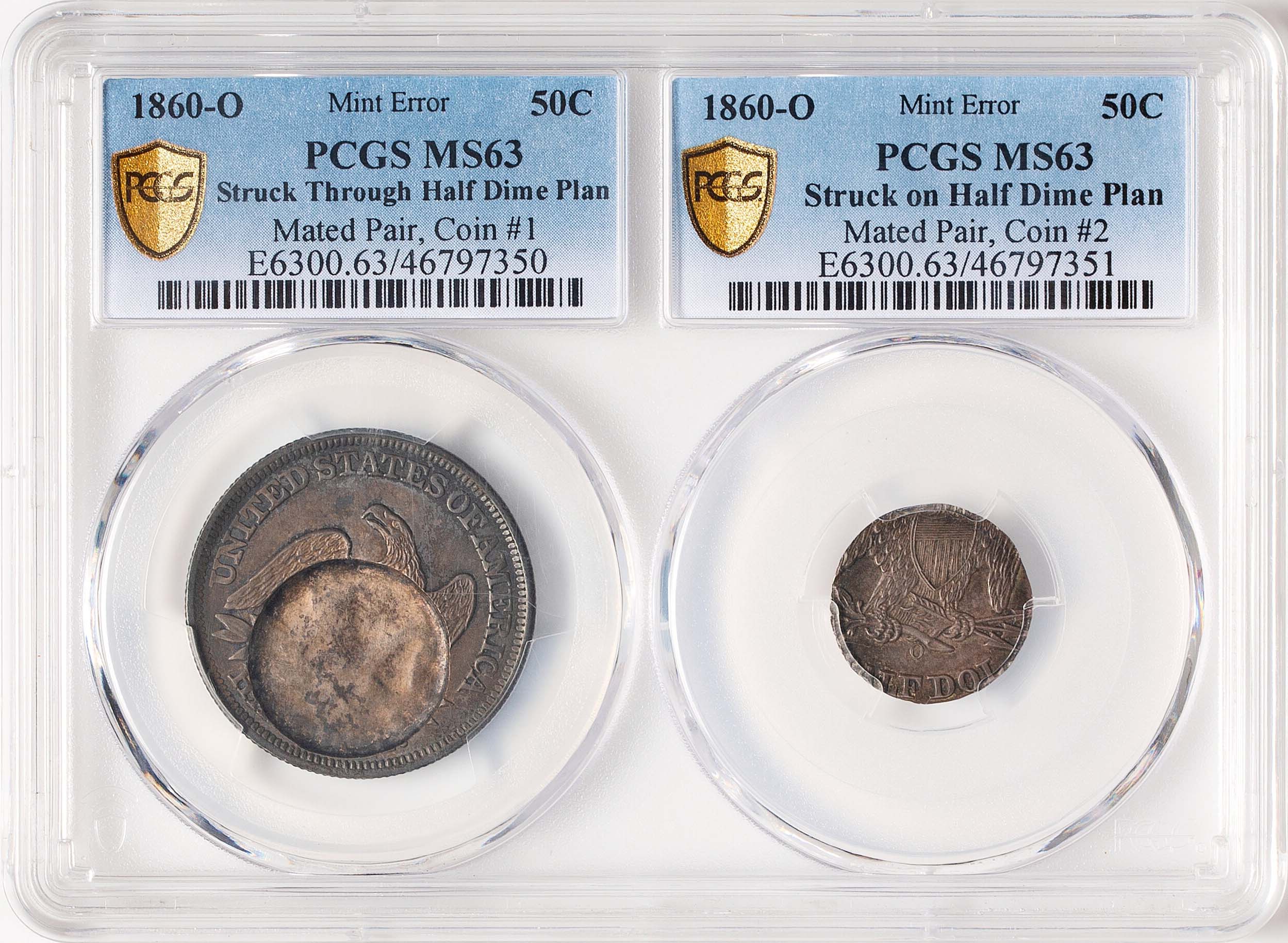
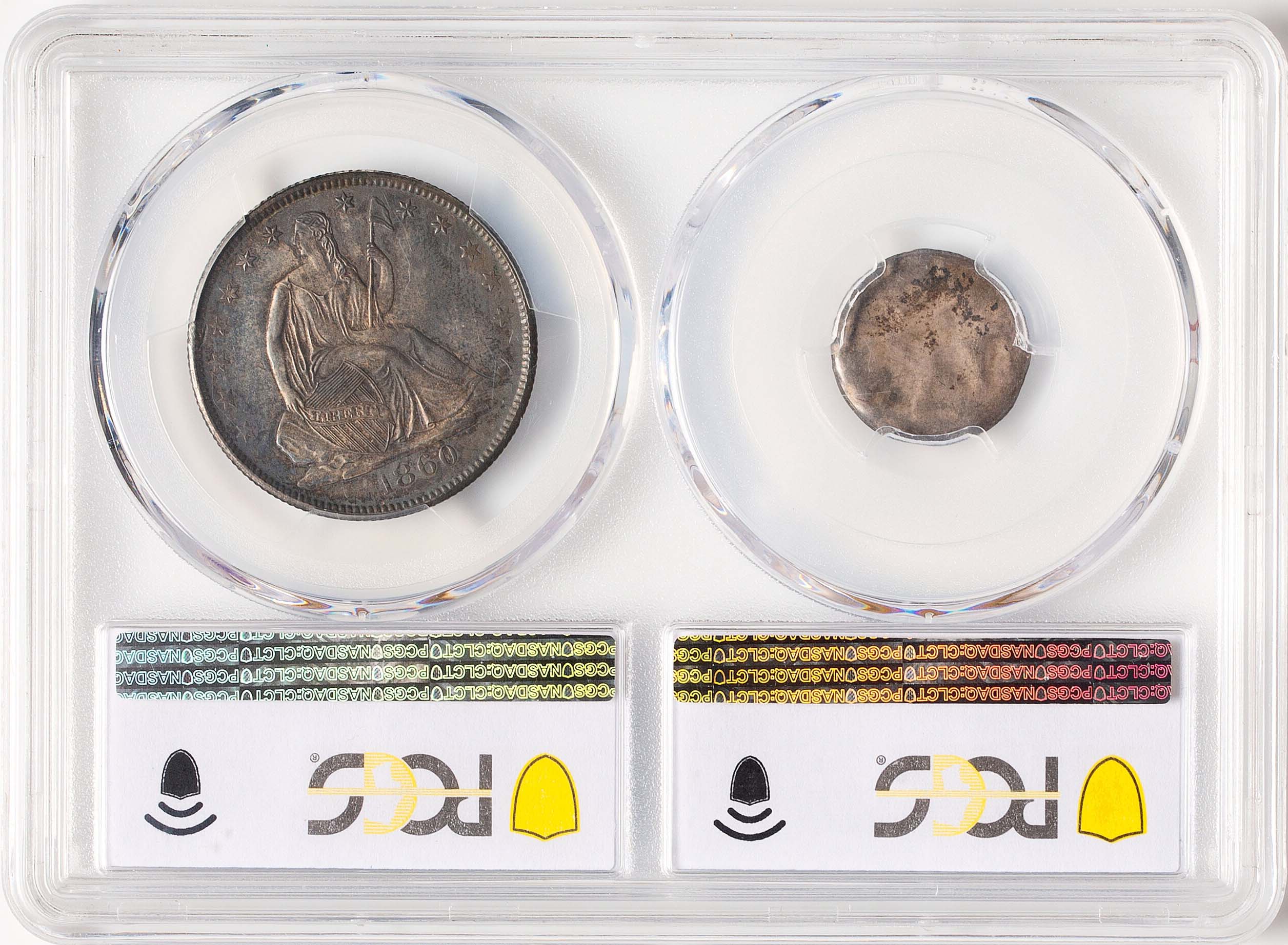
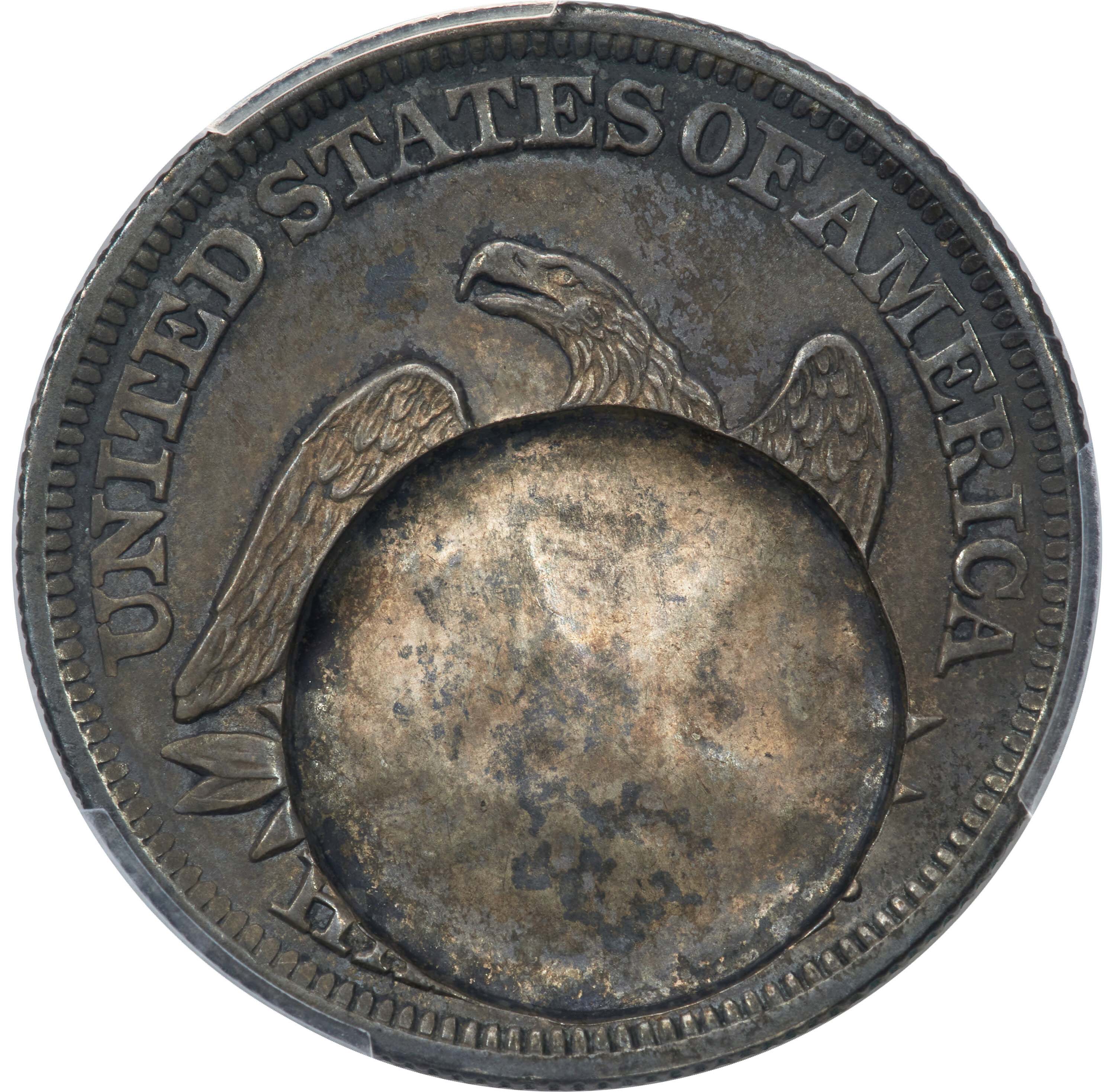
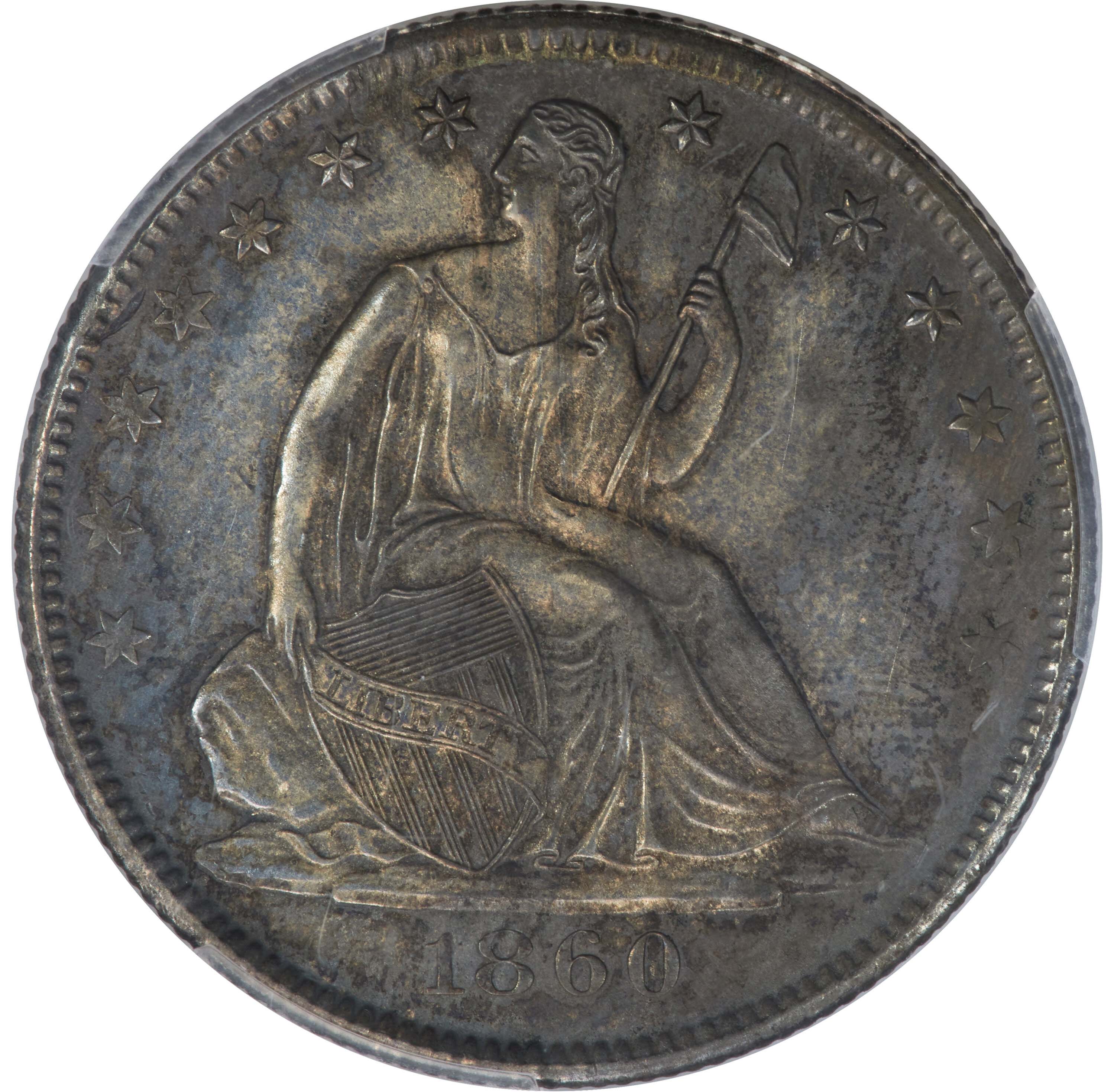
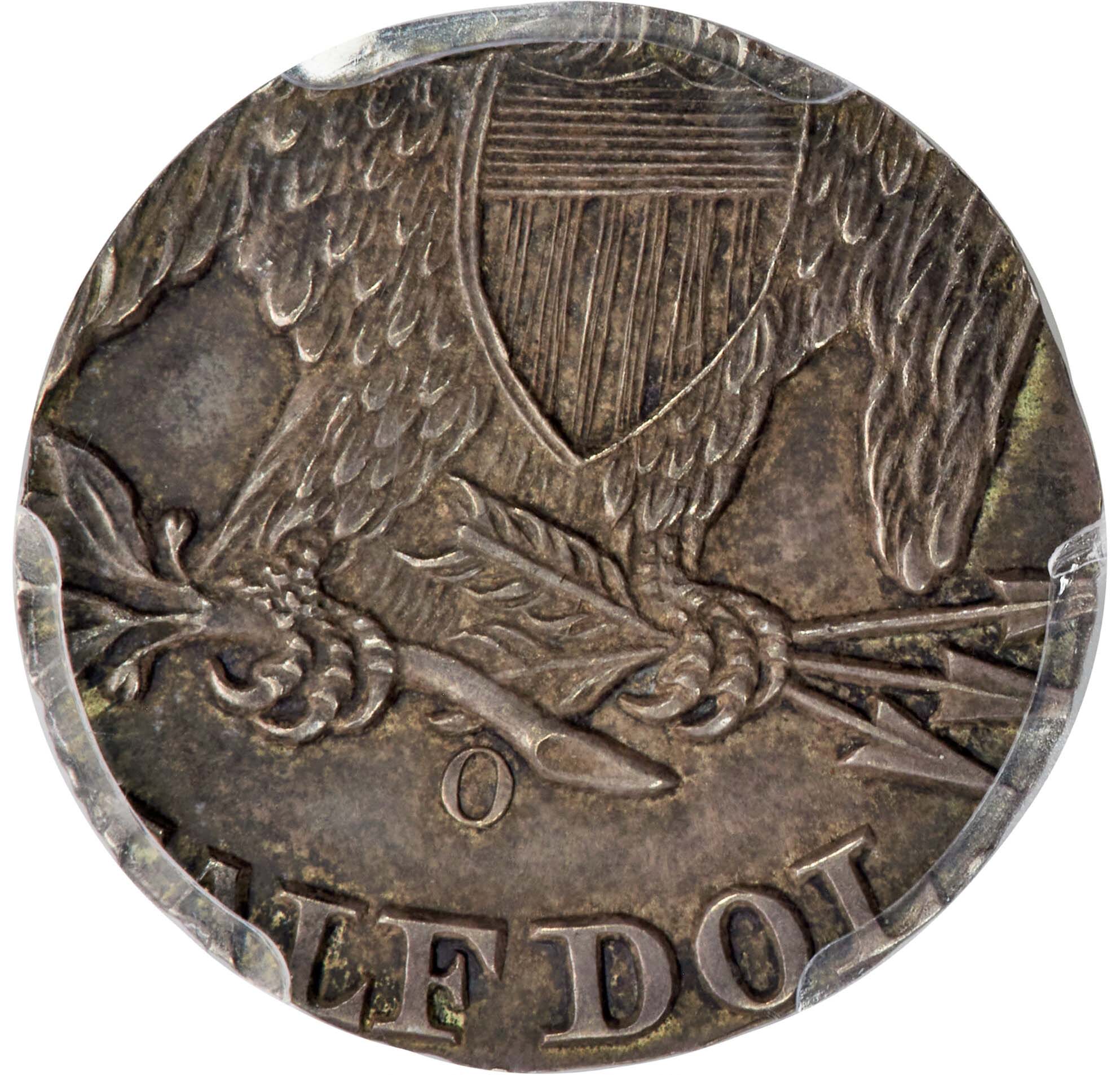
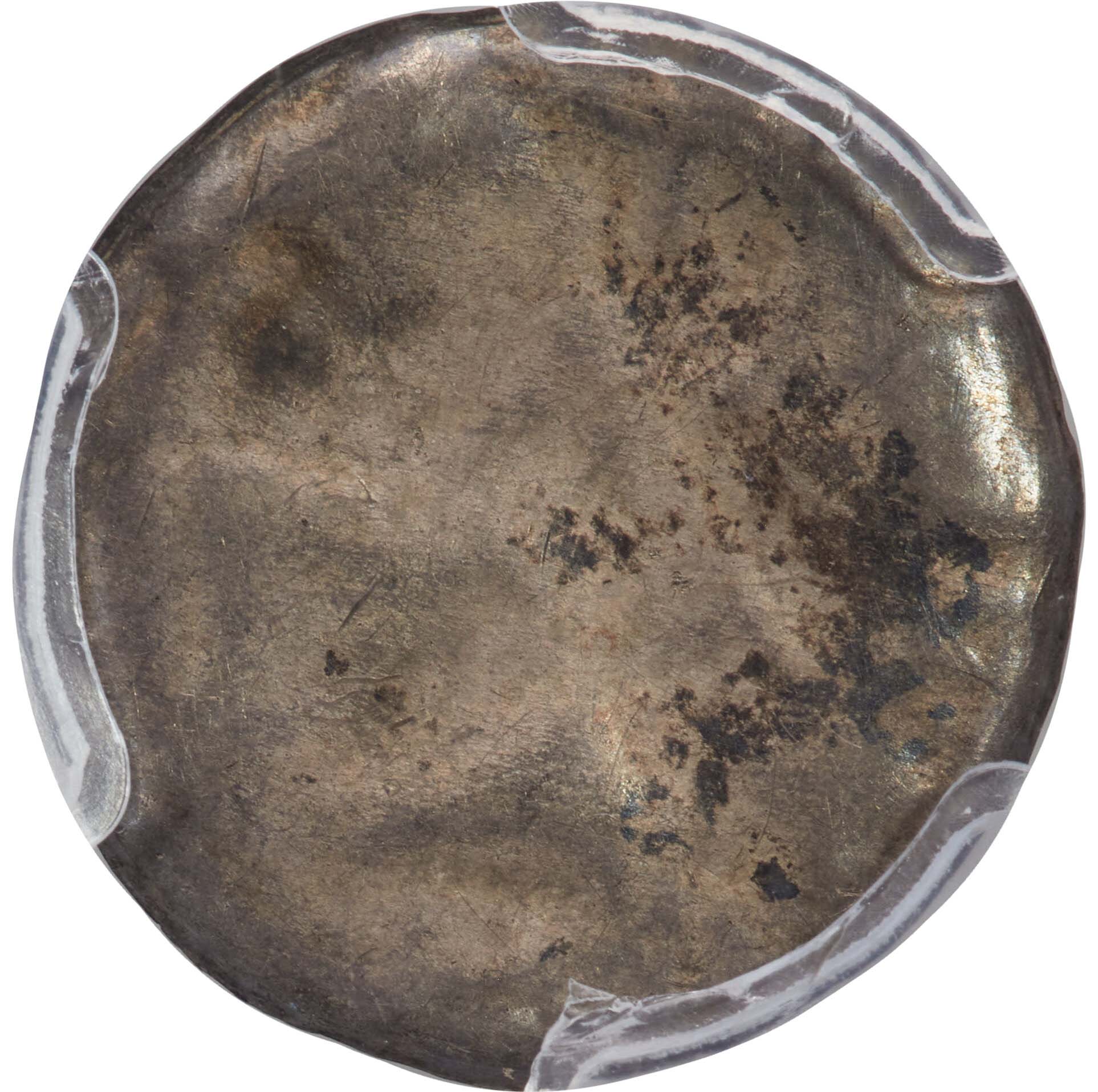
1860-O Half Dollar -- Indented by Half Dime Planchet, Mated Pair -- MS63 PCGS. Type One Reverse. WB-102, Die Pair 3, R.3. The "Weird Vertical Stripes" variety with crude vertical lines on the eagle's shield. An amazing mint error involving planchets of two different denominations. A half dime planchet and a half dollar planchet were fed together between half dollar dies, with the half dime planchet situated between the half dollar planchet and the reverse die. The half dollar planchet was indented by the half dime planchet during the strike, creating a mated error pair. Each of the coins on its own would be a spectacular error find, yet the two coins have remained together since the year Abraham Lincoln was first elected President, and the Pony Express began its brief service.
The "fifty-five cent piece" displays rich steel-gray, walnut-brown, and cobalt-blue toning across the obverse. The reverse displays medium russet-red and lavender toning that deepens at the margins. The obverse has a normal appearance aside from a small pod-shaped strike-through near star 4. The lower stars are lightly brought up, but the strike is needle-sharp on Liberty's hair and adjacent stars. The reverse of the half dollar displays the large circular recession where it was indented by the half dime. The half dollar on a half dime planchet is uniface reverse and shows all of the eagle's shield, claws, and tail, as well as the mintmark and most of the arrows and HALF DOL.
The mated pair was the subject of a February 27, 2023 article in Coin World by Paul Gilkes. In the article, PCGS numismatic director Steve Feltner stated "Of all the incredible mint errors that I have had the pleasure of handling over the years, this ranks very high on my list of favorites. My excitement was palpable as I discussed the incredible state of preservation both in technical grade and surface quality."
The only moderately comparable mated pair we could find in Heritage's auction archives is a 1973-S Ike dollar indented by an unidentified 1.73 gram planchet. That coin appeared as lot 3523 in our January 2008 FUN Signature and realized $40,250. The present mated pair, struck at the New Orleans Mint from Seated dies and offered in today's market, is certainly worth considerably more and has been the subject of intense admiration in the numismatic community. Heritage is honored to offer this remarkable pre-Civil War error, which is unlike any other we have seen.
1866 Quarter Eagle in Nickel
Judd-542, PR64
PCGS 'Rattler' Holder, CAC
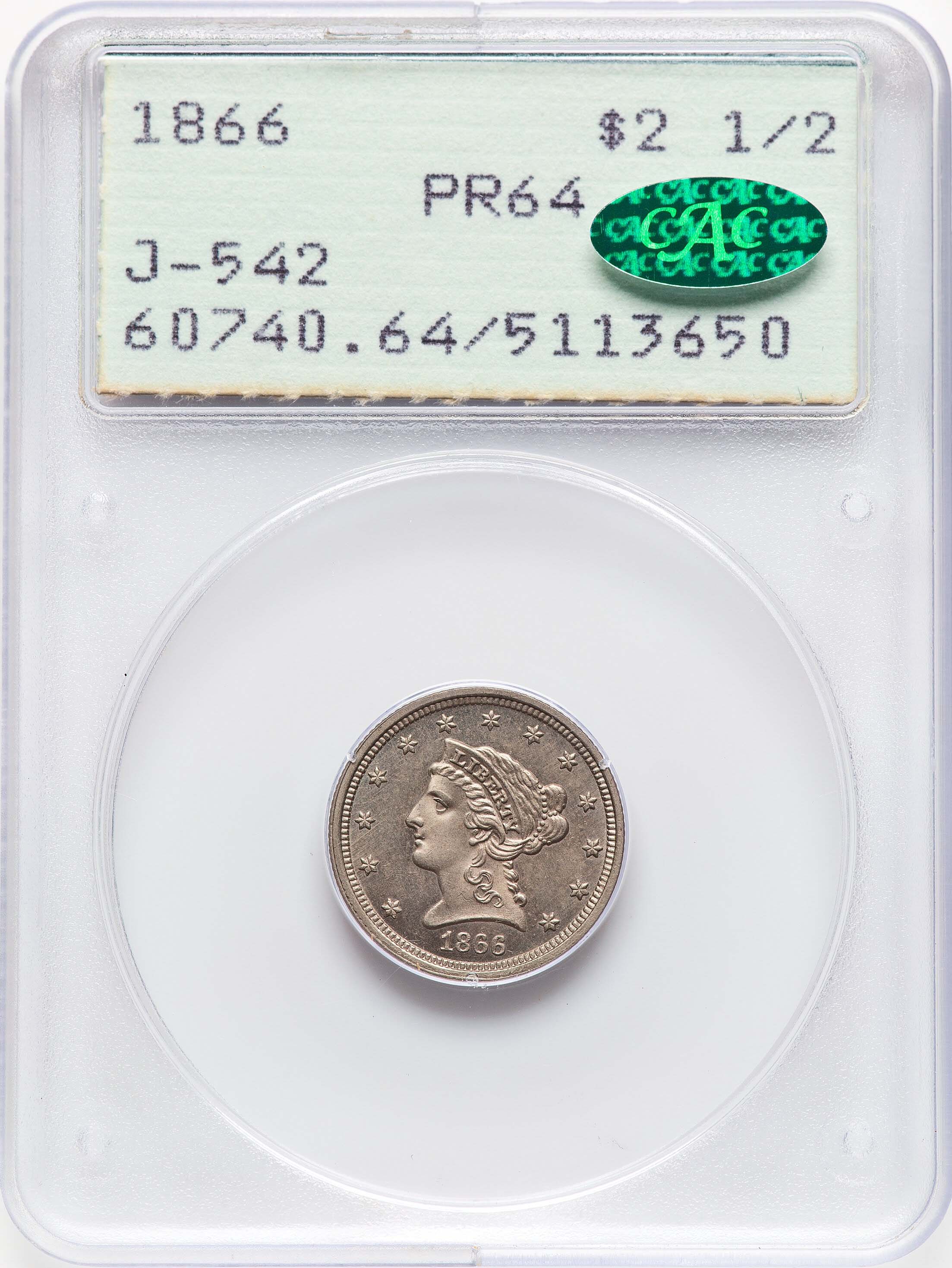
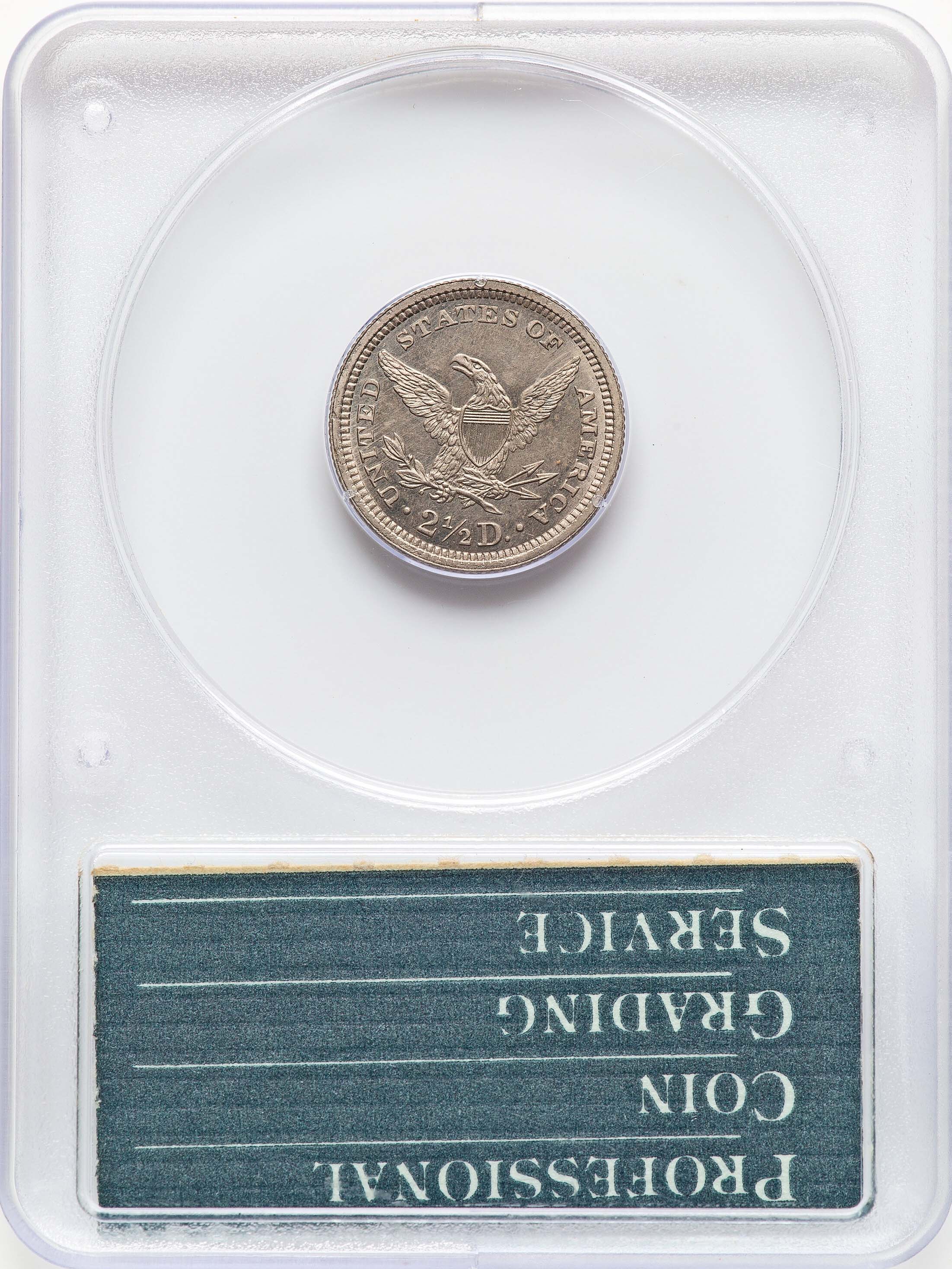
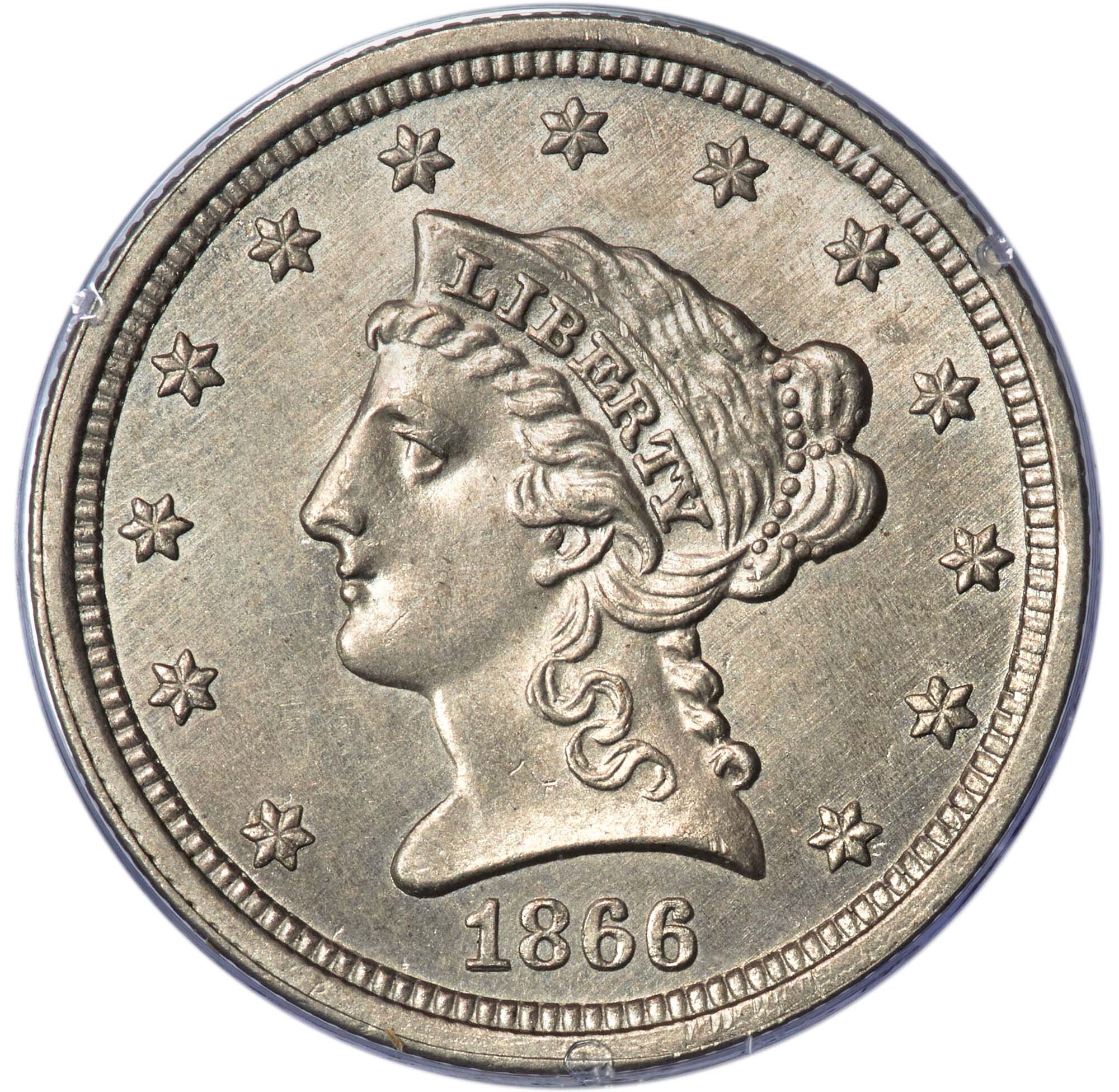
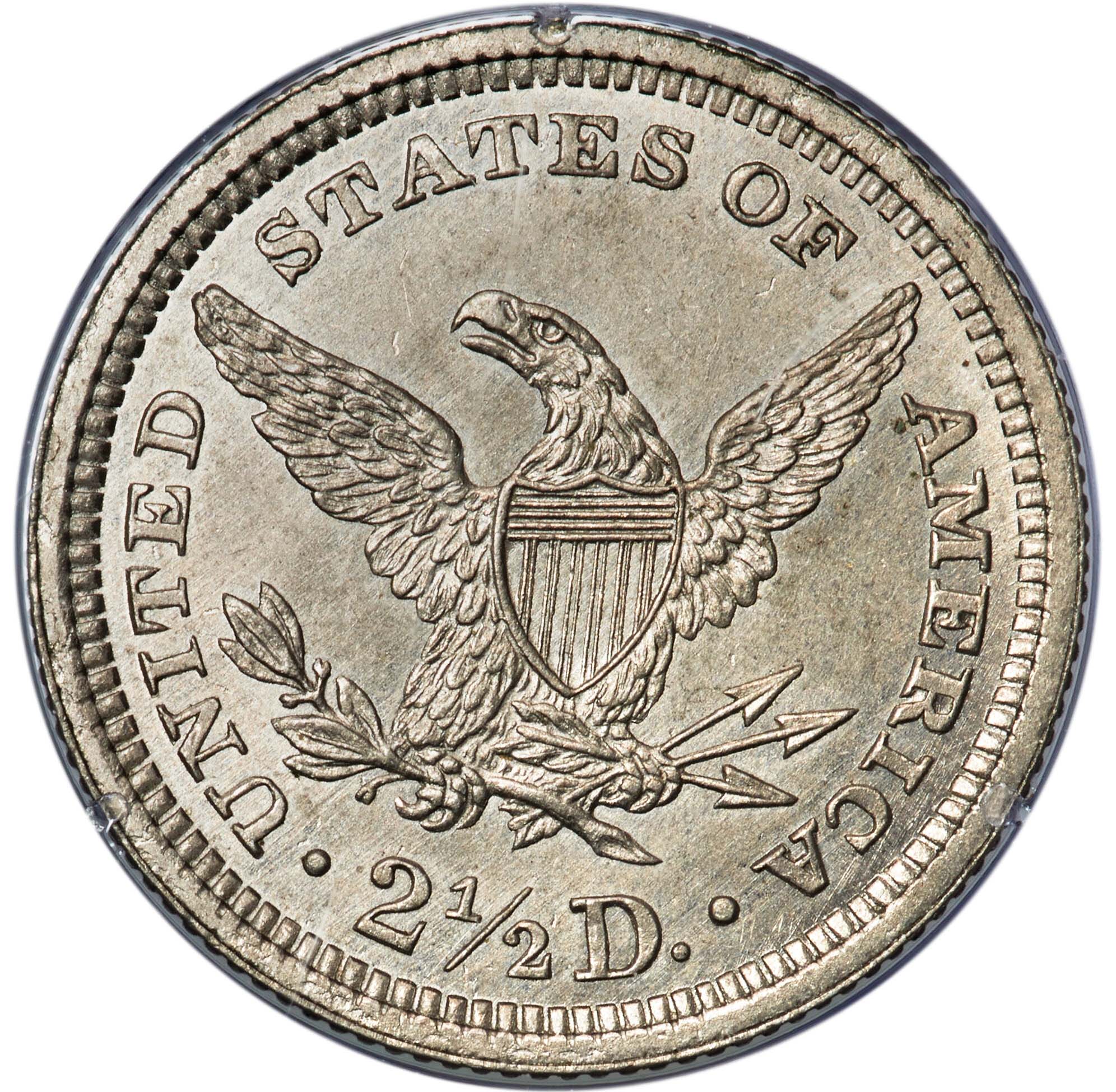
1866 Liberty Quarter Eagle, Judd-542, Pollock-607, High R.7, PR64 PCGS. CAC. The Judd-542 pattern is an off-metal version of the regular 1866 quarter eagle dies design, struck in nickel with a reeded edge. The purpose of this pattern is not clear. These pieces could have been deliberately produced for sale to collectors or perhaps they are simply mint error pieces struck on three-cent nickel planchets. While the three-cent nickel was introduced in 1865 and the planchet size is very close to the quarter eagle, it is unlikely that multiple examples of the same mint error were unintentionally struck. This example is identified as #4 on the Teichman Roster which is currently tracking only six J-542 coins, of which two are uncertified and are potentially duplicates (6/26).
Outstanding execution for the newly utilized and much harder metal earns endorsement from CAC with regards to quality for the grade. Luminous silver-nickel surfaces produce delightful eye appeal. A small lint mark at the base of Liberty's neck and a few microscopic contact marks are noted. Planchet striations running diagonally southwest to northeast produce a subtle effect which is neither overt nor distracting. This rare Choice proof is housed in a PCGS generation 1.2 "Rattler" holder.
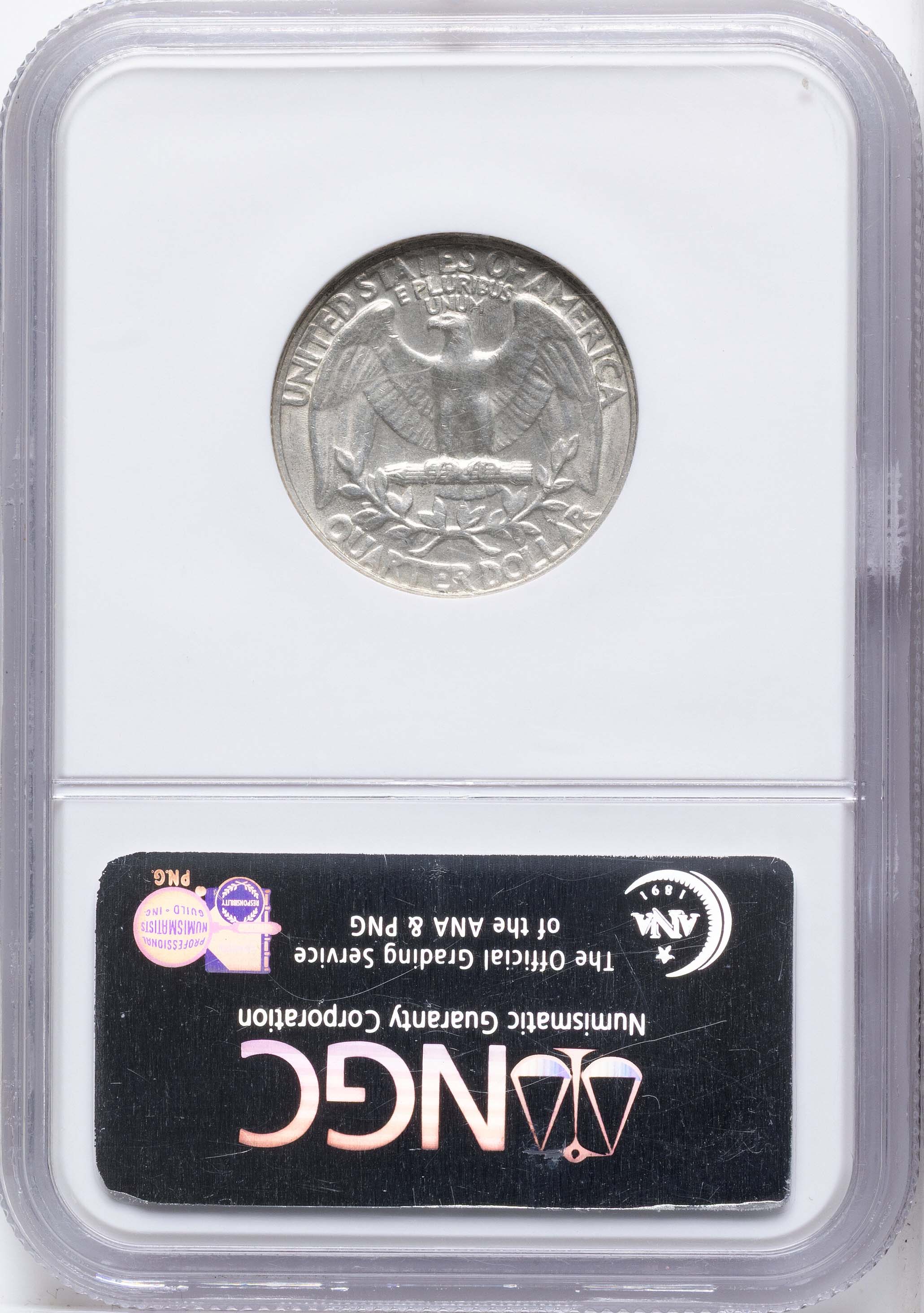
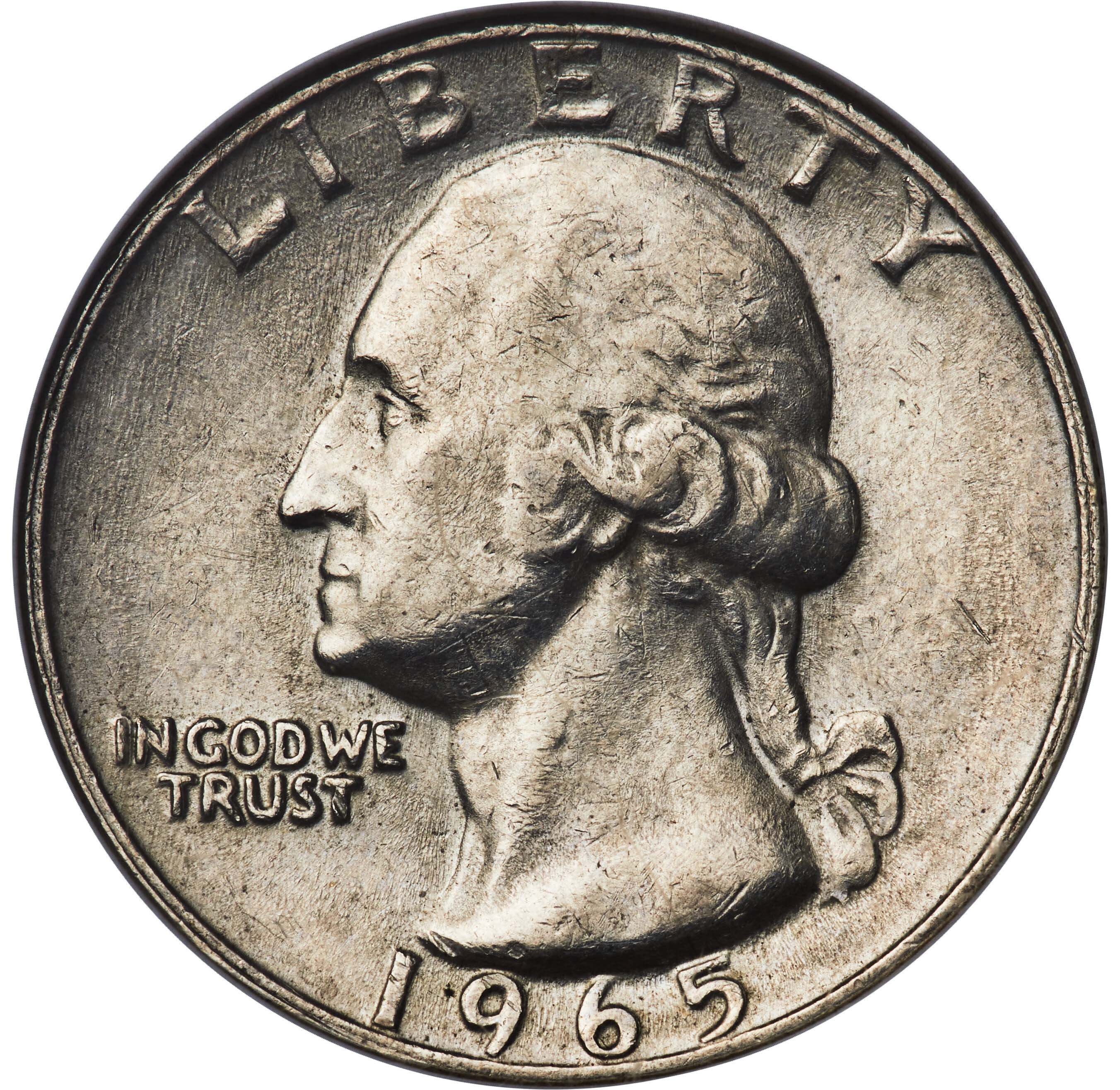
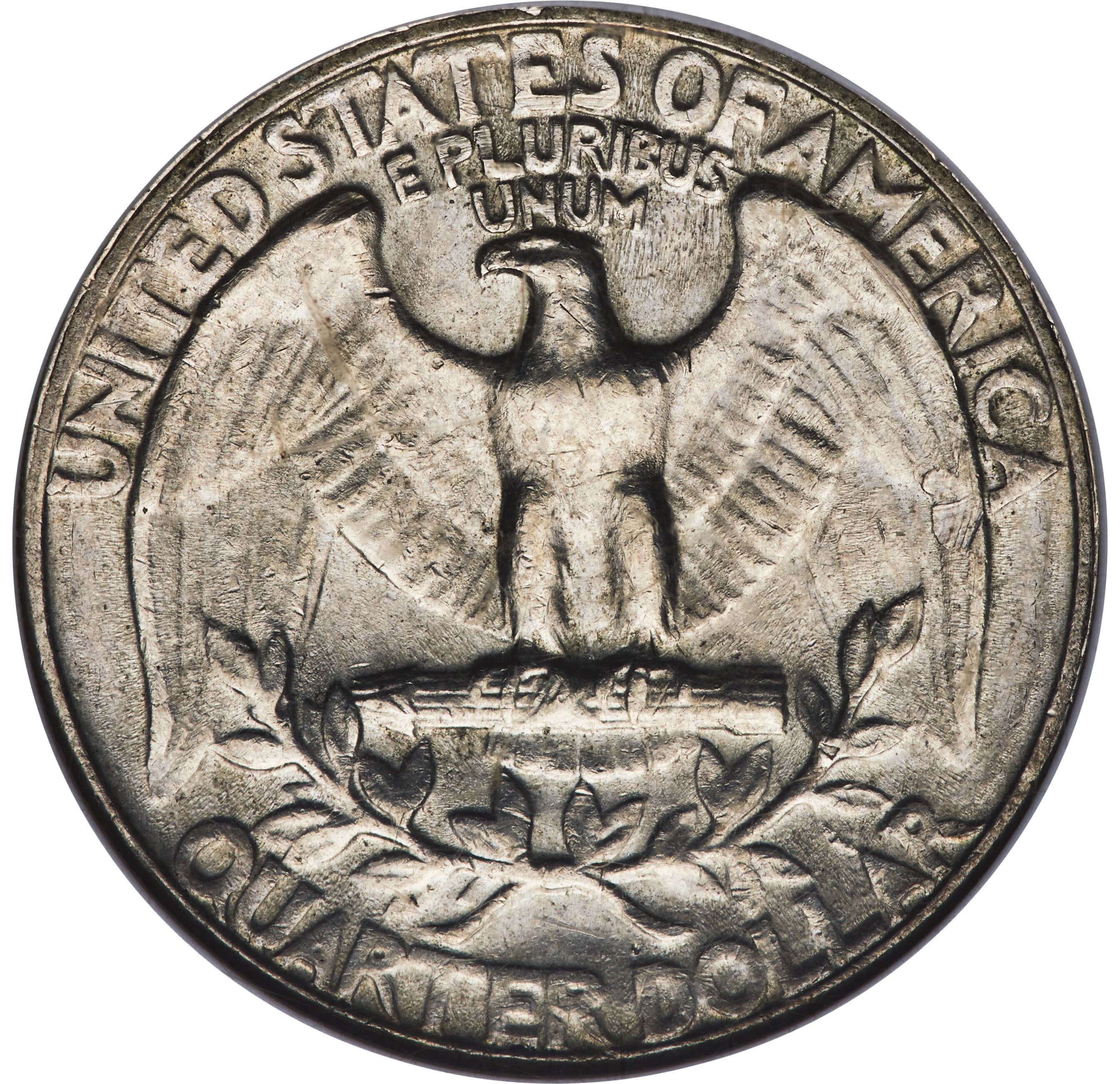
1965 Washington Quarter, AU58
On a 90% Silver Planchet
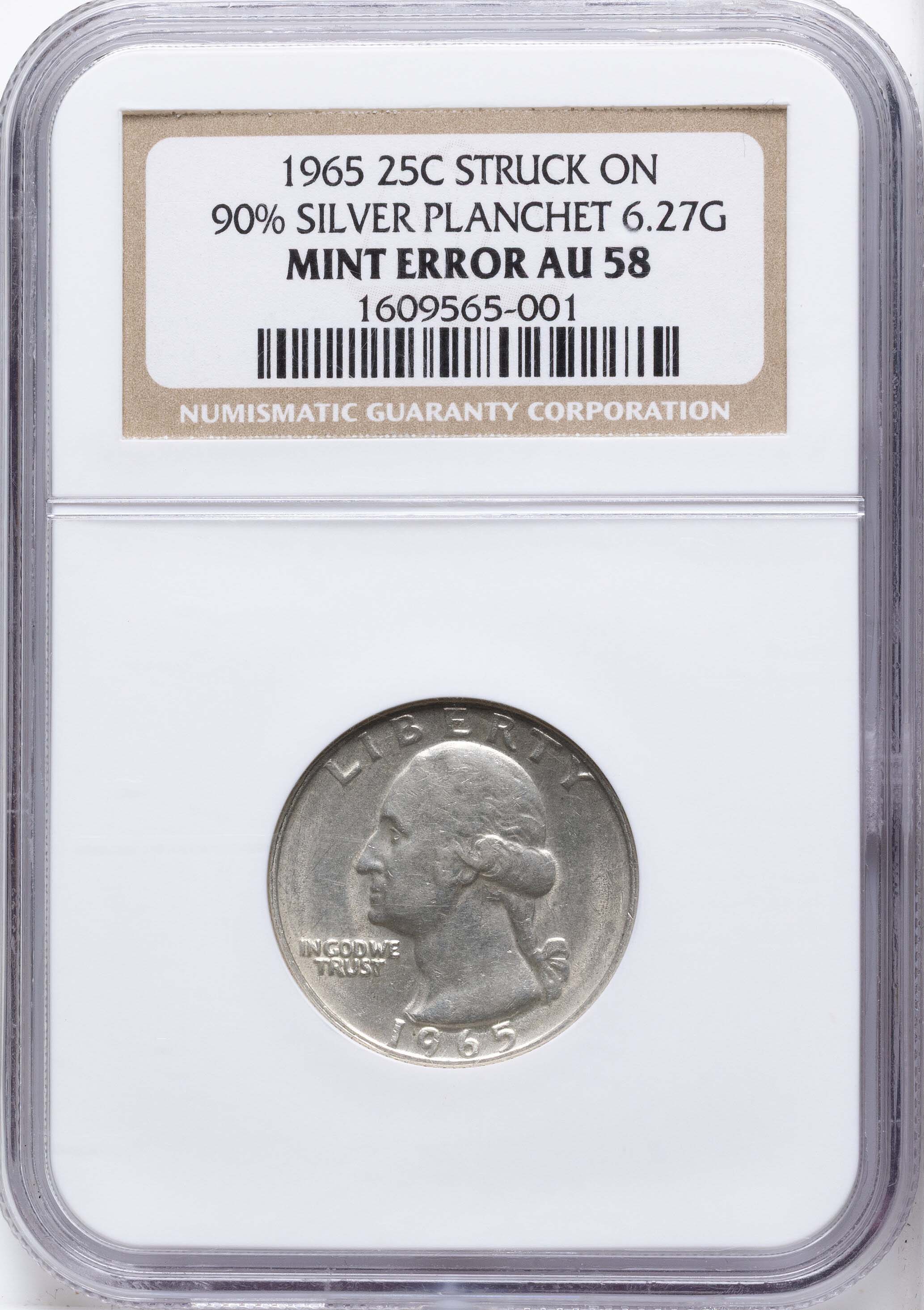
1965 Washington Quarter -- Struck on a 90% Silver Planchet -- AU58 NGC. 6.27 grams, within tolerance for a normal silver alloy quarter and somewhat heavier than the clad coinage composition. The year 1965 was transitional for the dime, quarter, and half dollar alloys, and as is often the case with transitional years, some wrong-planchet errors occurred where 1965 quarters were struck on the old silver planchets. This is such a piece. It is slightly finer than most of the examples we have seen, those grading between XF40 and AU55. In AU58, it is all the more a rarity. Satiny silver-gray surfaces yield remnants of luster in the protected areas, while light wear and scattered abrasions are not bothersome. Eye appeal is pleasing.
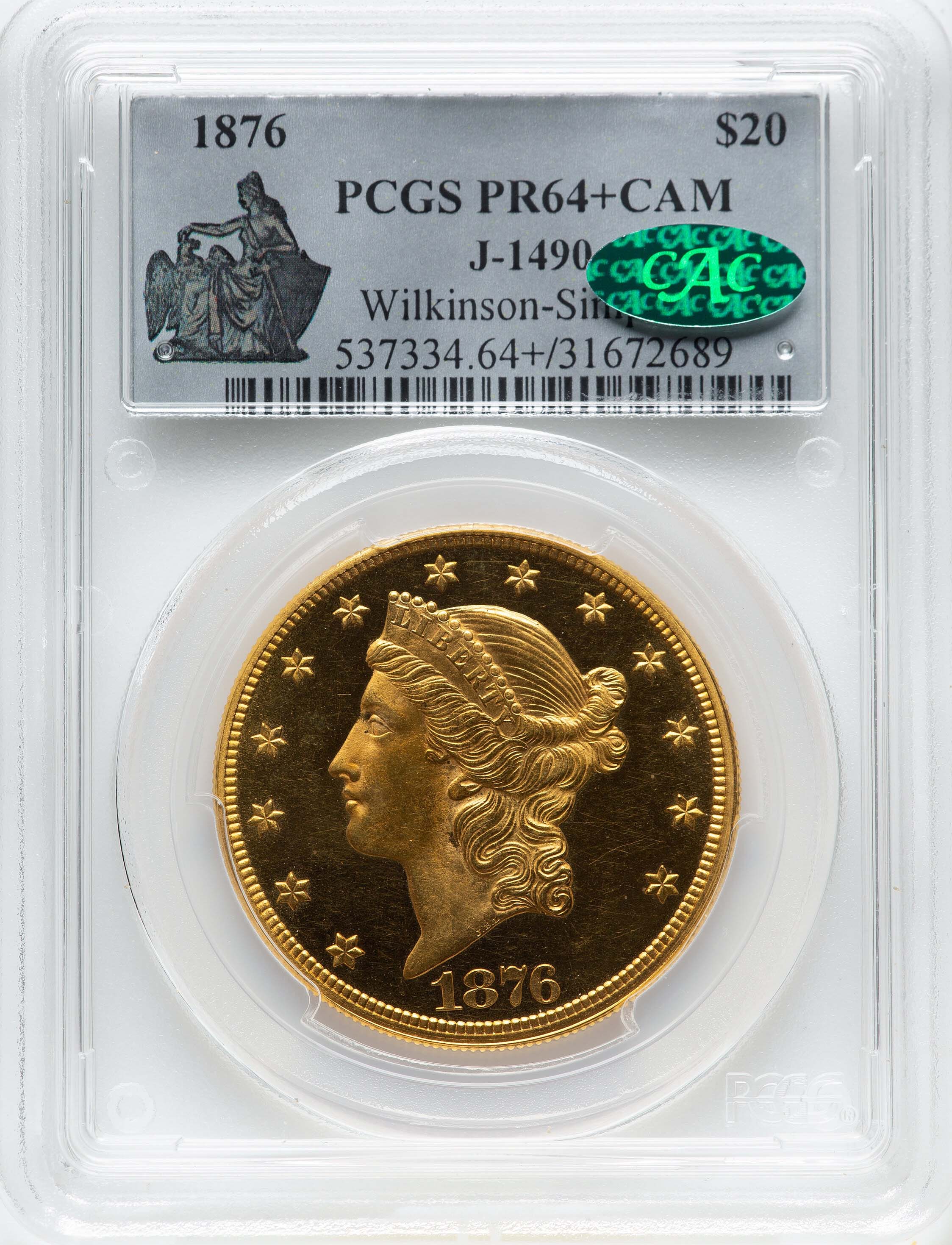
1876 Liberty Double Eagle Pattern, PR64+ Cameo
Unique Transitional Gold Pattern, Judd-1490
Ex: Woodin-Farouk-Wilkison-Simpson
CAC-Approved Quality
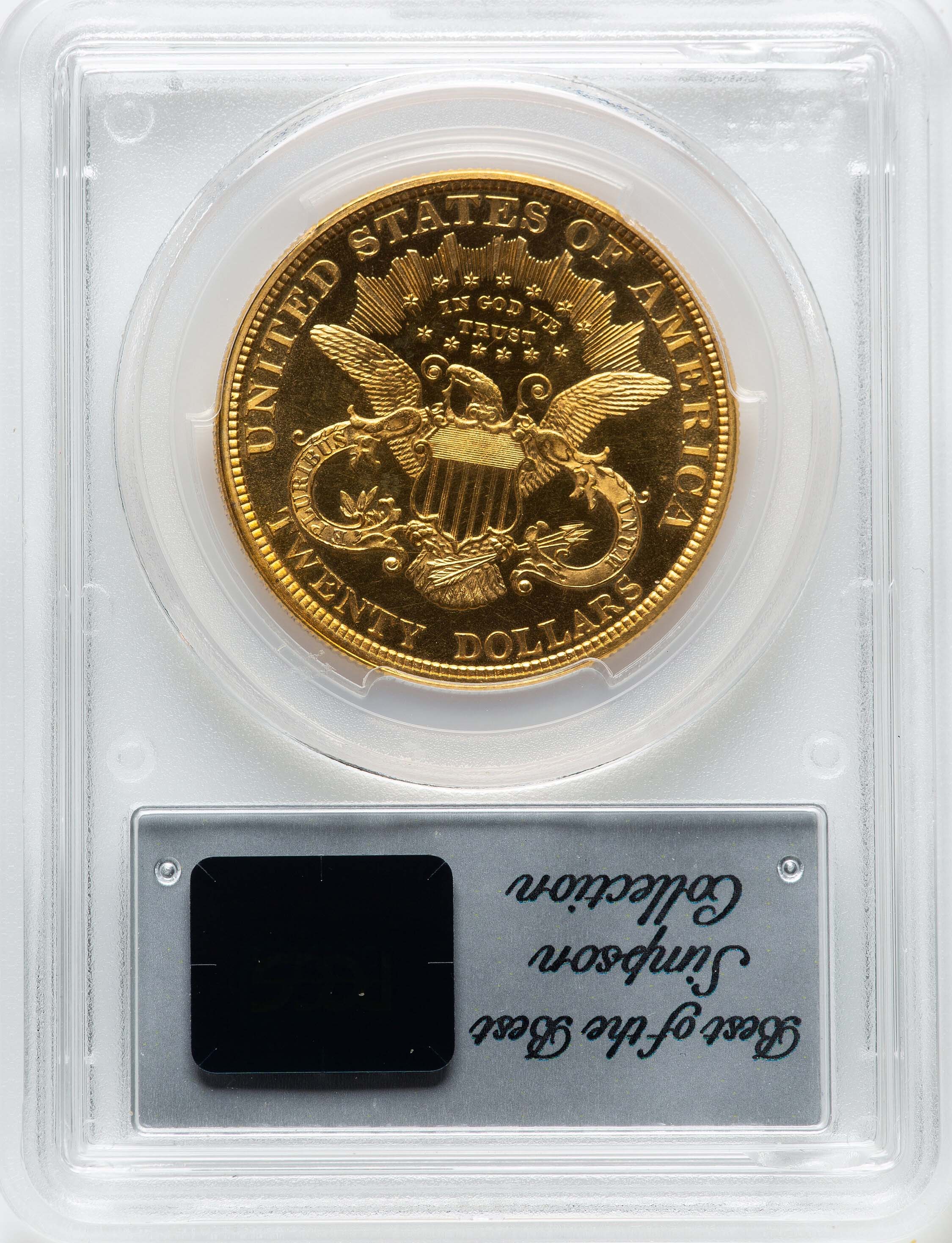
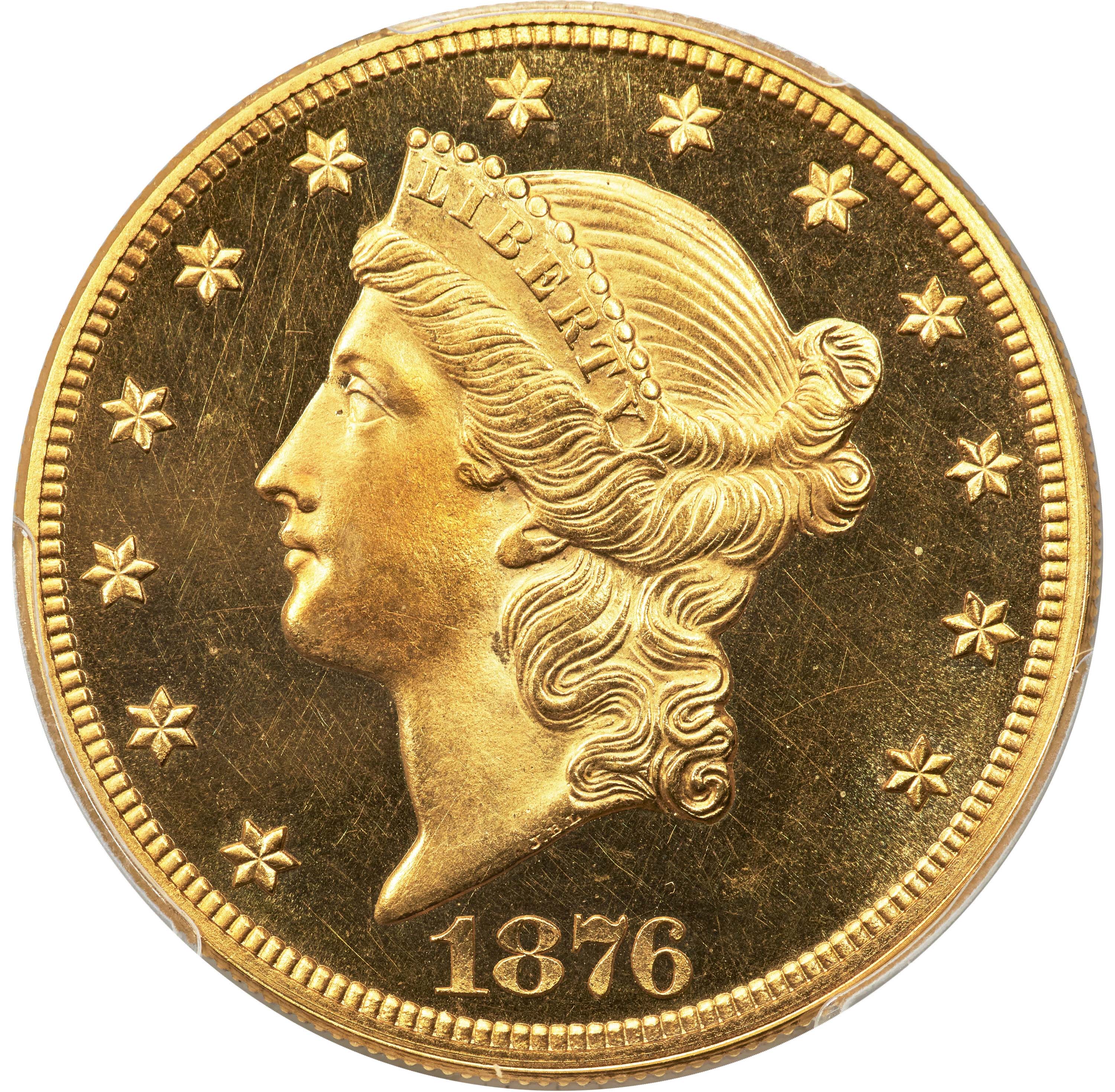
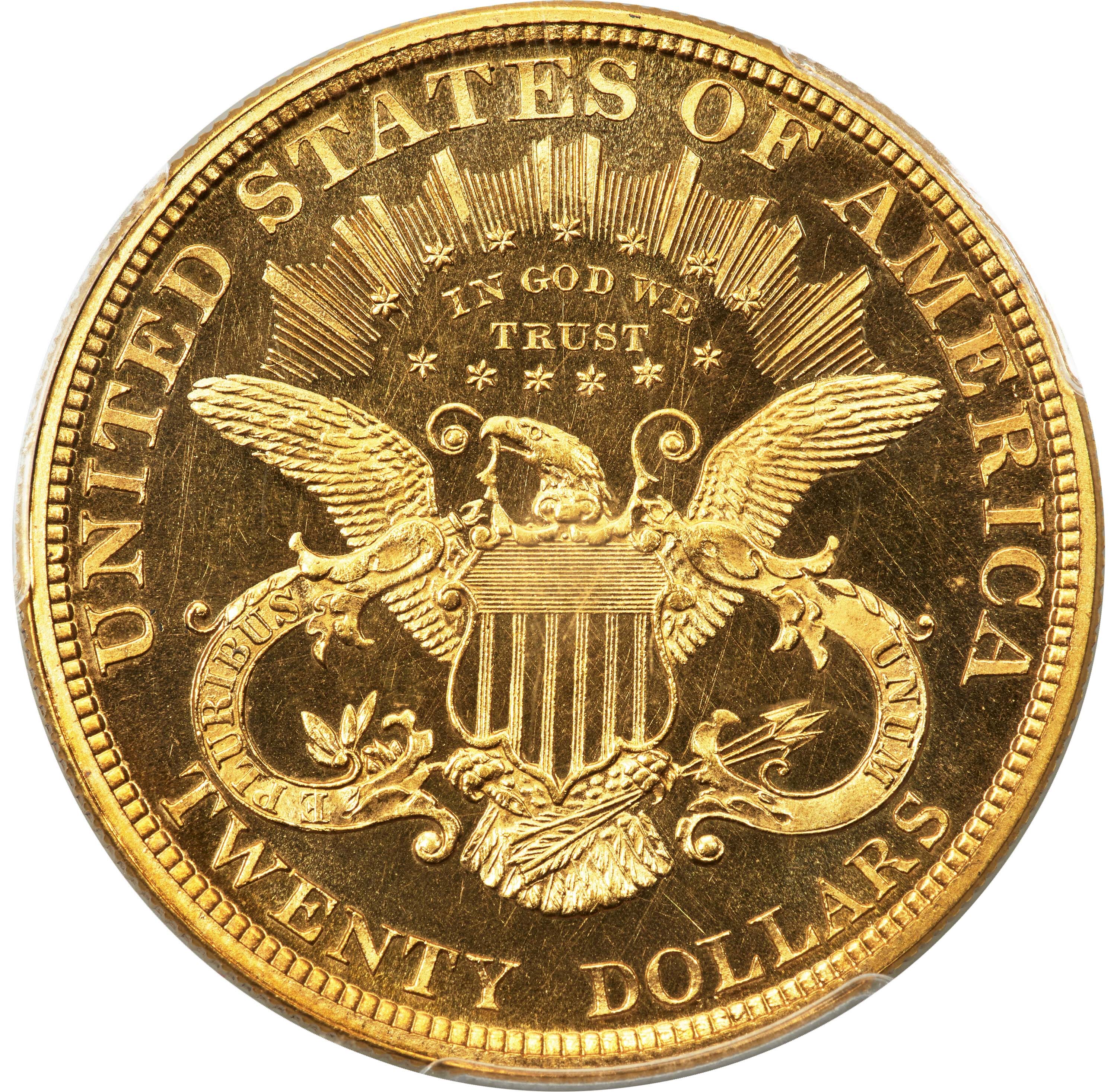
1876 $20 Liberty Double Eagle, Judd-1490, Pollock-1643, Unique, PR64+ Cameo PCGS. CAC. Ex: Wilkison-Simpson. With just a single specimen known, the 1876 Liberty double eagle pattern, Judd-1490, is an ultimate "stopper" for collectors of the U.S. pattern series. Many of the greatest pattern collections of all time, like those of Major Lenox Lohr, Harry W. Bass, Jr., and Dr. J. Hewitt Judd, have lacked this sought-after rarity. The opportunity to own this legendary coin comes only once in the collecting life of most numismatists and public offerings are almost as elusive as the coin itself. Heritage Auctions is privileged to present this unique transitional gold pattern rarity in just its third auction appearance.
Design
Diameter: 34 mm, weight: 516 grains. Designer: James B. Longacre (slightly modified by William Barber). The obverse is similar to the regular double eagle design for 1877, with the point of Liberty's coronet centered between stars six and seven (the point was positioned almost touching star seven in the design of previous years). The position of the stars in relation to other features of the bust also differs considerably from their placement in 1876. The letters in LIBERTY are farther from the beads in the coronet than on the regular obverse of 1876 and the date is lower in the field. Like the regular-issue dies of 1877, the reverse shows the TWENTY DOLLARS denomination completely spelled out. The Heraldic Eagle design is slightly larger than the regular-issue 1876 version, causing the TW in TWENTY and the S in DOLLARS to nearly touch the scroll. Struck in gold, with a reeded edge. This design was also struck in copper, with a reeded edge (Judd-1491). The reverse was used with a slightly different obverse to strike Judd-1492, a unique copper pattern with a plain edge.
The Transitional Gold Patterns of 1876
The design of the double eagle was modified in 1876 as the denomination transitioned from the Type Two to the Type Three design. As might be expected, the Mint experimented with a number of pattern designs to accomplish the transition. A June 24, 1876-dated letter from Mint Director Henry Linderman to Philadelphia Mint Superintendent James Pollock was especially important in the development of the Type Three reverse:
"Sir: I have your letter of 23rd inst. Enclosing two specimen Double Eagles struck in copper, one with the old die & one with a die from a new hub.
"I regard the obverse of the latter as a decided improvement over the one now in use but on the reverse of both specimens the words 'E PLURIBUS UNUM' are not well brought up. The Engraver should make a careful effort to have this matter appear more distinctly.
"I would like him to consider whether the inscriptions on the reverse could not be so arranged as to allow the word 'dollars' to be put on instead of the letter D."
Linderman's instructions were duly implemented on a series of patterns that led to the Type Three design. On Judd-1488 through Judd-1492, the location of the obverse stars is considerably different from their placement on the regular-issues of 1876 and on Judd-1490 through Judd-1492 the denomination is completely spelled out as TWENTY DOLLARS, rather than TWENTY D. These modifications were adopted for regular-issue coinage in 1877.
Judd-1490 on the Numismatic Scene
Numismatists believe Judd-1490 is a true transitional pattern, made to further the design change to the Type Three format in honor of the nation's centennial. It was not a delicacy clandestinely produced for favored collectors, but its existence was completely unknown to the numismatic community until the early 20th century. There were no 19th century auction appearances, no mentions in the numismatic press, and the issue was not listed in R.C. Davis's groundbreaking treatise on United States patterns. The first mention of the Judd-1490 pattern and its closely related Judd-1488 counterpart was an article in the June 1909 edition of The Numismatist:
"Two Unique Double Eagle Varieties
Previously Unpublished
Described by Captain John W. Haseltine
"For some time The Numismatist has known of two unpublished die varieties of the Double Eagle dated 1876 in the possession of Captain John W. Haseltine. The claim that they were unique has led to some discussion and investigation on the part of those who were informed of Captain Haseltine's possession, just as all such claims for varieties of modern coins should receive. Duplicates were claimed to exist, but on comparison they were found to be from different dies. Mr. Edgar H. Adams who is ever alert to disprove or substantiate any new claims for the Territorial or United States series, was among the persistent investigators. Mr. Adams now writes The Numismatist: 'Please make the statement from me in conjunction with your references to the two 1876 Double Eagle patterns owned by Captain Haseltine. I thought other specimens in gold had been discovered, however, when the pieces were brought together for comparison it quickly developed that the supposed duplicates were from the regular dies of the year with easily distinguishing differences from the Haseltine specimens. Both the later, so far as I am able to learn, can safely be regarded as unique.'
"Our illustrations are photographic reproductions direct from the specimens which are described in the following letter from Captain Haseltine:
'My Dear Mr. Zerbe,
You have in very complimentary terms referred to me as a Numismatic Refrigerator. I have therefor withdrawn from Cold Storage two unique Double Eagles in gold, which I now present to the Numismatic fraternity for their consideration.
'In 1876 the mint authorities desired to improve the design of the Double Eagle. In the old design the point of the diadem, in the head of Liberty, seemed misplaced, not being in the center. In the two unique pieces the point of the diadem is placed directly between the two stars, all the stars are better arranged and the heads of Liberty are larger and placed more directly in the center. In the second type the numeral 1 is nearer the bust and the 6 is farther from it, than in type 1.
'The reverse of type 1 is the same as the regular issue of 1876 and preceding years since 1866, having of course Twenty D below.
'Reverse of type 2 is entirely different from type 1, the T and W in TWENTY nearly touch the scroll or label inscribed E Pluribus, and there are other slight variations which can be noticed in the cuts. The whole heraldic design is larger and TWENTY DOLLARS below, in fact an entirely different die.
'In presenting these two important discoveries, to the Numismatists of the world, I claim that both are unique and for the benefit of our science, I would respectfully desire and request anyone who thinks he has a duplicate to correspond with me and publish it with proof in The Numismatist.
'At your request I now present these two Double Eagles in gold, in beautiful condition for the information of all interested. I delayed sending you this until the coins were sold, as I did not wish you to think I wanted some free advertising.
'Yours truly,
'John W, Haseltine'
"1876 being the Centennial year there is a reason why experimental dies should have been made to bring our coinage to better perfection, and surprising though it is to have unpublished varieties brought to the attention of the numismatist at this late day, yet the denomination and the year offer something in explanation. Not only our coin of highest value, but the type: what modern coin is more beautiful than the lately discarded type of the Twenty Dollar gold piece in brilliant proof condition? An effort to make our largest and most beautiful coin a little nearer perfection in the Centennial year is a very natural conclusion."
Traditionally, it was thought that Haseltine obtained the two double eagle patterns from his father-in-law, William Idler. Idler was a Philadelphia coin dealer with insider connections at the Mint that enabled him to acquire many rare issues that were not available to the general public. However, recent research indicates these coins may have come from a different source.
Colonel Archibald Loudon Snowden had a long and distinguished career at the Philadelphia Mint. He started as a clerk before the Civil War and later served as both Chief Coiner and Superintendent of the Philadelphia Mint. During his tenure as Chief Coiner and Superintendent, he acquired an enormous collection of rare patterns by simply purchasing them from the Mint for bullion value, a practice that was legal at the time, but strictly forbidden later. Snowden famously sold the unique fifty dollar half union gold patterns to prominent collector William H. Woodin, with Haseltine acting as intermediary, for $10,000 circa 1909. The transaction became public knowledge when it was reported in The Numismatist, causing a backlash from many collectors and elected officials, who believed the coins should have been reserved for the Mint Cabinet. After much legal negotiation, Woodin agreed to return the half unions to the Mint and Snowden, who could not afford to return the $10,000 purchase price, reimbursed him by giving him his remarkable collection of patterns. Most researchers now believe that the two unique 1876 double eagle patterns were included in Snowden's collection and passed to Woodin as part of this transaction.
Woodin eventually sold the unique Judd-1490 to Baltimore collector Waldo Newcomer, and it later passed to "Colonel" E.H.R. Green and King Farouk of Egypt, two of the most famous and eccentric collectors of the 20th century. From there, it went to Dr. John W. Wilkison, who formed the most extensive collection of gold patterns ever accomplished up to that time. Later owners included proof gold specialist Ed Trompeter and pattern aficionado Charles Anderson. The coin finally passed to Bob R. Simpson, who acquired Anderson's collection intact in 2008 for a reported $36 million. This remarkable coin has only appeared in two auctions up to the present time, Sotheby's sale of King Farouk's collection in 1954 and Superior's section of Auction '86, more than 40 years ago. We expect its appearance here will be enthusiastically followed by pattern specialists and Registry Set enthusiasts alike. A new prices realized record is almost a forgone conclusion.
Physical Description
This spectacular Plus-graded Choice proof exhibits razor-sharp definition on all design elements, with full star centers and fine detail on Liberty's curls and the eagle's feathers. The deeply mirrored fields contrast boldly with the richly frosted devices to create an intense cameo effect when the coin is tilted in the light. The impeccably preserved greenish-gold surfaces are free of mentionable distractions, with only a few minor hairlines showing in the fields. Overall eye appeal is terrific. It has been 40 years since this coin was last publicly offered and it may be decades before it becomes available again. Series specialists and Registry Set enthusiasts will find no substitute for this fabulous unique gold pattern once it crosses the auction block. The discerning collector should bid accordingly. This coin is pictured on PCGS CoinFacts and is plated in Dr. J. Hewitt Judd's United States Pattern Coins (10th edition) and David Akers' United States Gold Patterns. PCGS Population: 1 in 64 (1 in 64+) Cameo, 0 finer (7/26). CAC: 1 in 64, 0 finer (7/26).
Ex: Either William Idler or (more likely) Philadelphia Mint Superintendent Archibald Loudon Snowden; Captain John W. Haseltine; William H. Woodin, purchased for $1,000 in 1909; Waldo Newcomer; "Colonel" E.H.R. Green; Green Estate; offered to F.C.C Boyd for $1,500 on 1/4/1944, per an invoice from B.G. Johnson, but not purchased; King Farouk; Palace Collections of Egypt (Sotheby's, 2/1954), lot 292; New Netherlands Coin Company, at $838; Dr. John W. Wilkison, via Charles Wormser, for $2,000; Mike Brownlee and Julian Leidman: Paramount International Coin Corporation; A-Mark; PNG dealer Larry Whitlow, for a six-figure price; Auction '86 (Superior, 7/1986), lot 1451, $99,000; Ed Trompeter; Heritage Auctions and Silvano DiGenova (purchased Trompeter's half eagles, eagles, and double eagles from his heirs in 1998); Southern Collection (Charles Anderson); Bob R. Simpson, who purchased the Southern Collection intact in 2008, for $36 million (per a Coin World article 1/13/2017).
1849 Gold Dollar Pattern, Judd-115, MS61
Hand Engraved By James Longacre
Possibly the Only Piece Struck in Coin Gold
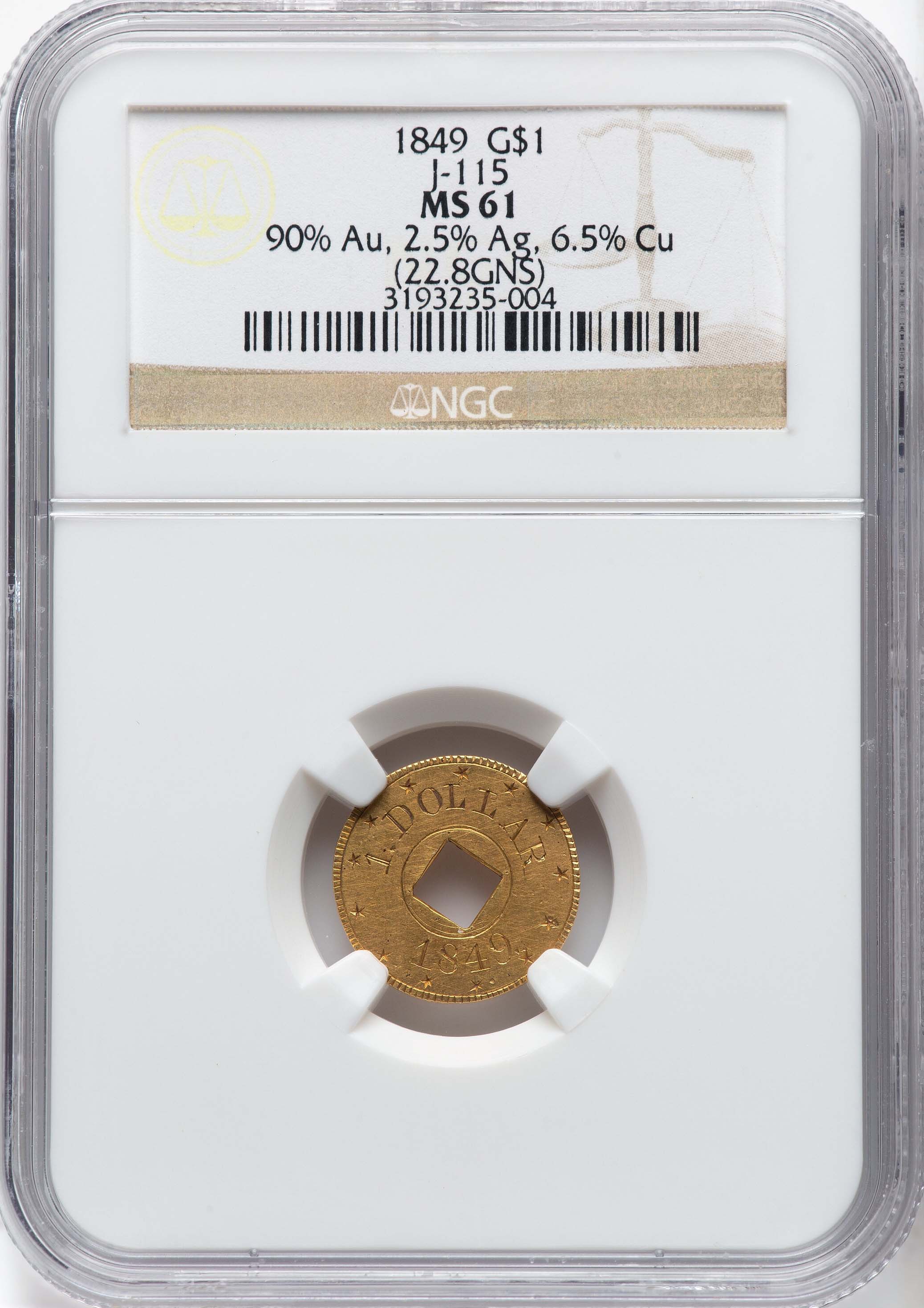
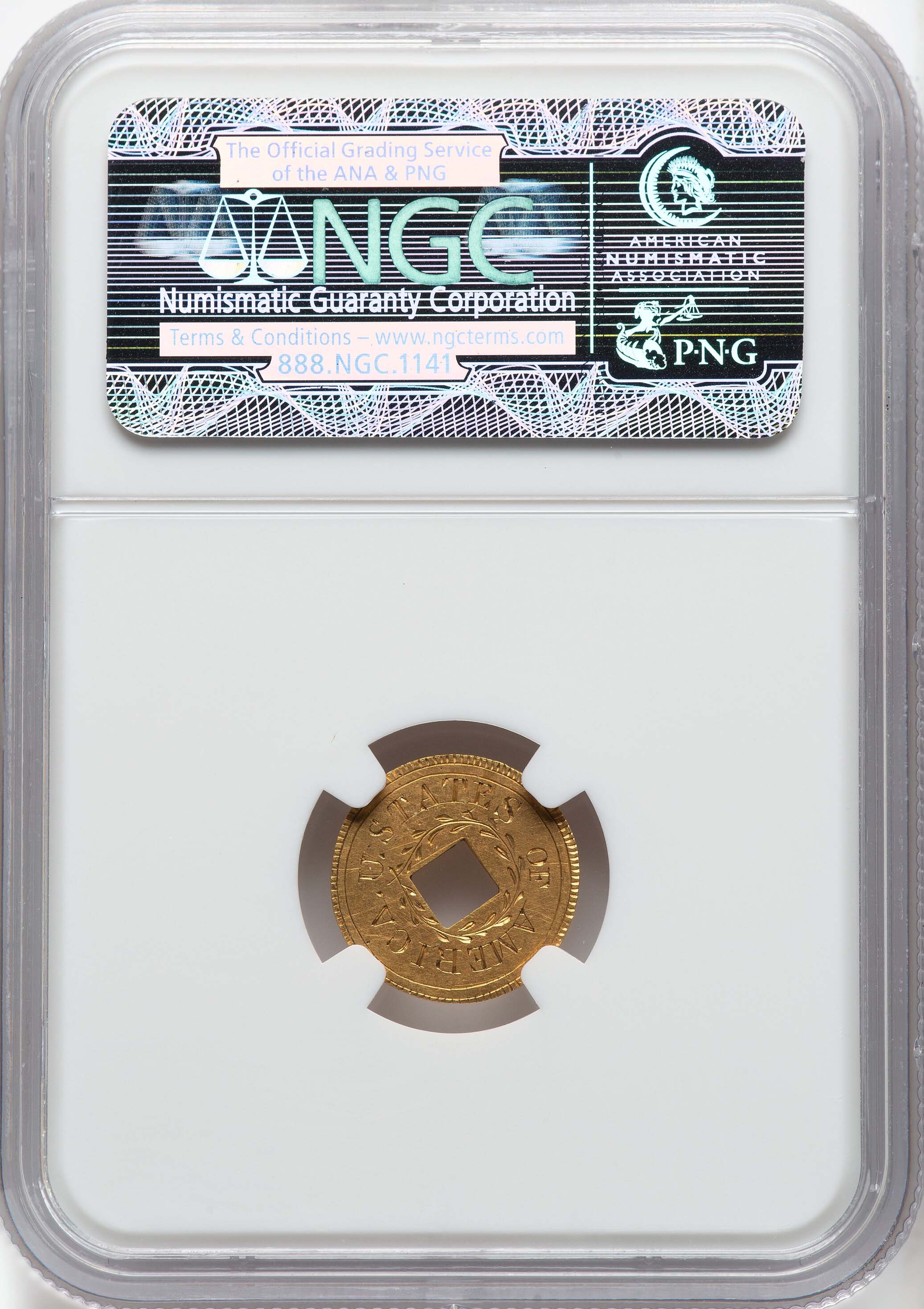
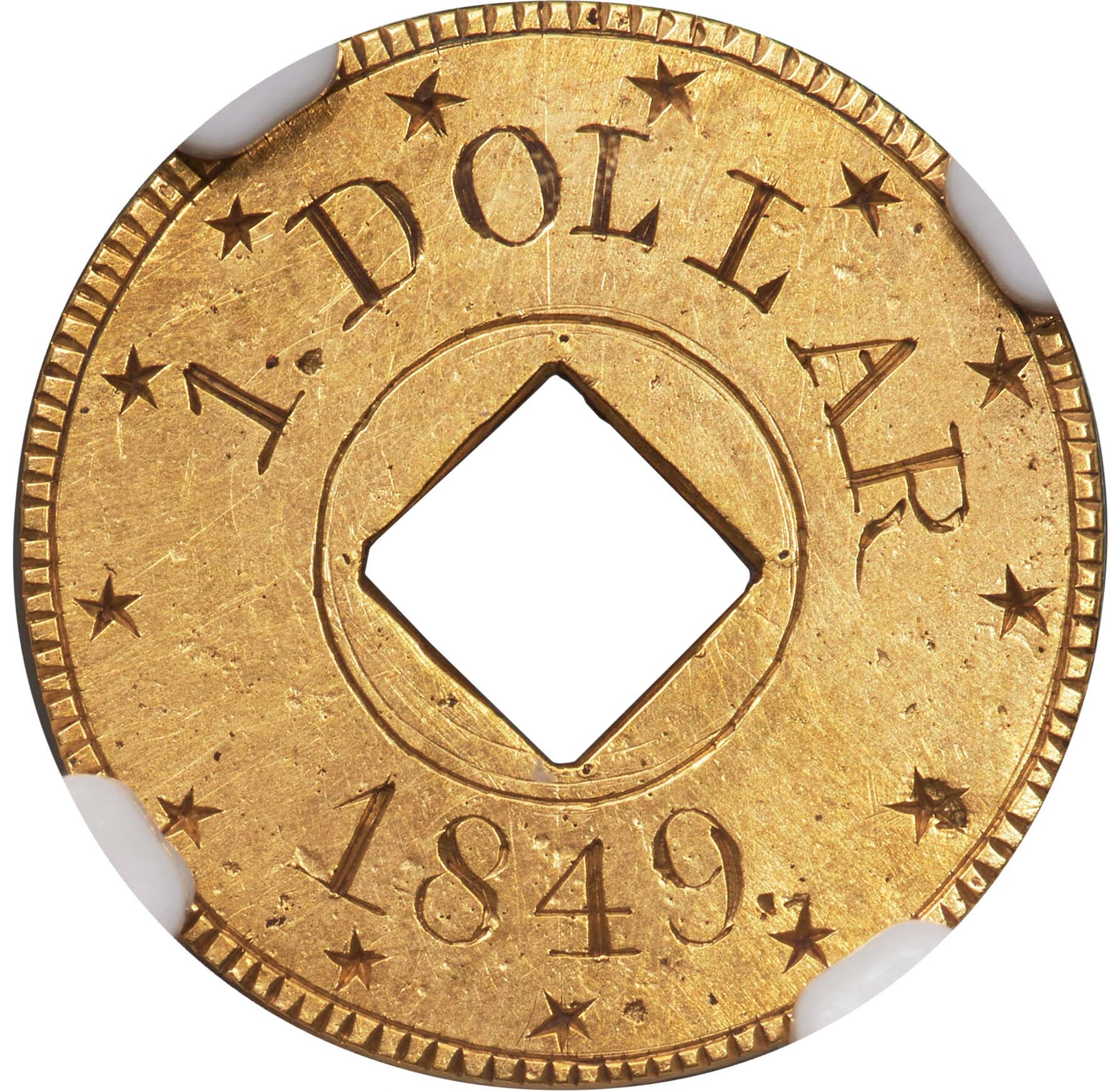
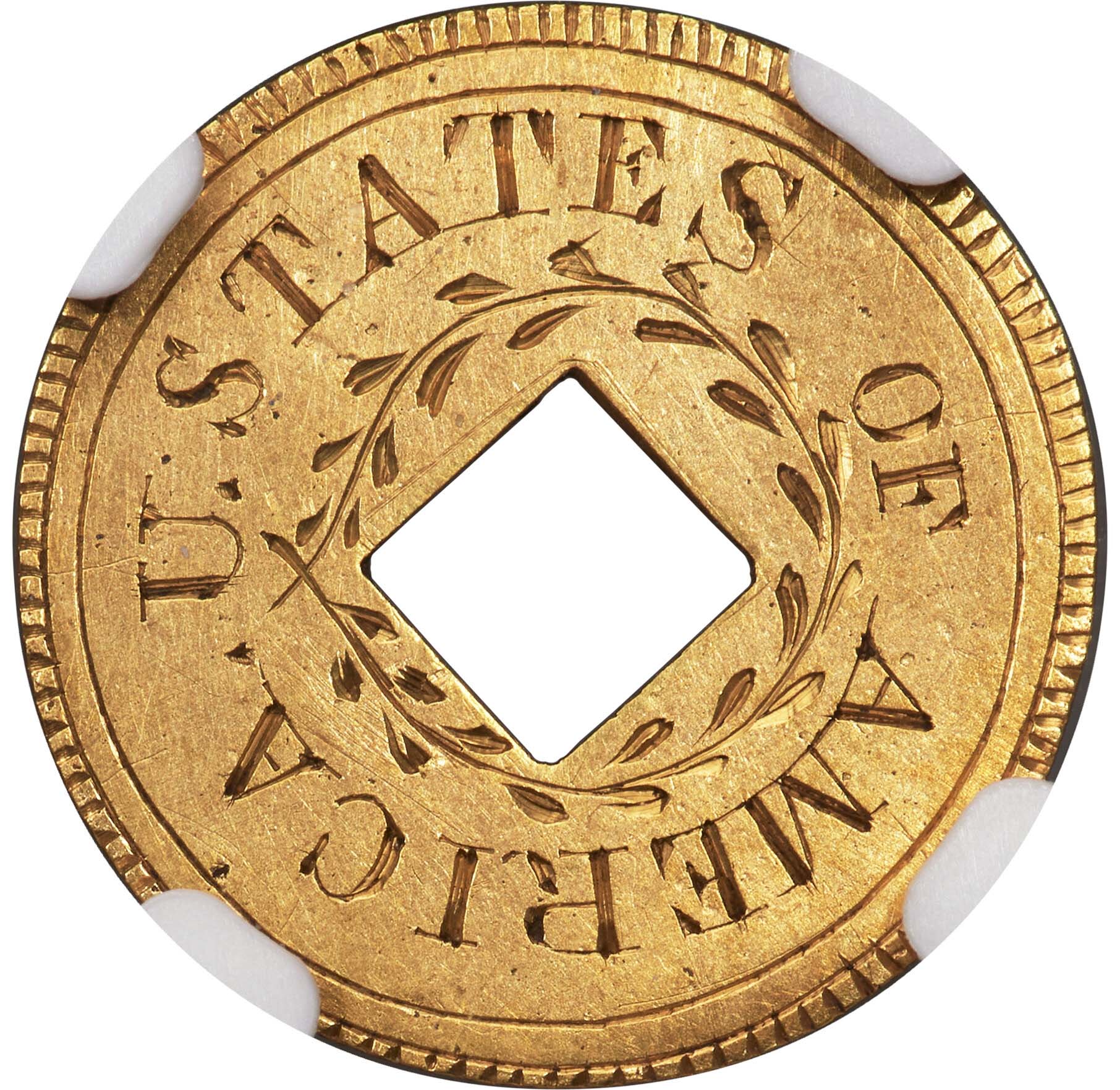
1849 Gold Dollar, Judd-115, Pollock-130, High R.7, MS61 NGC. A simply laid-out coin with a square central perforation. On the obverse, around the perforation, is the legend 1.DOLLAR. 1849. The reverse displays a laurel wreath around the perforated center and outside that U. STATES OF AMERICA. Struck in gold with a plain edge. Composition - 90% gold, 2.5% silver, 6.5% copper, weight = 22.8 grains.
This is the only U.S. pattern that was hand-engraved, and as such it is distinctive and highly collectible. The necessity for hand-engraving and the larger history of these pieces is covered in an in-depth article in The Numismatist in October 2011, written by Ed Rector. In short, these patterns were emergency issues that were hand-engraved to simulate what a struck coin would look like with a square hole in it. They were needed in a hurry because a lame-duck Congressman from North Carolina, James Iver McKay, was pressing hard for the issuance of the pieces (mostly as an outlet for the gold mines from his native state). By January 26, 1849 Congressman McKay was in possession of one of these pieces (presumably this one). On January 30, six additional specimens were produced and sent by Mint Director Robert Maskell Patterson to other Congressmen.
All eight known pieces for the Judd-115s and 116s have been weighed and three have been metallurgically tested. This particular piece is by far the heaviest of the seven possible pieces at 22.76 grains and it has a specific gravity of 18 -- pure gold has a specific gravity of 19.3. The gold dollar adopted later in 1849 weighed 25.79 grains. The closest weight of the other six pieces is 19.02 grains. The lightest of the six others is the Chase Manhattan piece that weighed only 15.28 grains. Metallurgical testing of two of the other pieces showed a gold content of only 52.7% and 51% gold. Close examination of the eight known Judd-115/116 patterns strongly suggests the present piece may be the only actual Judd-115 in existence, as it is the only piece struck in coin gold (90% gold). The other six specimens should more properly be designated as Judd-116s. The tests conducted on those other six pieces also recommend reexamining the assertion that the Judd-116 pieces are gold-plated silver. Instead it suggests they are gold-silver-copper alloy pieces, but not gold-plated.
This piece is an attractive example with lustrous, lightly marked antique-gold surfaces. A small mark near the reverse rim at 2 o'clock serves as a useful pedigree marker. The eye appeal is outstanding.
Ex: Colonel James Flanagan (Stack's, 3/1944), lot 1559, sold to "J.B." (Jake Bell?); King Farouk; Palace Collections of Egypt (Sotheby's, 2/1954), lot 331; Abe Kosoff; Harold Bareford Collection (Stack's, 12/1978), lot 2; Central States Signature (Heritage, 4/2015), lot 5529.
1879 Metric Double Eagle Pattern, PR64+ Deep Cameo
Famous Quintuple Stella, Judd-1643
Only Four Examples in Private Hands
Finest-Certified Example, Ex: Simpson
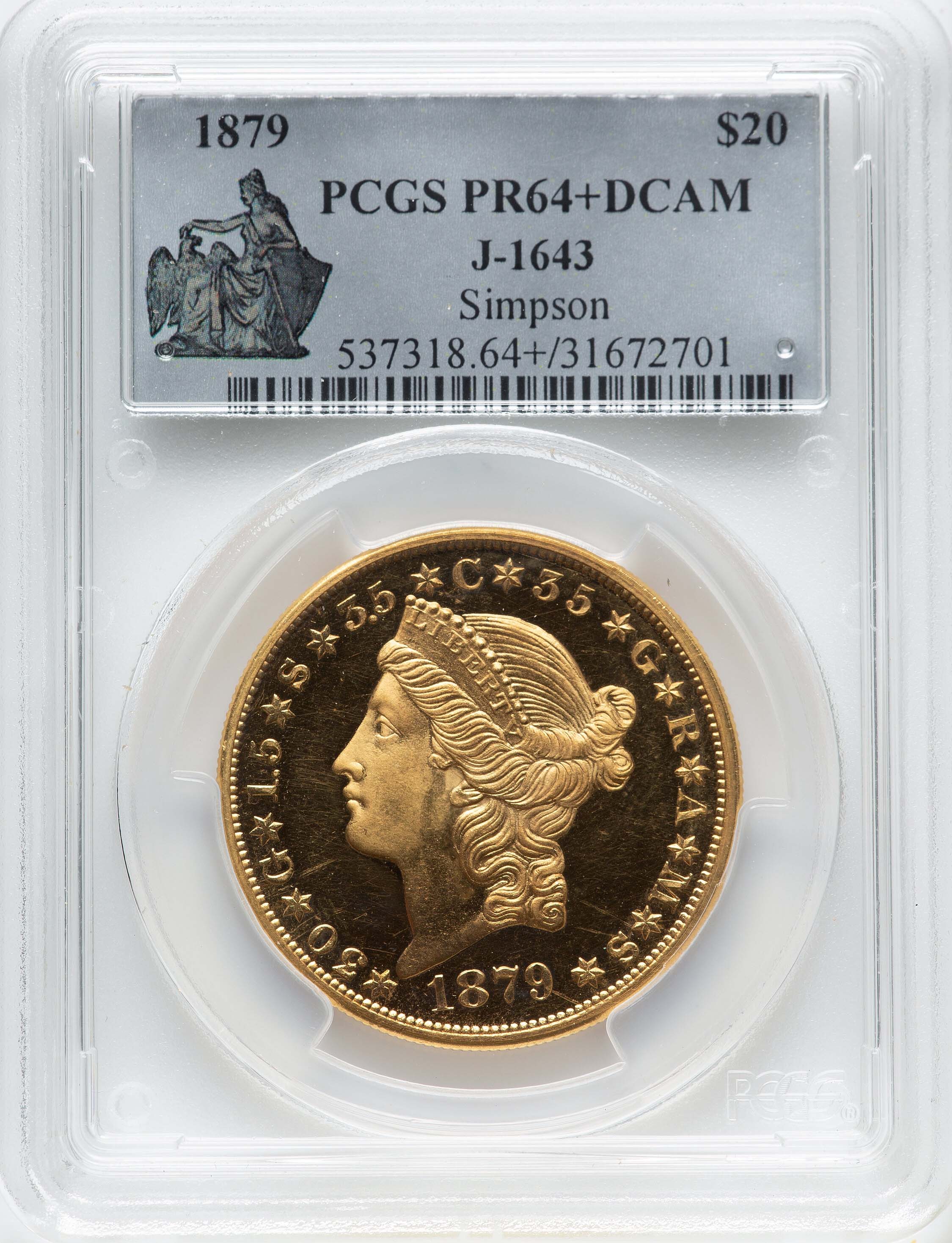
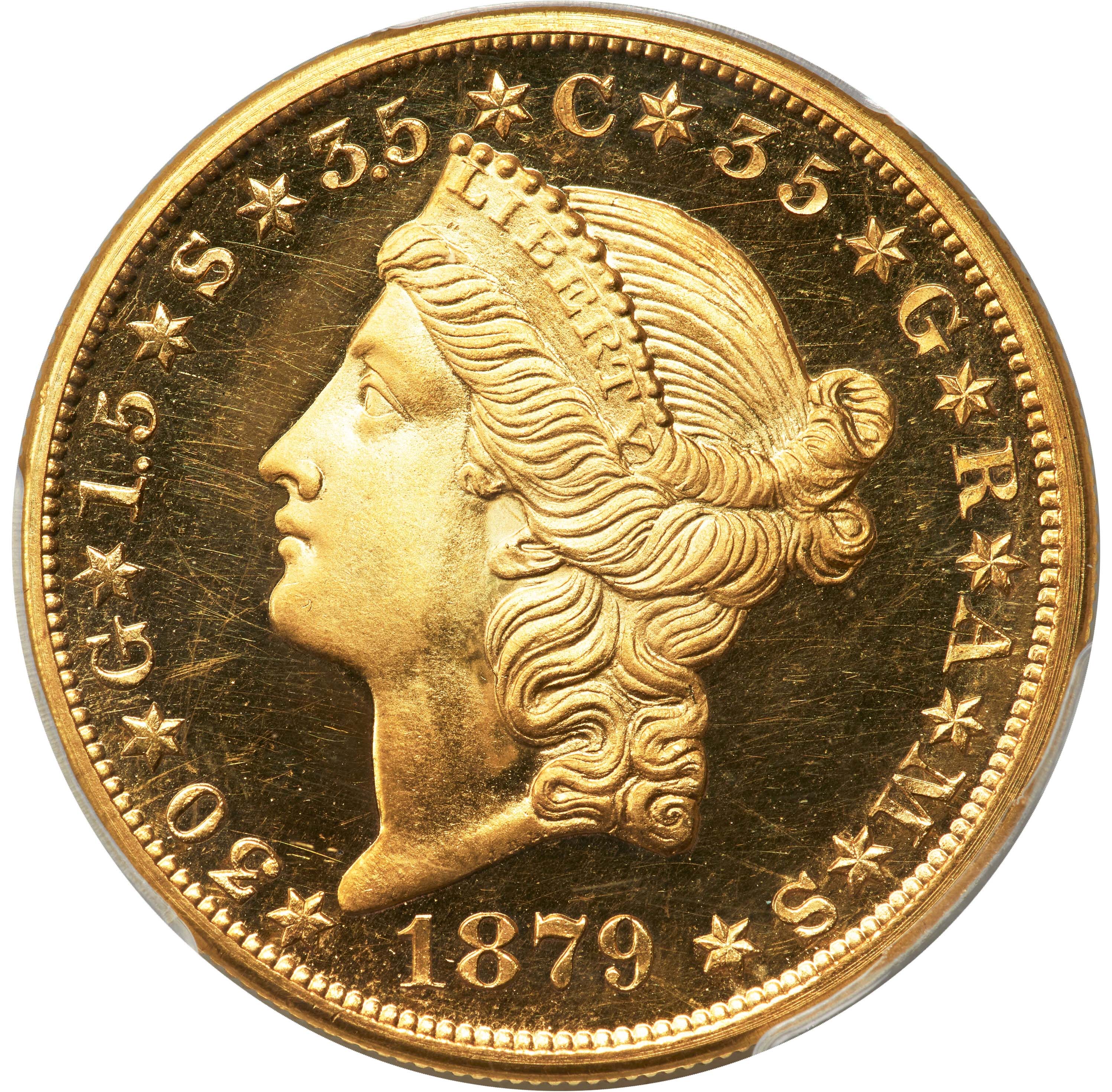
1879 Liberty Head Quintuple Stella, Judd-1643, Pollock-1843, Low R.7, PR64+ Deep Cameo PCGS. Ex: Simpson. The 1879 Metric double eagle, or quintuple stella, Judd-1643, is a landmark rarity in the U.S. pattern series. The 1879 Metric double eagles are closely associated with their even more famous four-dollar pattern counterparts, the always popular stellas of 1879 and 1880, but they are much rarer. Despite inflated population data from the leading grading services, only five examples have been traced, and one of them is included in the National Numismatic Collection at the Smithsonian Institution, forever out of reach of eager collectors. Heritage Auctions is privileged to present the finest-certified example of this sought-after pattern rarity, from the magnificent Bob R. Simpson Collection, in this important offering.
Design
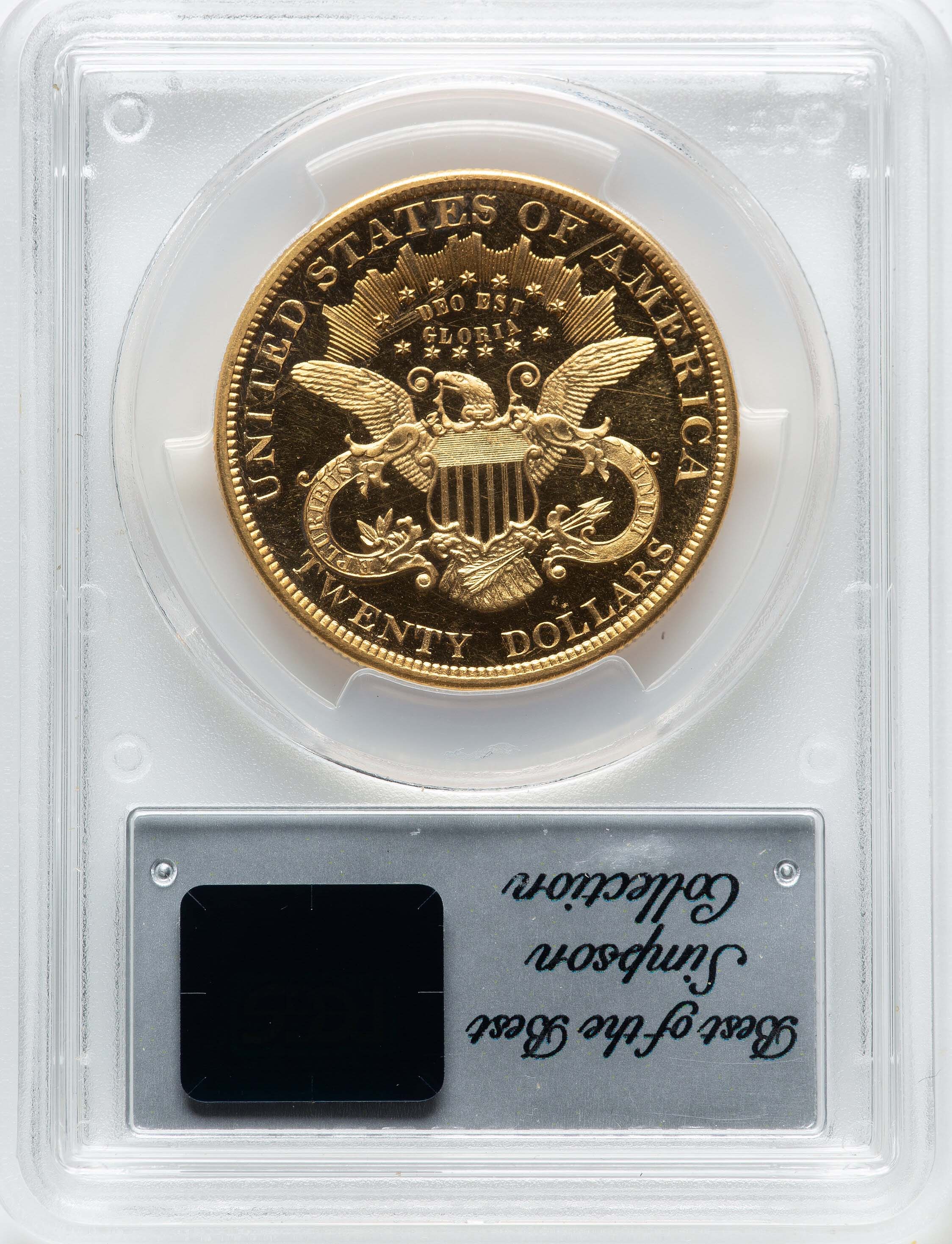
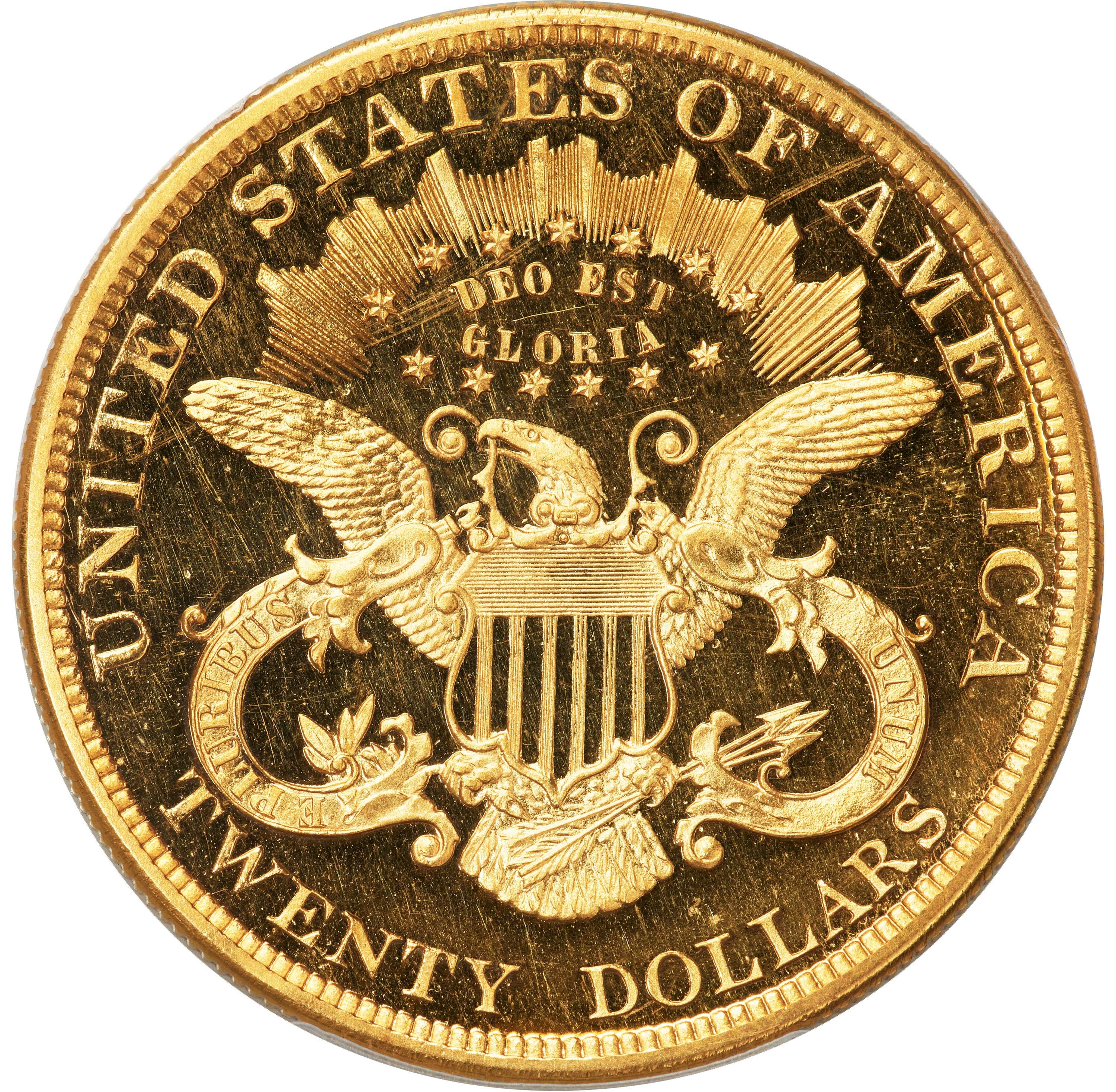
The obverse features the Liberty Head profile from the regular issue double eagle, although it does not appear to be struck from the Type Three hub used for regular issue pieces. The standard diagonal die line from the hair to the left side of Y is not present, as it is on all regular issue pieces of the Type Three design. The legend is a variation of the legend on the four dollar stella, spelling out the goloid composition and weight of the coin: ★ 30 ★ G ★ 1.5 ★ S ★ 3.5 ★ C ★ 35 ★ G ★ R ★ A ★ M ★ S ★ . The date is below the bust and the initials J.B.L. (James B. Longacre) are located on the bust truncation. The reverse is similar to the regular issue piece with an eagle and shield design, the legend E PLURIBUS UNUM on the scroll work to the left and right. Around, the legend UNITED STATES OF AMERICA, and below, the denomination TWENTY DOLLARS. An oval of stars and a glory of rays above the eagle contain the motto DEO EST GLORIA. This motto is different from the IN GOD WE TRUST inscription on the regular adopted design. The diameter is the same as the standard double eagle (34 mm), but the quintuple stella was designed to be slightly thicker and heavier (35 grams vs. 33.436 grams). Reportedly struck in goloid composition with a reeded edge, but we do not know of any elemental analysis that has been done to establish the composition of the known examples. However, the coin in the Trompeter sale in 1992 was weighed (before its encapsulation in a holder) and found to have the correct weight for the goloid composition of 35.01 grams. The design was also struck in copper (Judd-1644) with about a dozen specimens known, at least five of which have been gilt.
Origin and History of the Quintuple Stella
(The following is reprinted from our 2025 ANA Signature lot description). The always popular four dollar stellas of 1879 and 1880, and their even rarer 20-dollar counterpart, the 1879 quintuple stella, were part of an effort to create an international coinage that would function much like the euro does in the European Union today. Traditionally, the concept of the stella has been ascribed to the Honorable John A. Kasson, the U.S. Minister to Austria in 1879, and former chairman of the Congressional Committee on Coinage, Weights, and Measures. Kasson wrote a letter in 1879 advocating the creation of a coin that could be exchanged directly for the Austrian eight florin piece, which was worth $3.88. However, in the Spring 2015 issue of the Journal of Numismatic Research, Roger W. Burdette notes that while Kasson's letter may have provided the inspiration for a new gold coin at the critical time in 1879, the real impetus behind the creation of the stella came from Dr. William Wheeler Hubbell.
Hubbell was an advocate of the metric system and holder of the patent for the goloid alloy used on a controversial series of patterns in the late 1870s. Goloid was a composition of gold, silver, and copper, combined in various proportions. Accordingly, Hubbell proposed a four dollar stella as an approximation of Kasson's suggested $3.88 coin. The stella would have a composition of six grams of gold, 3 decigrams of silver, and 7 decigrams of copper, and a weight of 7 grams. The quintuple stella would have the same composition, with each element multiplied by five. In the same Journal of Numismatic Research article (Spring 2015), Roger Burdette notes the metric gold coinage was reported favorably to the House of Representatives on January 21, 1879 and a February 4, 1879-dated letter from Acting Mint Director Robert Preston to the Philadelphia Mint acknowledged receipt of three examples of the quintuple stella:
"Your letter of the 3rd inst., notifying this office of the shipment by Adams' Express Co. of three specimens of the Metric Double Eagle pieces for the House Committee on Coinage has been received. The coins have also been delivered by the express company."
Roger Burdette believes two other examples were struck at the same time for the Mint Cabinet. These coins were apparently later sold or traded to collectors by Mint officials. Another letter from Acting Director Preston on June 4, 1880 reports:
"There were only five Metric double eagles struck, and none of which are in the possession of this office, and as the dies have been destroyed, no more can be struck."
The 1887 Mint Collection pattern inventory by James McClure records the two quintuple stellas, but no gold specimens of this issue are mentioned in Louis Comparette's 1912 catalog of the Mint Collection. It seems all five of the 1879 quintuple stellas eventually made their way into collector's hands, but a single example has been donated back to the National Numismatic Collection by Stack's in recent times. All five pieces of the original mintage can be accounted for today (see roster below). Like the four dollar stellas, the 1879 Metric double eagle never progressed beyond the pattern stage.
Collectors became aware of the quintuple stellas soon after the coins were struck. The discovery coin was presented to Dr. William Wheeler Hubbell, the inventor of the special alloy for the international coinage program. It first appeared at auction in Philadelphia coin dealer John W. Haseltine's famous "Type Table" auction in 1881, just two years after its striking. Haseltine provided a lengthy description of the coin in lot 1490 of that sale:
"1879; Metric Gold Double Eagle or $20 Piece; obv., the head of Liberty; 13 stars interspersed with 30 G - 1.5 S - 3.5 C - 35 Grams; rev., spread eagle; "United States of America; Twenty Dollars;" motto, "Deo Est Gloria," emblazoned; struck by resolution of Congress and the only one issued; this is the first and only coin extant of the metric system of this denomination; there were 5 struck at the United States Mint, 3 in gold and 2 in copper; the copper specimens are in the Mint Cabinet; the other 2 gold pieces are in the Treasury Department, at Washington, which the Secretary of the Treasury positively refused to issue to any one; therefore, this is the only specimen issued, which was granted to Mr. W.W. Hubbell, the inventor; color, orange gold; weight 25 grammes; very beautiful; one of the rarest and most interesting coins in the world; it is limited to $300."
Haseltine was an insider, with excellent connections at the Mint. He seems to have had access to important information about the coin and may have seen the letter from Acting Director Roberts acknowledging the receipt of the three quintuple stellas sent to Congress. Curiously, he was not aware of the two gold specimens in the Mint Cabinet. In any case, while authorities undoubtedly opposed releasing the quintuple stellas to collectors at the time of striking, all five examples eventually reached the numismatic marketplace.
The manner in which the coins became available to collectors is not known, but prominent dealer H.P. Smith handled the lion's share of examples sold in the 19th century. In addition to handling the discovery coin twice, his New York Coin & Stamp firm offered the only other specimen of the quintuple stella to appear at auction in the 19th century in their Robert Coulton Davis auction in 1890. After his death, the Chapman brothers auctioned his collection and found another specimen in his holdings. He certainly had a strong affinity for this ultra-rare pattern issue.
By the early 20th century, all five quintuple stellas found homes in tightly held, long-term collections. The discovery coin became a highlight of the famous Garrett Collection and the coin from H.P. Smith's holdings eventually passed to the celebrated collection of Louis E. Eliasberg. The other three coins, including the specimen offered here, were all acquired by super-collector Virgil Brand at an early date. The coins remained in these high-profile collections for extended periods and, even when those collections were dispersed, public offerings were few and far between over the years. As might be expected, any offering of an 1879 quintuple stella represents an important opportunity for advanced collectors and is widely reported in the numismatic press.
John Dannreuther notes that collecting the four dollar stellas has become extremely popular with collectors in recent years. The 1879 quintuple stella would be a natural complement to an advanced collection of four dollar stellas. With only five examples known, it would be the rarest piece and a marvelous capstone to such a collection. We believe the quintuple stella is underpriced and long overdue for a breakout in the present market. We would not be surprised to see a record price realized set when the finest-certified present coin crosses the auction block.
The Present Coin
The coin offered here was once a highlight of the fabulous collection of super collector Virgil Brand, who formed one of the largest and most valuable coin collections of all time. In fact, Brand owned more than one example of this iconic pattern rarity. According to his records, Brand acquired one example from dealer Charles Steigerwalt in 1894 and two others from Stephen Nagy in 1907. Unfortunately, Brand's records are not clear about the distribution of the three coins, and we have not been able to determine which source this coin came from, or how it was dispersed from Brand's holdings. The collection, which numbered more than 350,000 pieces, was split between his heirs in a contentious process and his holdings were not completely dispersed for more than fifty years, further obscuring the early history of this coin.
The next appearance, and first public offering, of this remarkable specimen was in lot 624 of the Fred Olsen Collection, which was auctioned by B. Max Mehl in November 1944. Mehl gave the coin a rare full-page lot description, liberally quoting the standard Adams-Woodin pattern reference and emphasizing its rarity and visual appeal:
"1879 Five-Stella Coin. Beautiful head of Liberty with the portions of different metals contained therein, and its weight, around the head. Reverse, type similar to regular issue. Struck in gold. Perfect brilliant proof. A gem. According to A-W only four specimens were struck. Listed in A-W as No. 1572, Rarity 13.
"The important advantages of this Metric Gold Coin are that the gold is even 30 grams, the silver even 1.5 grams, the copper 3.5 grams. The gold, therefore, is standard .9 fine and the silver is .9 fine in the coin, and the total weight is even 35 grams, and is precisely $20 in value. The superiority of the metal for constancy in value is strikingly shown by the fact that although it measures the same in diameter and on a plane as the binary $20 coin, it (the metric) is 24 grains heavier, or 540.25 plus grains in weight, showing as well as in the rich orange color its superiority for practical use, as it flows with a sharper and more distinct finish into the dies.
"To the best of my recollection, this is the first and only specimen I have ever had the pleasure of offering at auction. I have had only one other specimen pass through my hands in my forty-four years of numismatic experience. I do not hesitate to make the statement that this is as beautiful a Double Eagle as ever issued by our government and certainly by far the rarest. In fact, in actual rarity, I doubt if there are more than one or two United States Gold coins which exceed it. A gem and rarity of the highest order and a prized possession for any collection."
The lot realized $3,850, a staggering price for the time. Of course, collector demand for this rare issue has increased prices realized exponentially over the years. Currently, the record price realized for the 1879 quintuple stella is $2,160,000, brought by the PR64 Deep Cameo PCGS example in our ANA Signature Auction last year. That coin was also owned by the present consignor at one time, but he sold it as a duplicate, after he acquired this Plus-graded Choice proof, which he considered superior (see roster below for details).
The next owner of this magnificent specimen was renowned gold pattern specialist Dr. John E. Wilkison, who sold his remarkable collection intact to Paramount International Coin Corporation in 1973. This coin changed hands privately twice and appeared at auction two more times in the following years, before it was acquired by the present consignor.
This 1879 quintuple stella eventually passed to Bob R. Simpson, our consignor, a Texas oilman and co-owner of the Texas Rangers baseball team. Simpson formed an amazing collection of all types of U.S. coinage that has been sold in a series of blockbuster auctions by Heritage in recent years. This coin was acquired when Simpson purchased the Southern Collection, one of the most advanced pattern collections of all time, for a reported $36 million in 2008. It has been off the market for 18 years.
Physical Description
The coin offered here is a magnificent Plus-graded Choice proof with sharply detailed design elements and deeply reflective fields that contrast profoundly with the richly frosted devices. The gold-on-black cameo flash is especially vivid when the coin is tilted in the light. The well-preserved yellow and orange-gold surfaces are free of mentionable distractions and only some minor hairlines in the fields prevent an even higher grade. Overall eye appeal is terrific. This coin possesses an unbeatable combination of absolute rarity, the highest available technical quality, outstanding eye appeal, and an illustrious pedigree. We expect intense competition from pattern specialists and Registry Set enthusiasts when this lot is called. The 1879 quintuple stella is listed among the 100 Greatest U.S. Coins. This coin is pictured on PCGS CoinFacts. PCGS Population: 2 in 64 (1 in 64+) Deep Cameo, 0 finer (6/26).
Roster of 1879 Quintuple Stellas, Judd-1643
This roster is based on the listing in USPatterns.com. Grades are per the last auction appearance, unless a subsequent certification event is known.
1. PR64+ Deep Cameo PCGS. Virgil M. Brand; unknown intermediaries; Fred Olsen Collection (B. Max Mehl, 11/1944), lot 624; Dr. John E. Wilkison Collection; purchased privately by Paramount International Coin Corporation in 1973; A-Mark; Metropolitan New York Sale (New England Rare Coin Auctions, 4/1980), lot 391; 65th Anniversary Auction (Stack's, 10/2000), lot 1626; Southern Collection; Bob R. Simpson Collection. Illustrated on USPatterns.com and in the Encyclopedia of U.S. Gold Coins: 1795-1933 by Jeff Garrett and Ron Guth. The present coin.
2. PR64 Deep Cameo PCGS. Virgil M. Brand; unknown intermediaries; Amon Carter, Sr.; Amon Carter, Jr., Carter Family Collection (Stack's, 1/1984), lot 635; Ed Trompeter; Trompeter Collection (Superior, 2/1992), lot 138; Heritage inventory (2/1999); Bob R. Simpson; Regency Auction (Legend Numismatics, 5/2016), lot 377, realized $1,880,000; the Costa Collection, via Greg Rohan and Todd Imhof; ANA Signature (Heritage, 8/2025), lot 3299, $2,160,000.
3. PR64 Cameo PCGS. Harlan Page Smith Collection (S.H. & H. Chapman, 5/1906), lot 1444; John Story Jenks Collection (Henry Chapman, 11/1921), lot 5680; Elmer Sears (possibly as agent for the next): John H. Clapp; Clapp Estate; Louis E. Eliasberg, Sr. in 1942, via Stack's; Eliasberg Estate; Eliasberg Collection, Part I (Bowers and Merena, 5/1996), lot 313; Chicago Rarities Night Sale (Bowers and Merena, 4/2008), lot 734.
4. PR63 Cameo PCGS. United States Mint; Dr. William Wheeler Hubbell; John W. Haseltine; "Type Table" Catalog (John W. Haseltine, 11/1881), lot 1490; Hebbeard Collection (Harlan Page Smith, 4/1883), lot 458; Dr. Edward Maris Collection (Harlan Page Smith, 6/1886), lot 230; T. Harrison Garrett; Robert and John Work Garrett, by bequest in 1888; John Work Garrett bought out or traded for his brother's interest in the collection circa 1919; Garrett Estate; Johns Hopkins University, by bequest; Garrett Collection, Part II (Bowers and Ruddy, 3/1980), lot 1097; Ed Trompeter; Moreira Collection (Superior, 1/1989), lot 4026; FUN Signature (Heritage, 1/2007), lot 1594, realized $862,500; FUN Signature (Heritage, 1/2022), lot 4793.
5. Proof (Uncertified). Virgil M. Brand; unknown intermediaries; Adolphe Menjou Collection (Numismatic Gallery, 6/1950), lot 1818; King Farouk; Palace Collections of Egypt (Sotheby's, 2/1954), lot 294; ANA Convention Auction (Abe Kosoff, 8/1958), lot 1676; Auction '79 (Stack's, 7/1979), lot 950; Stack's; gifted to the National Numismatic Collection at the Smithsonian Institution.
Additional Appearances
A. Waldo Newcomer; "Colonel" E.H.R. Green; offered by B.G. Johnson to F.C.C. Boyd in a January 1944 invoice for $1,250. Probably the coin in number 5 above, but not confirmed.
B. Charles Steigerwalt; purchased by Virgil Brand in 1894 for $100, Brand journal number 12582; Armin Brand; sold to B.G. Johnson on 12/1/1937. Possibly the coin in number 1, 2, or 5 above.
C. Robert Coulton Davis Collection (New York Coin & Stamp, 1/1890), lot 1127. Possibly the coin in number 3 or B above.
D. Stephen Nagy; purchased by Virgil Brand in 1907 for $150, Brand journal number 38942. Possibly the coin in number 1, 2, or 5 above.
E. Stephen Nagy; purchased by Virgil Brand in 1907 for $150; Brand journal number 38943. Possibly the coin in number 1, 2, or 5 above.
Note: One of the coins in D or E above went to Horace Brand and the other was no longer in the collection when the brothers split their inheritance.