 The rarity of an error is not only based on how dramatic the coin looks or by the immediate impact it has on an observer. Sometimes the rarity of an error coin is in the combination between what might typically be viewed as a minor error type, and a rare host coin for that error. That combination can create some numismatic magic.
For example, say you had a 50% off-center cent. It might not be that impressive if it was a modern Lincoln cent. But let's say it was a similarly off-center 1793 chain cent? Now you have something extraordinary. A misaligned die error isn't often immediately impressive. However, the coin in this article takes what would otherwise be a simple and commonplace error and transforms it into something truly extraordinary.
A misaligned die occurs when the hammer die in a hammer / anvil die pair becomes loose. Imagine the anvil die as stationary. It is typically the reverse die, on the bottom, showing the reverse of the coin when struck. The hammer die is the obverse, and it comes down in a vertical coin press to strike a planchet resting on the anvil die. If the obverse (or hammer) die becomes loose and therefore misaligned in relation to the reverse or anvil die, the strike will appear on the obverse side to be off center, while the reverse side will be perfectly centered. The collar remains in normal position.
Collectors often make a purchasing mistake when they only see the obverse of a coin which looks off center and buy it, thinking that they are buying an off-center coin. Unless they flip the coin over they might be buying a misaligned die strike. Once they see the reverse perfectly centered, the situation becomes obvious. The misaligned obverse doesn't mean that the coin was struck fully out of collar as is the case with an off-center coin.
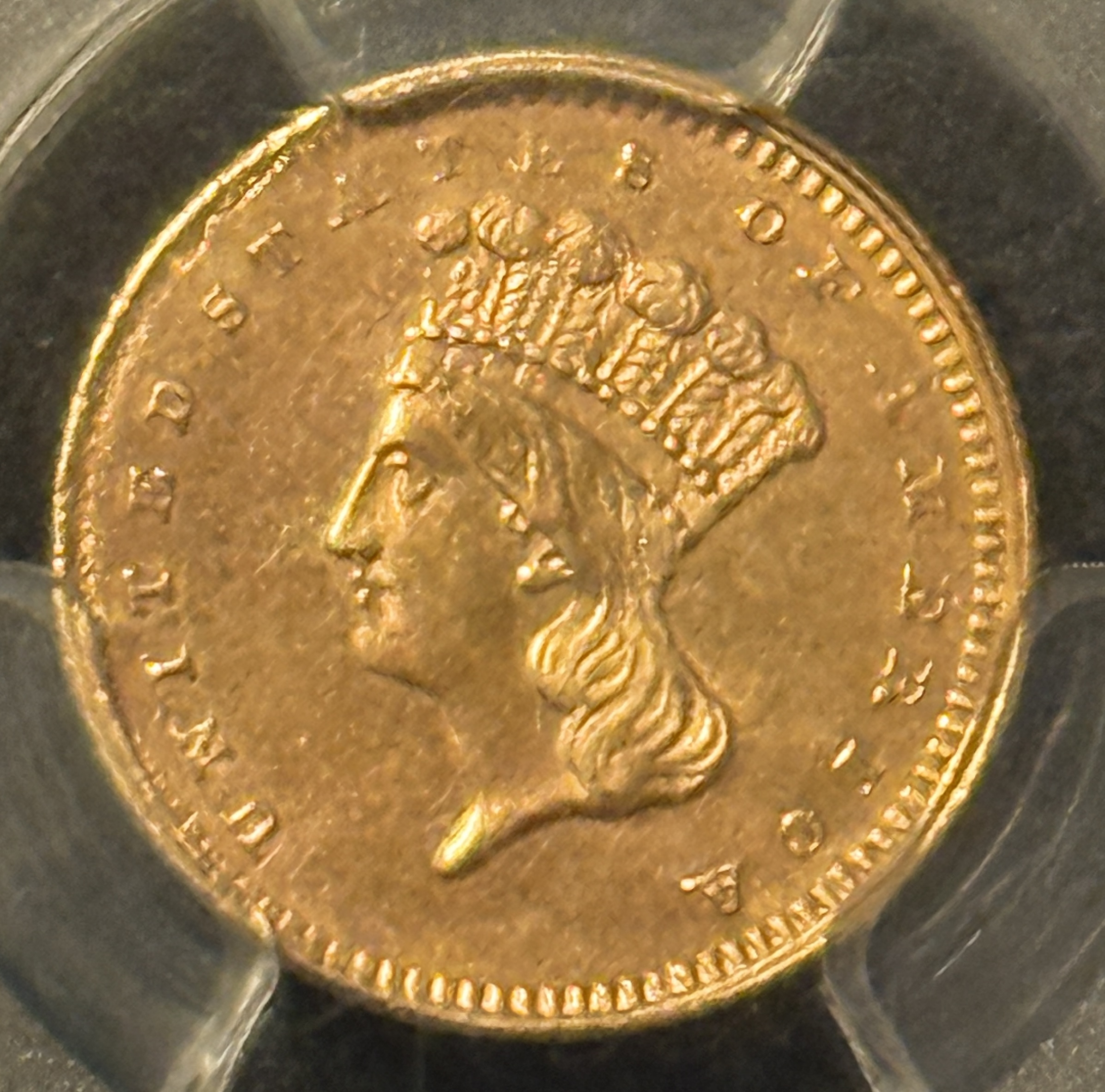
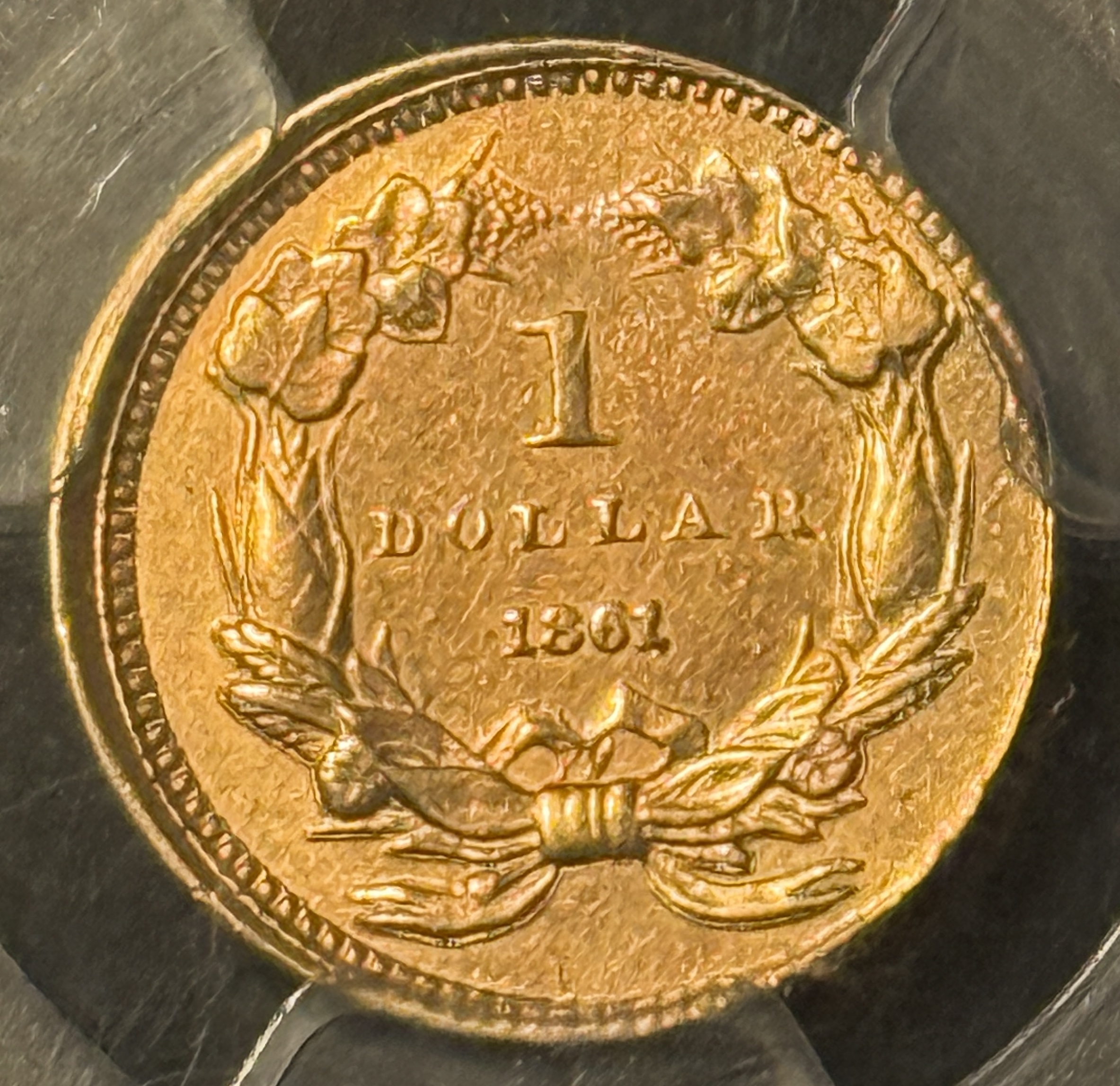
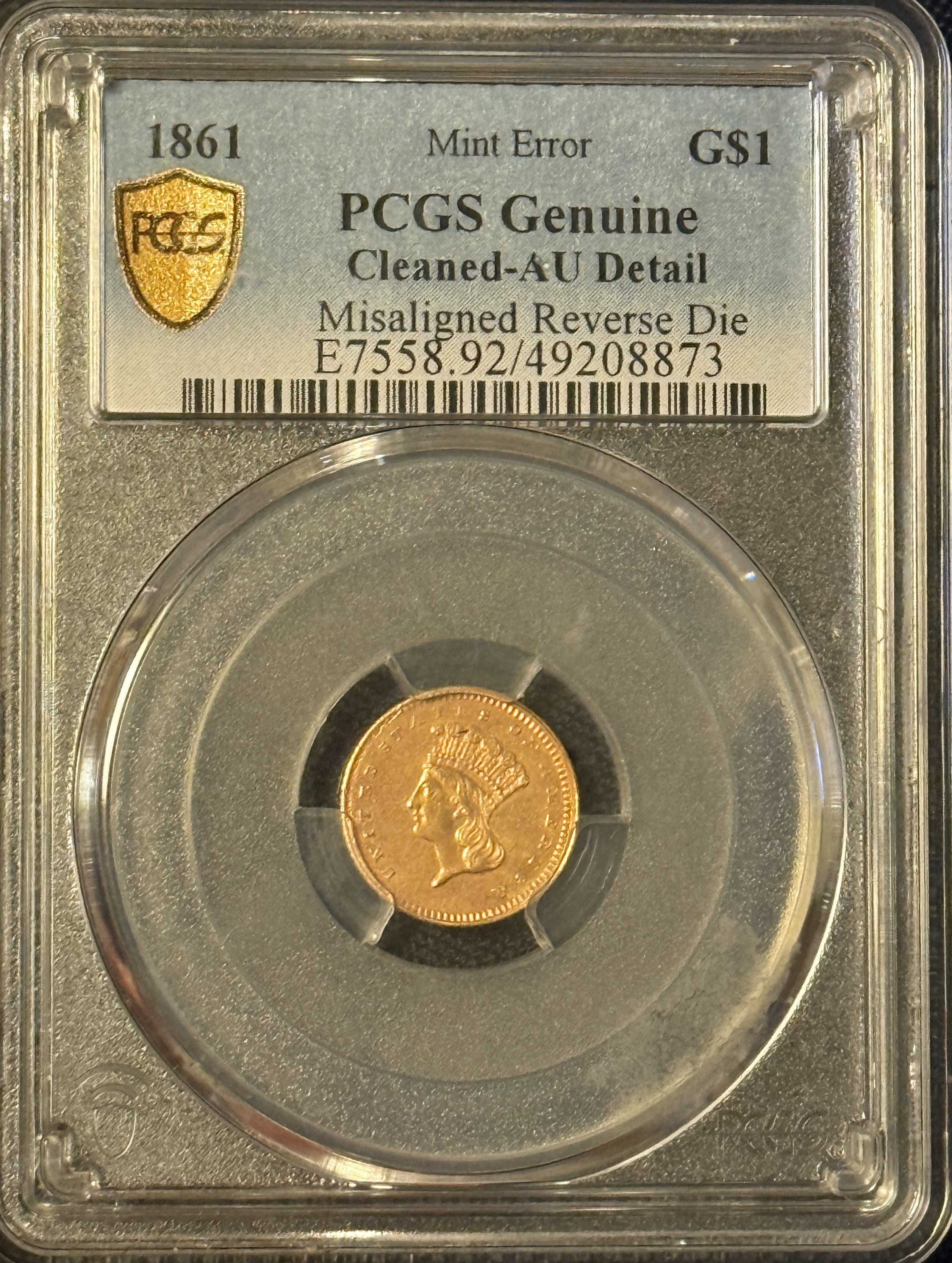
What makes the coin in question today particularly interesting is that it is on an extremely rare host coin. Major errors on gold coins are few and far between, especially on classic American gold type coins. They are extremely rare. Finding an example of a major error on a gold coin is rare due to the fact that gold was carefully monitored at the mint and mistakes were retained and melted for reuse.
In the case of this coin, a typical error type is now quite remarkable for two reasons. First, this is a misaligned die on a 1861 $1 dollar gold coin. This, in and of itself, is rare it is. In addition, this particular coin tells us something truly interesting about the minting process. You will note that it is the reverse of the coin that is misaligned, and not the obverse. This that tells us that the reverse die was the hammer die and the obverse was the stationary, lower, anvil die. This is quite unusual on US coinage with only a few series using this die orientation. Mercury dimes use this die orientation. Buffalo nickels as well used this die orientation. I own a misaligned reverse die Mercury dime. This gold coin proves yet another coin type which also has the same die orientation.
Overall, this is a wonderful rarity and excellent educational piece and is one that would be extremely hard, if not impossible, to find again in the numismatic marketplace.