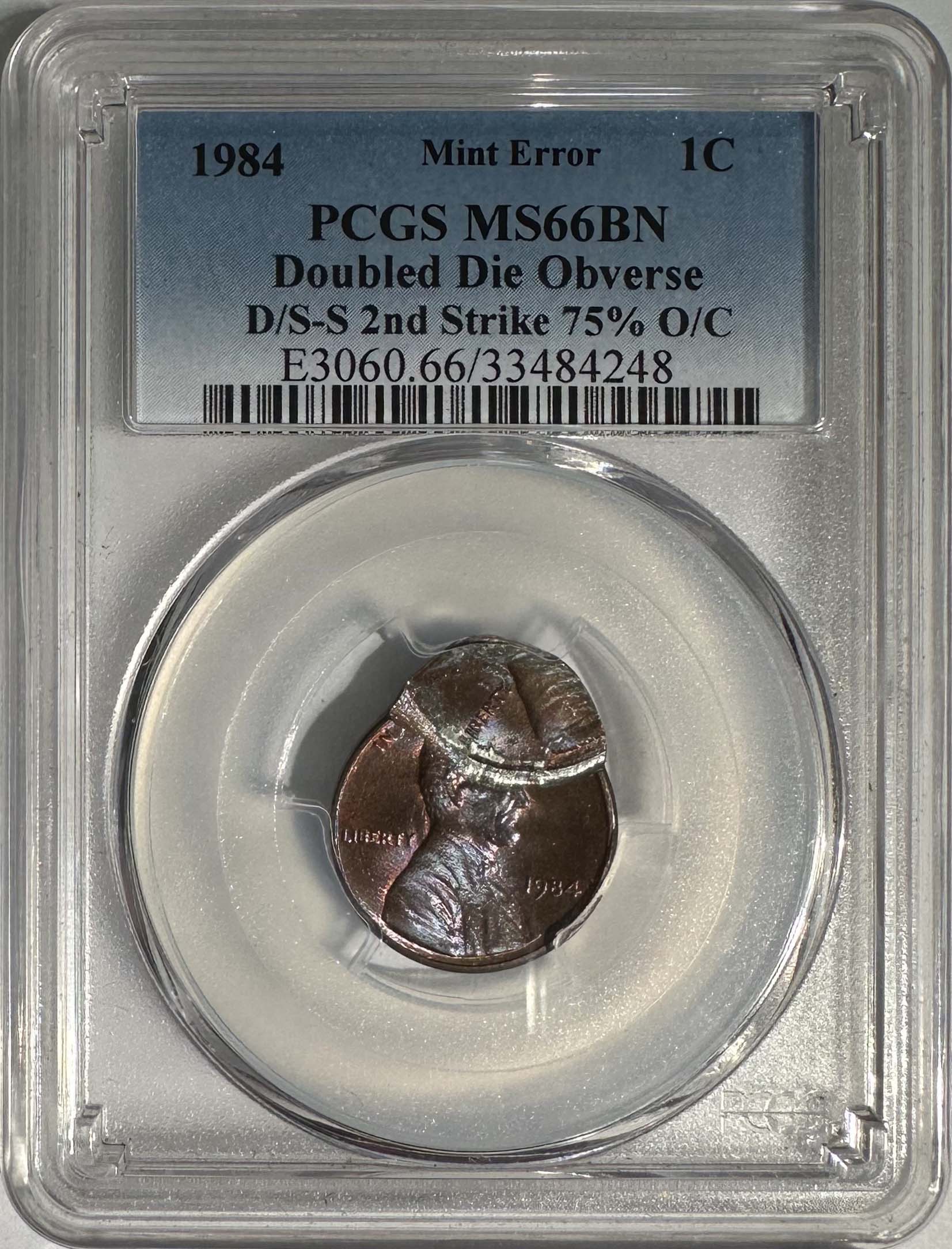
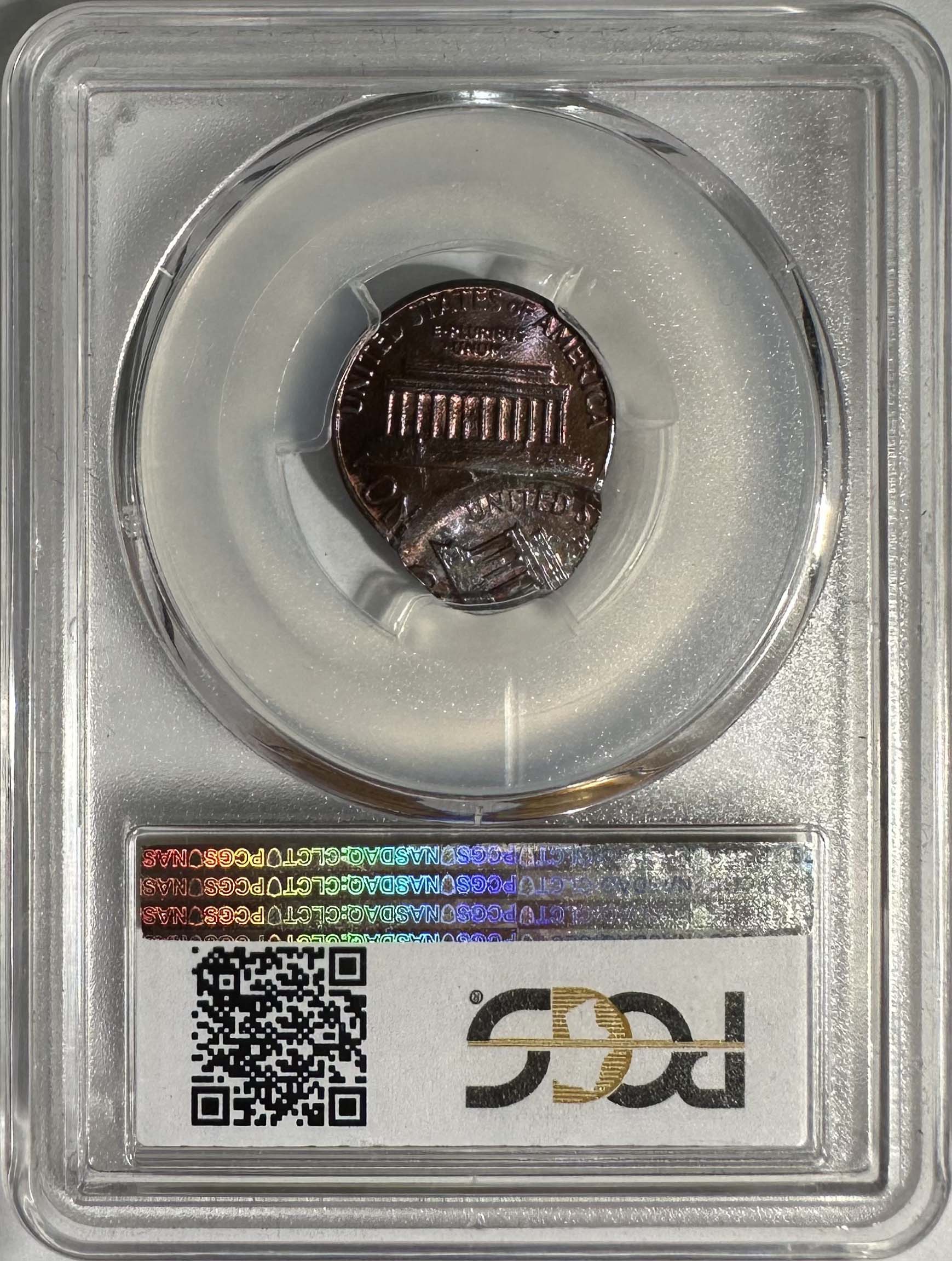
This Lincoln cent transcends the mint error category for several reasons. It is the only known major striking error on a modern U.S. coin with a well known die variety. It is perfect for a major mint error collection of unique errors, a collection of die varieties, a collection of doubled dies, or a collection of Lincoln cents.
Major die varieties such as doubled dies and overdates are very popular and widely collected. There are other known die varieties other than these two but the collector interest and value centers on the rarer and more famous examples. Focusing on the Lincoln cent series, the most famous doubled dies are dated 1917, 1936, 1955, 1958, 1969-S, 1970-S, 1972, 1983, 1984, and 1992.
An extremely rare example just sold for $64,000 on April 26, 2026 in a David Lawrence auction and had a catalog price of $300. It was a 1988 Lincoln cent doubled die with a doubled ear FS-101 PCGS MS63RB and one of only three graded at PCGS.
There are minor striking errors and planchet errors found on some die varieties. These include clipped planchets, tapered planchets, broadstrikes, slightly off-center strikes, laminations, struck throughs, cuds, and partial collars.
Going back over 200 years, there are a few U.S. coins that are major die varieties and also are major striking errors. A perfect example recently sold for $558,000 in a Heritage auction. It was a 1794 Large Cent, head of '94, S 28 variety, dramatically double struck.
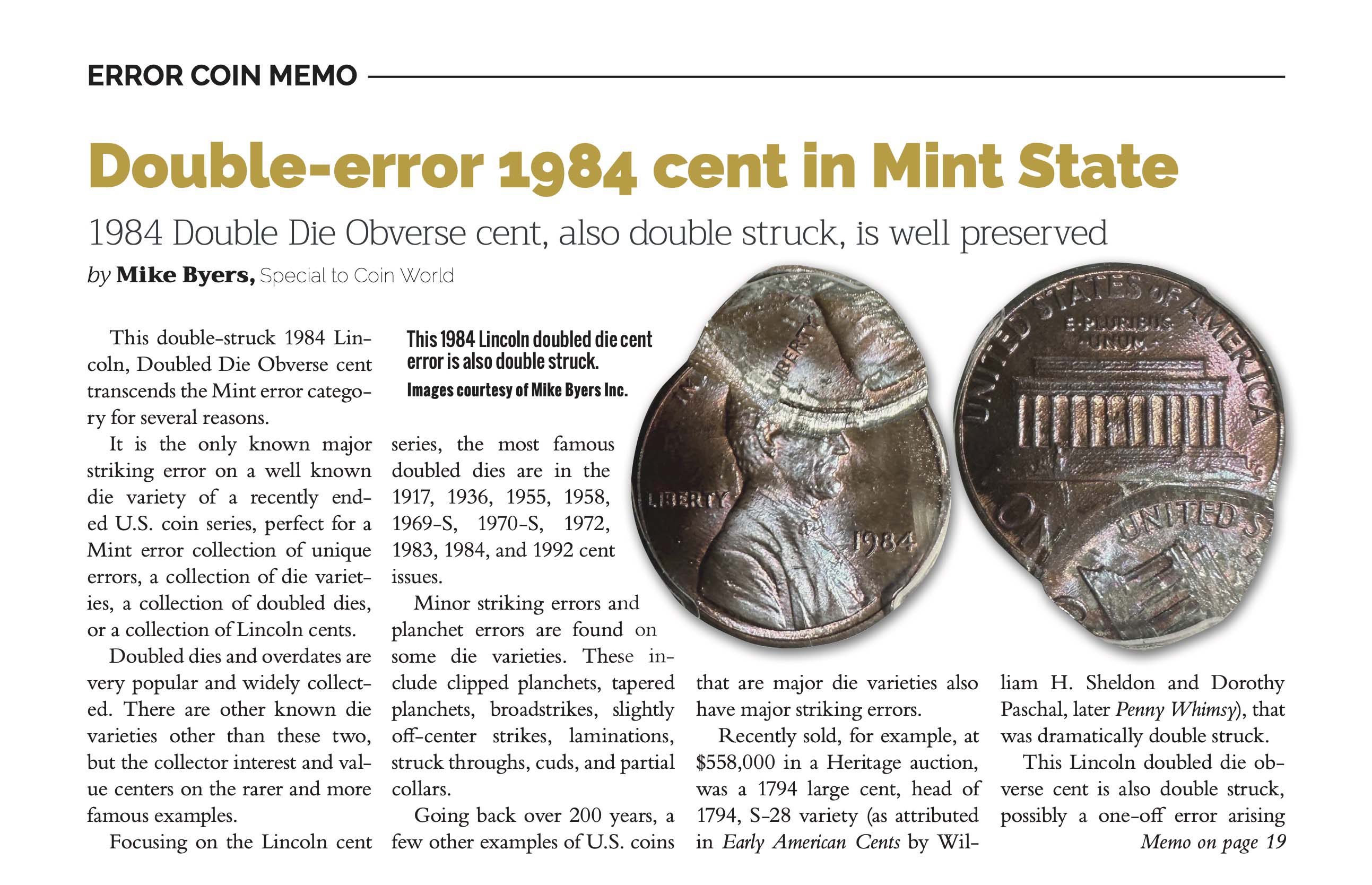
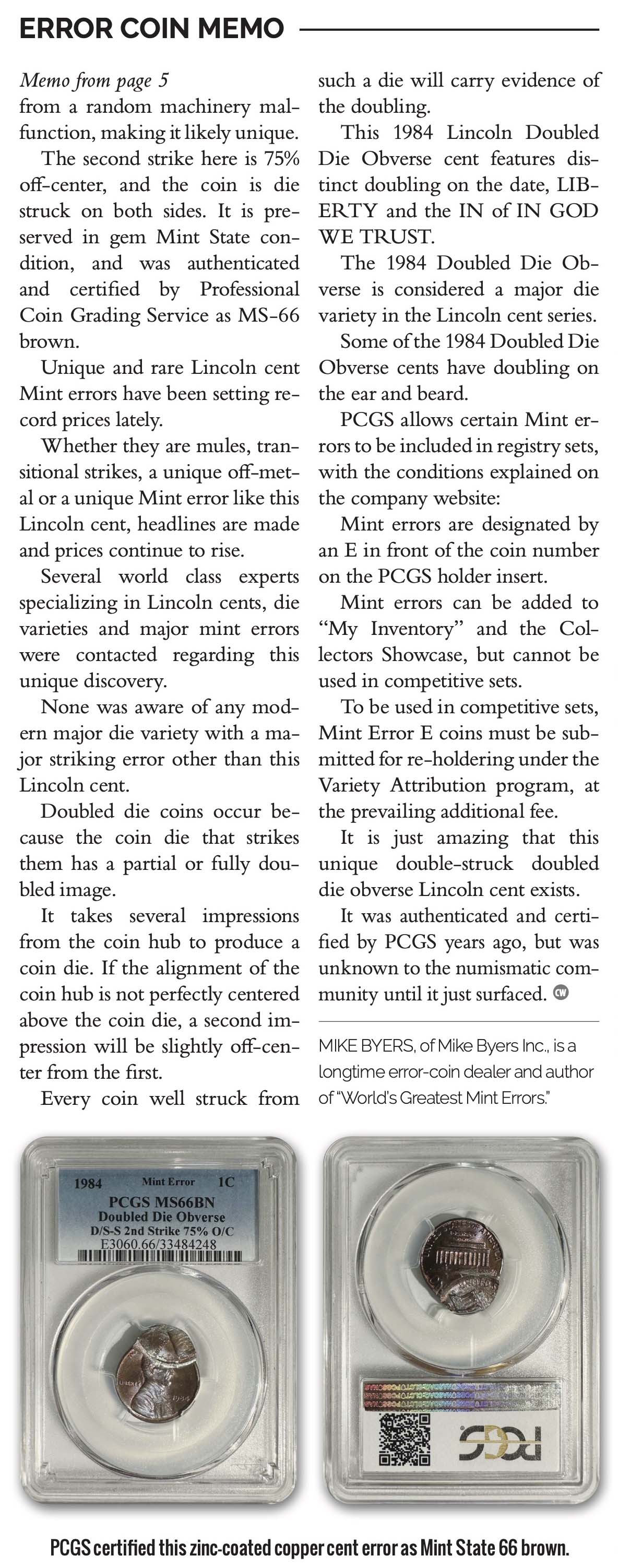
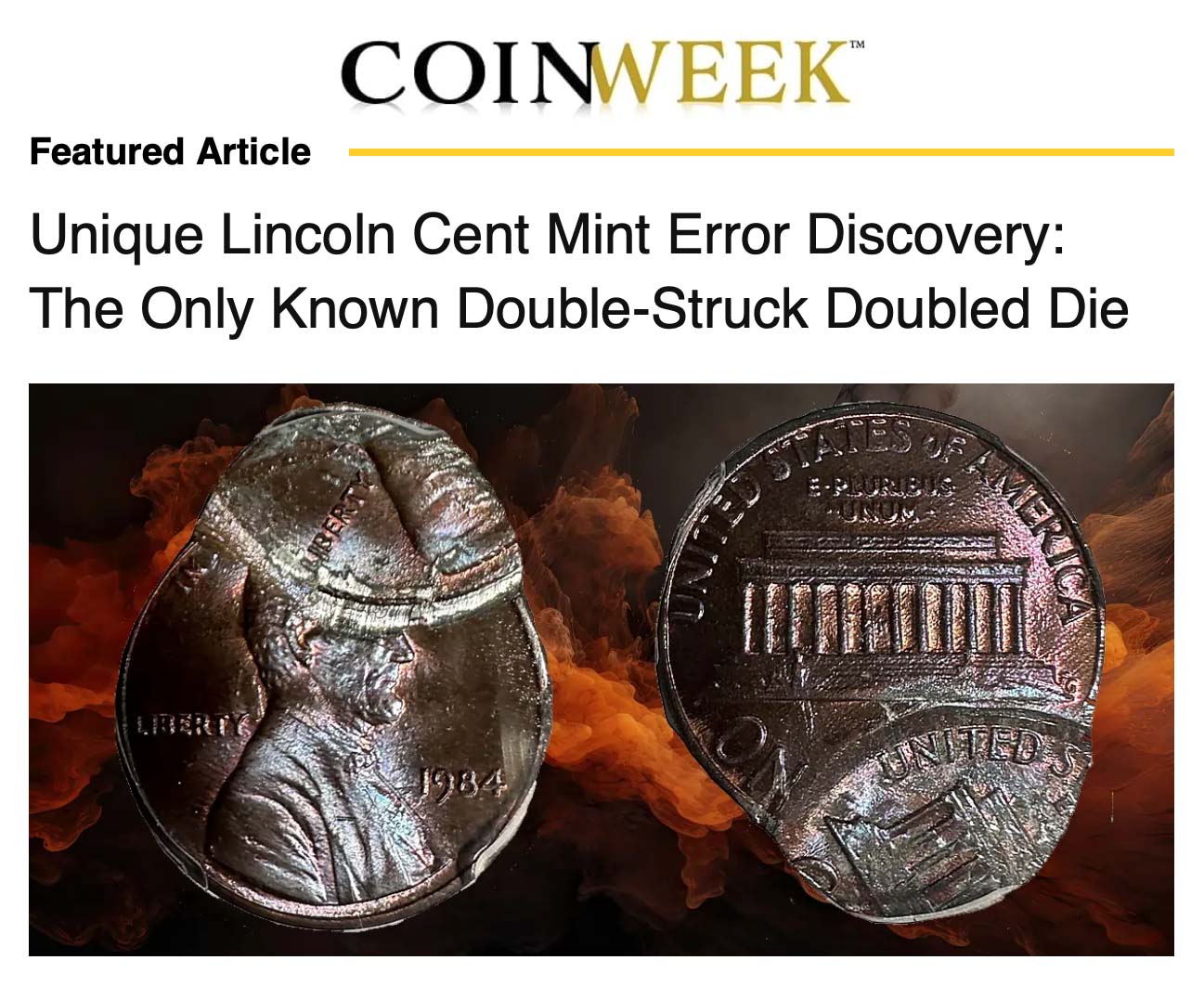
This unique doubled die Lincoln cent is double struck. The second strike is 75% off-center and is die struck both sides. It is preserved in gem mint state condition, and was authenticated and certified by PCGS as MS 66 Brown.
Unique and rare Lincoln cent major mint errors have been setting record prices lately. Whether they are mules, transitionals, a unique off-metal or a unique mint error like this Lincoln cent, headlines are made and prices continue to rise.
Several world class experts specializing in Lincoln cents, die varieties and major mint errors were contacted regarding this unique discovery. None were aware of any modern major die variety with a major striking error other than this Lincoln cent.
Doubled die coins occur because the coin die that strikes them has a partial or fully doubled image. It takes several impressions from the coin hub to produce a coin die. If the alignment of the coin hub is not perfectly centered above the coin die, a second impression will be slightly off-center from the first. If this coin die is used to strike coins, these coins will have this doubling effect.
The 1984 doubled die is considered a major die variety within the Lincoln cent series. There are several different 1984 Lincoln cent doubled die varieties and the FS-101 variety has doubling on the ear. This 1984 Lincoln cent obverse doubled die is one of the FS-102 varieties and features distinct doubling on the date, LIBERTY and IN GOD WE TRUST. Wexler's Die Varieties lists this as 1984 1¢ WDDO-005 "Best Of" Variety and it is also cataloged in The Cherrypickers' Guide as FS-01-1984-102 (038).
PCGS allows certain mint errors to be included in Registry Sets, with the conditions explained on their website:
"Mint errors are designated by an "E" in front of the coin number on the PCGS holder insert. Mint errors can be added to "My Inventory" and the Collectors Showcase, but cannot be used in competitive sets. In order to be used in competitive sets, Mint Error "E" coins must be submitted for re-holdering under the Variety Attribution program at the prevailing additional fee."
It is just amazing that this unique double struck doubled die Lincoln cent even exists. It was authenticated and certified by PCGS years ago but was unknown to the numismatic community until it just surfaced.
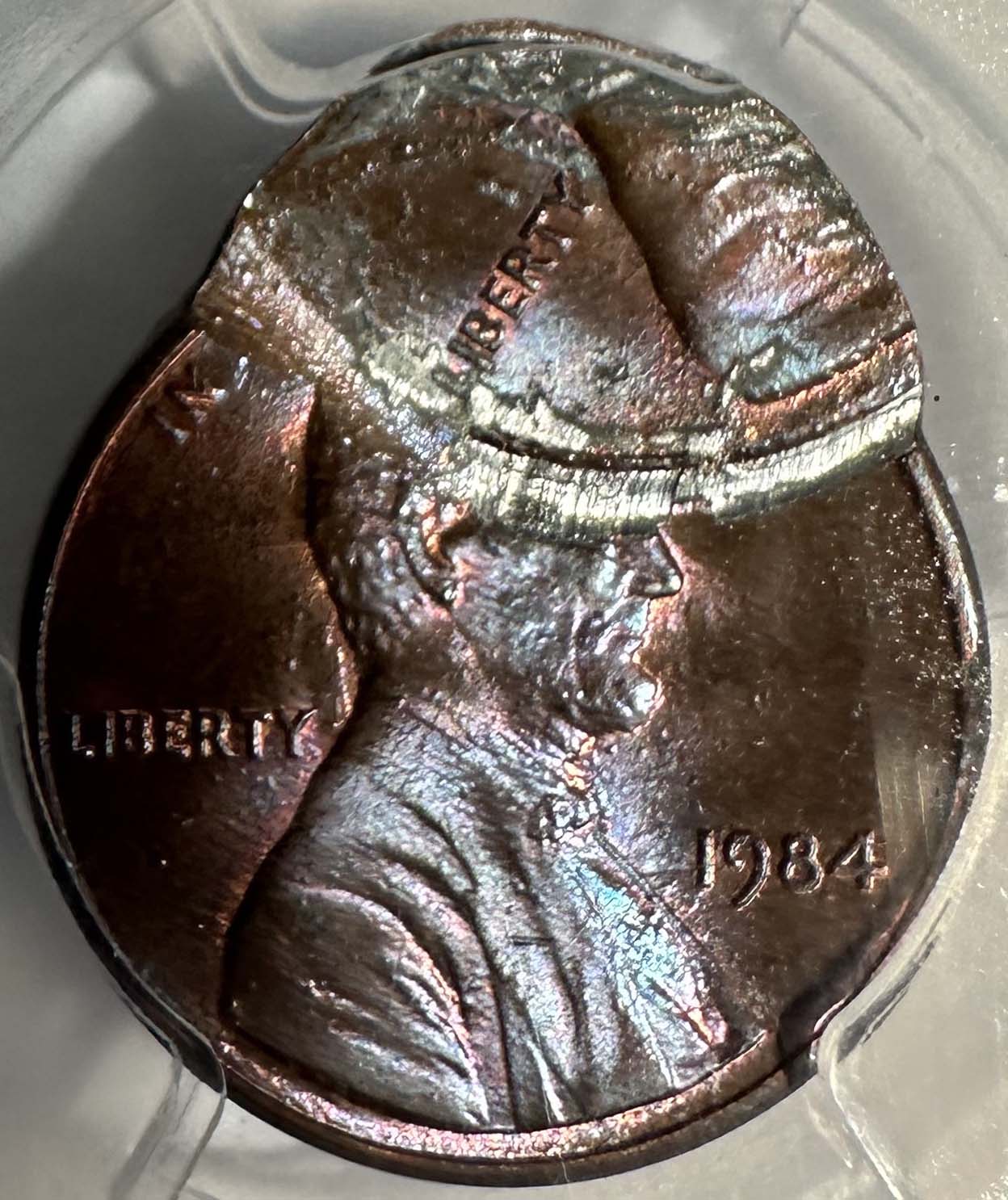
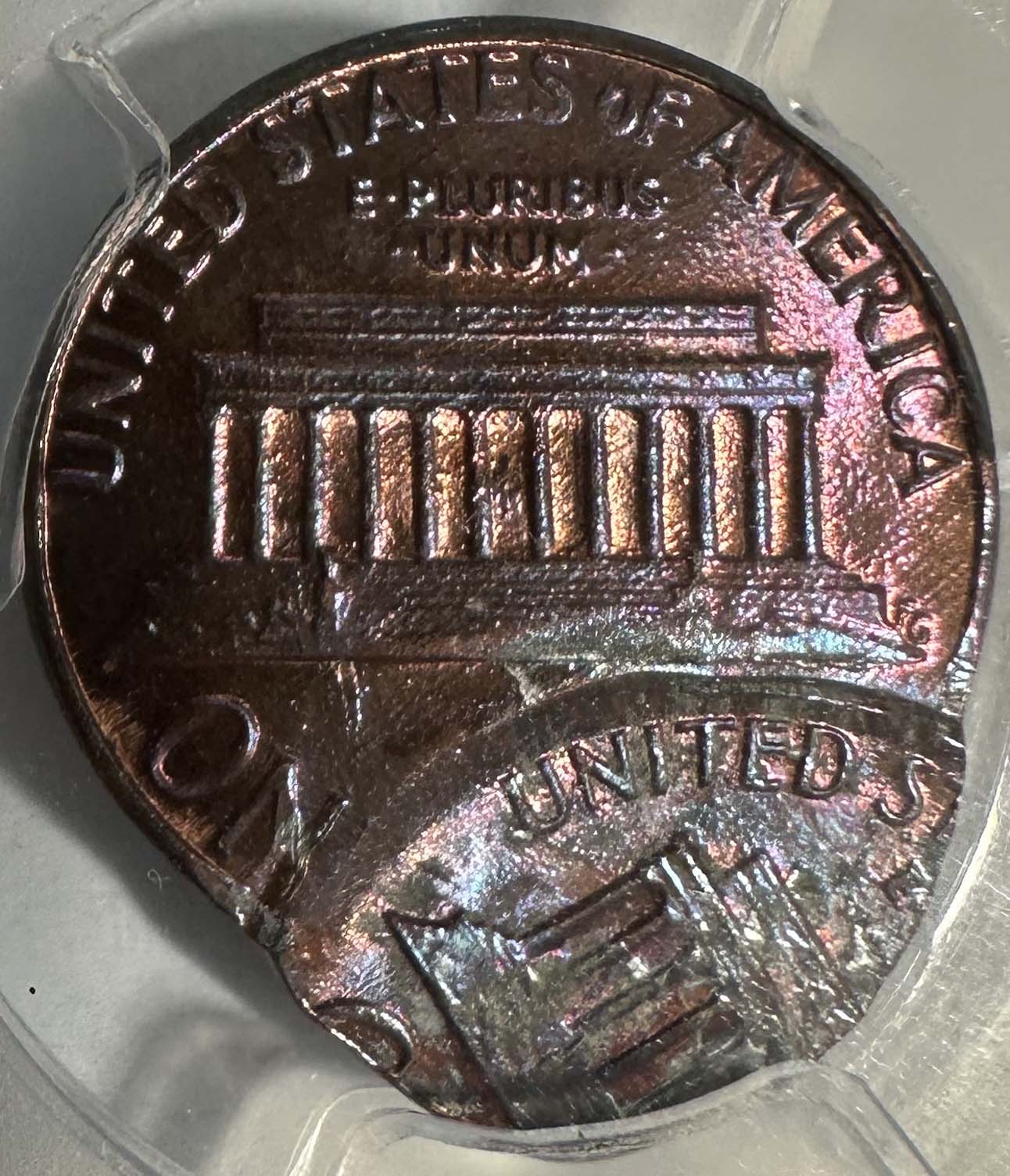
Featured in the May 18, 2026 issue of Coin World:
Copyright story reprinted by permission from Pages 5 & 19 of the May 18, 2026 issue of COIN WORLD, Sidney, OH (coinworld.com)
Featured on the cover of
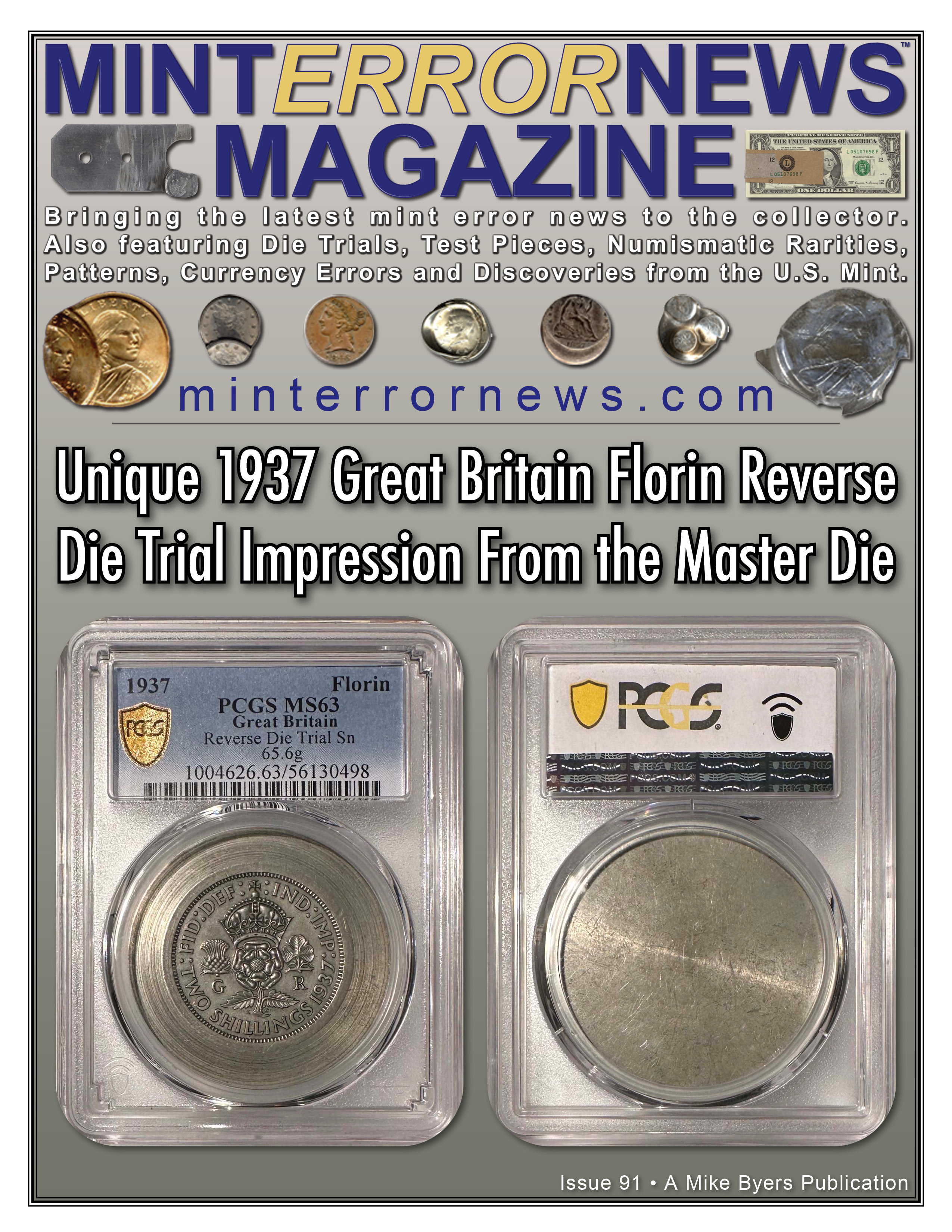
Mint Error News Magazine Issue 91:
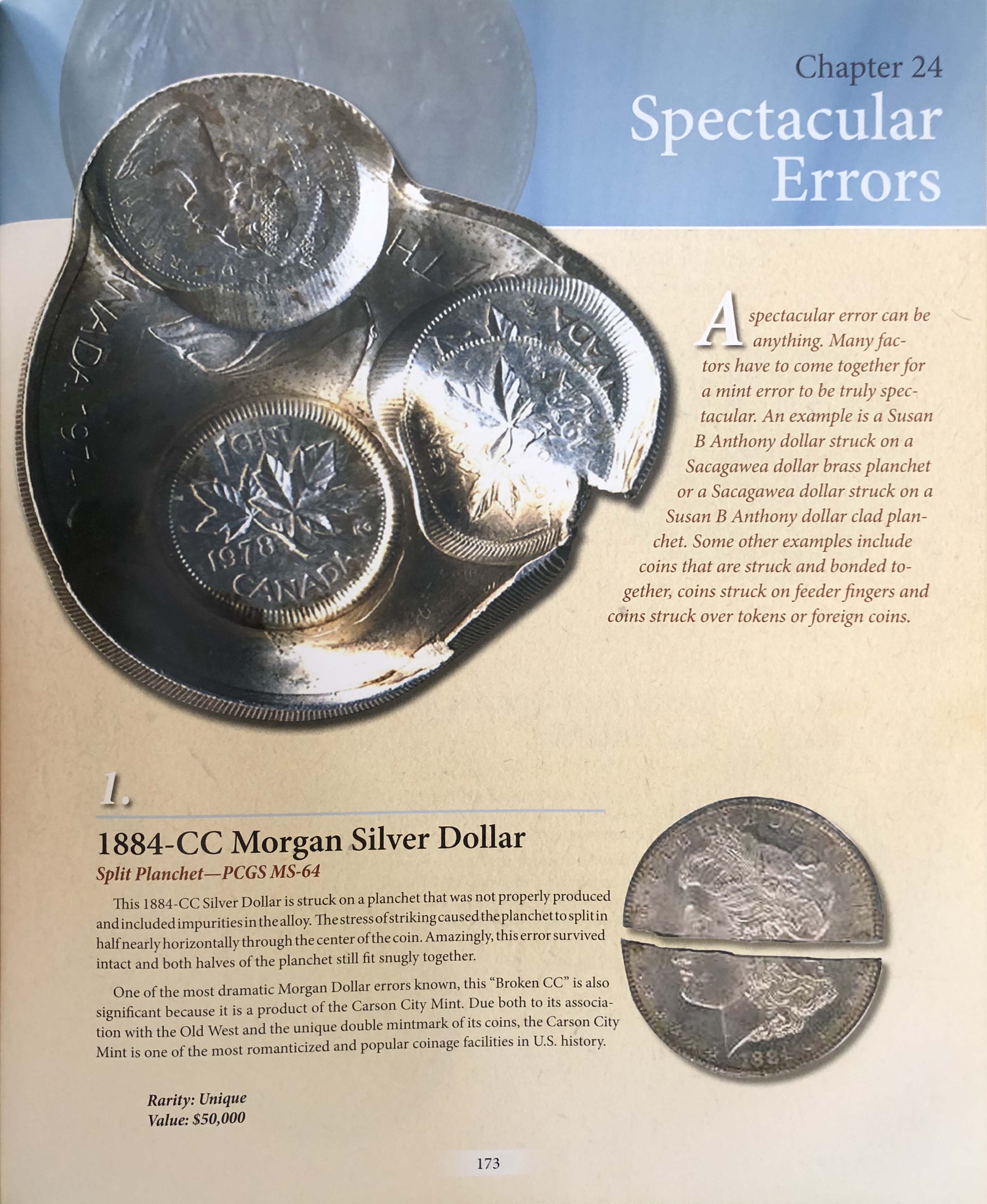
Spectacular Errors are featured in
my NLG Award winning book,
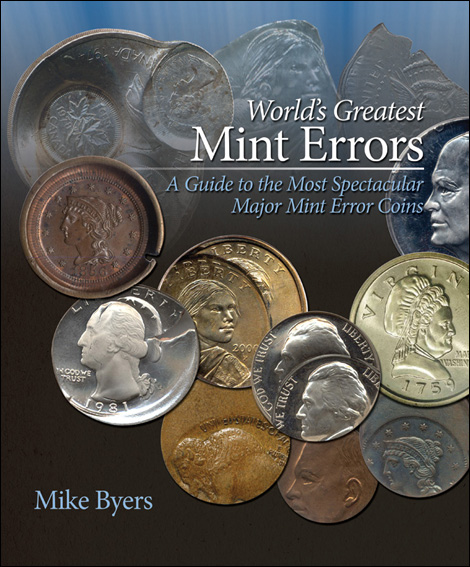
World's Greatest Mint Errors.