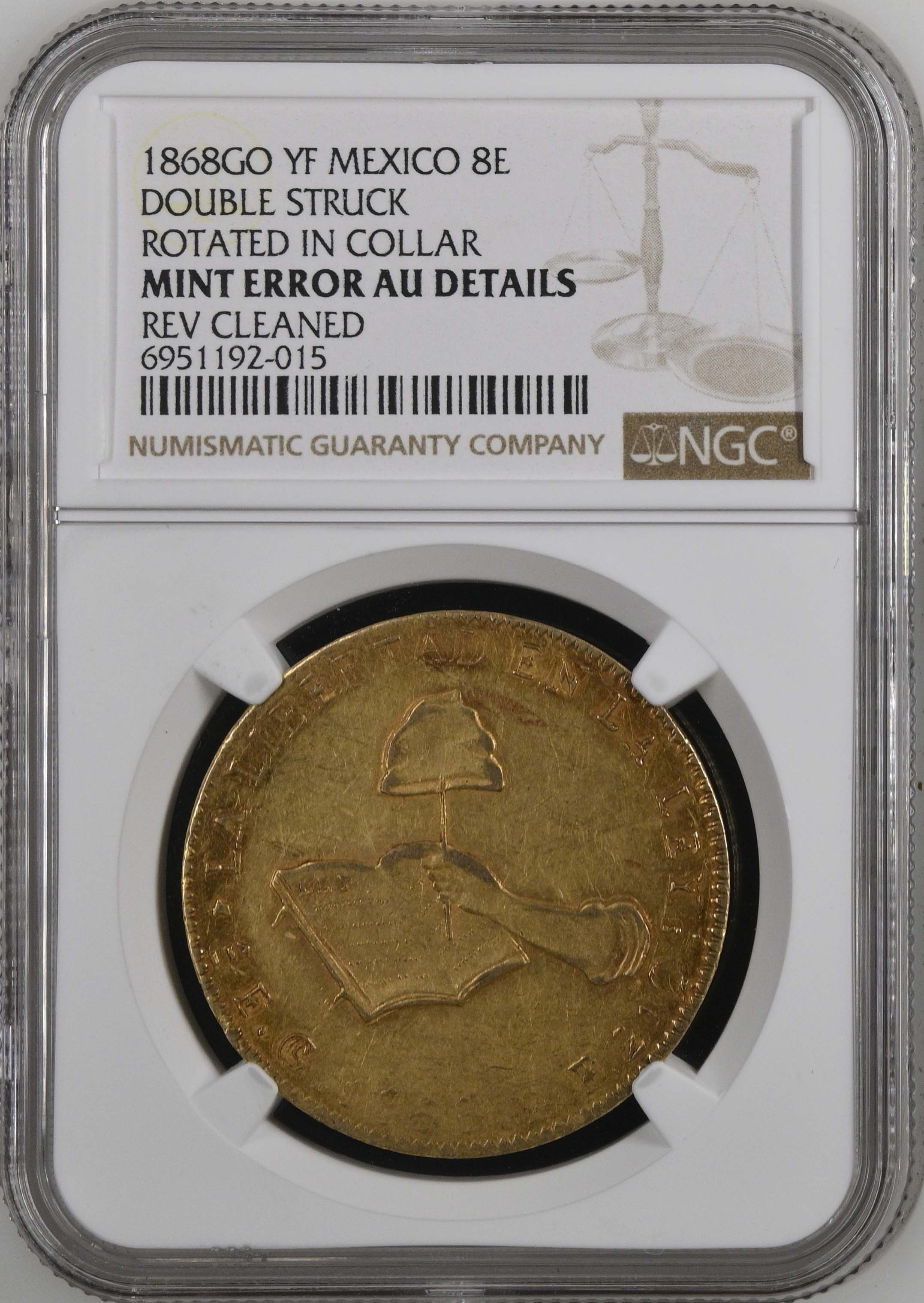


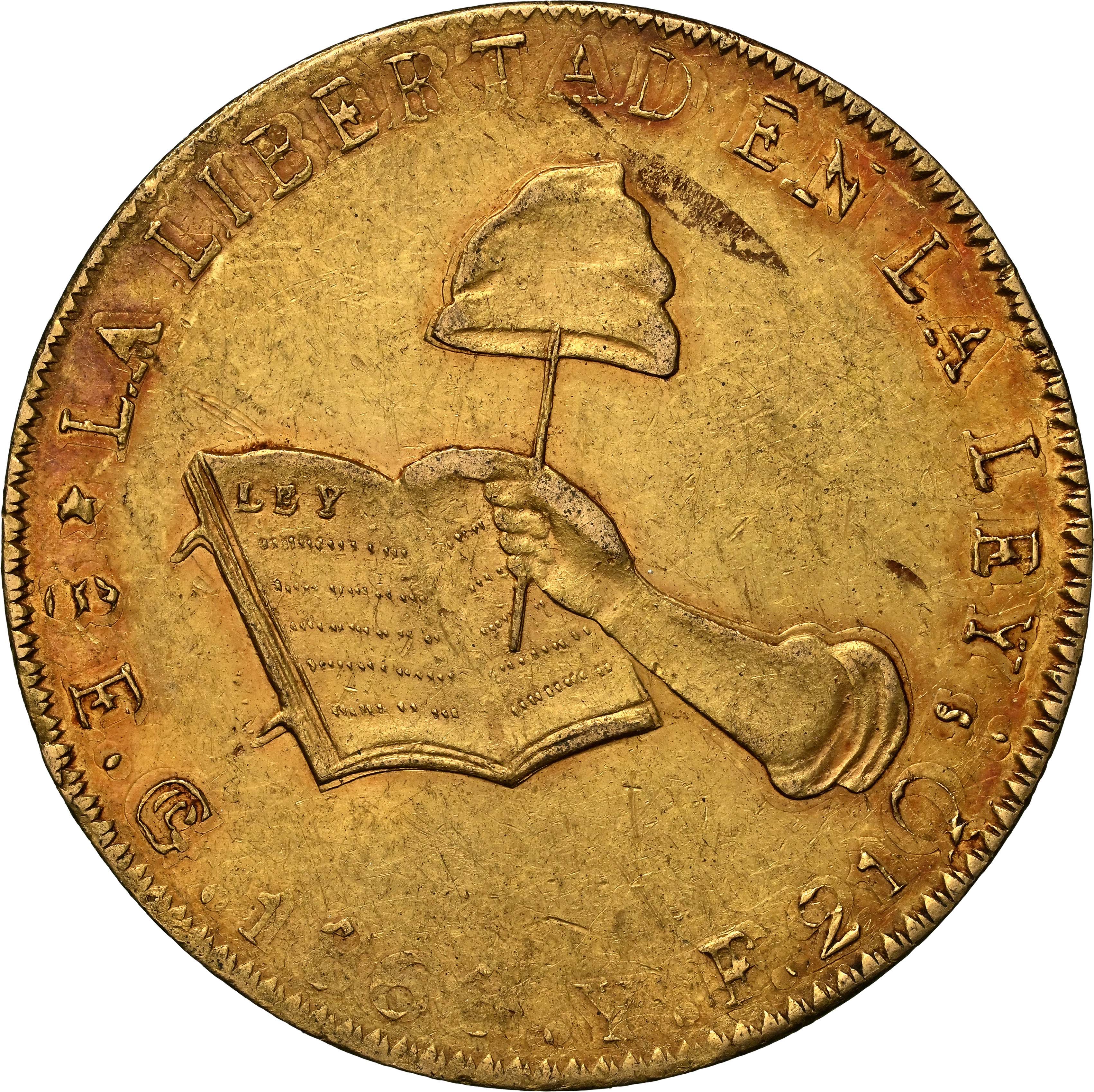
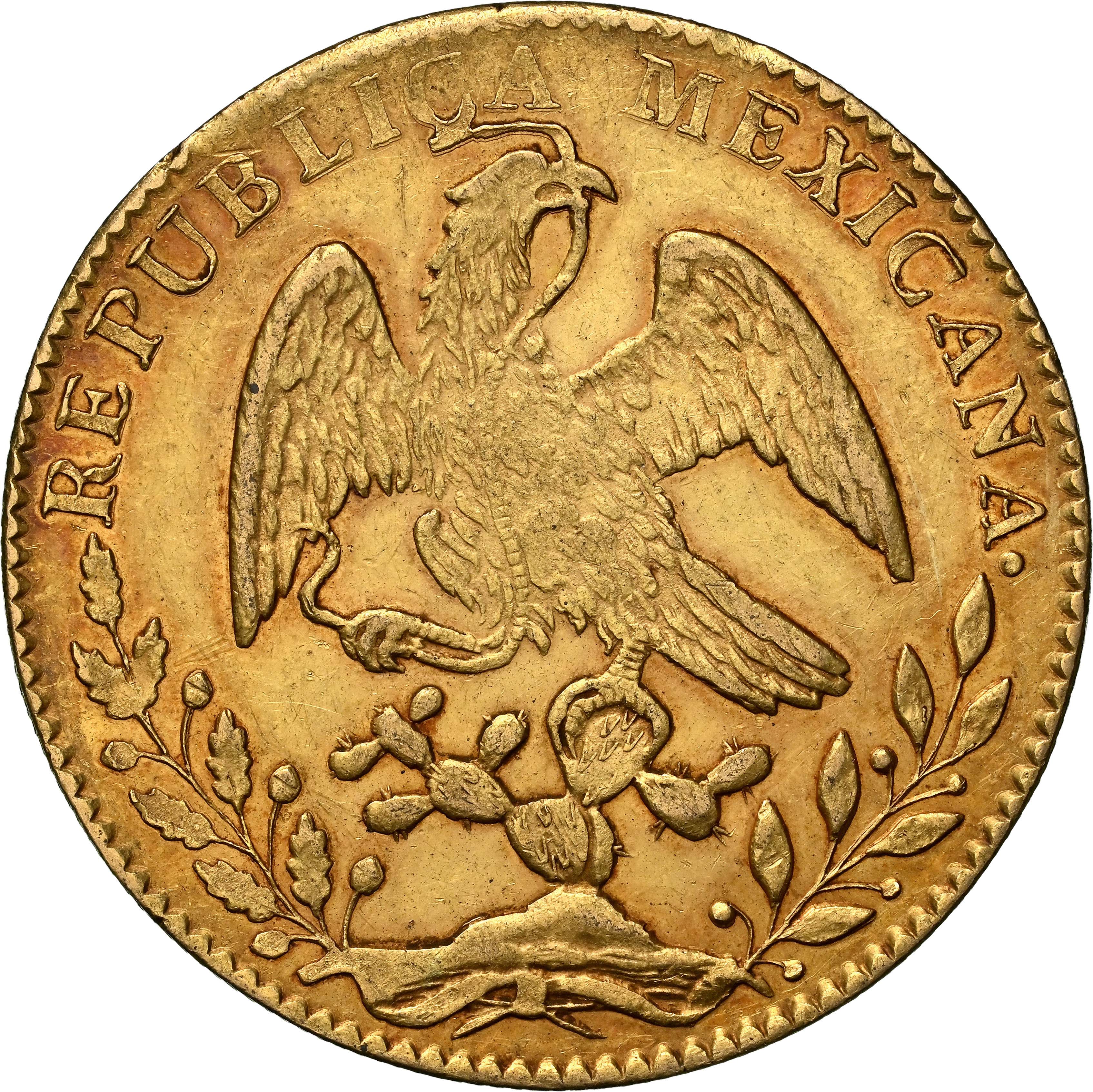
This extremely rare double struck 8 Escudos has a multi-degree rotation between the two strikes. Considerable detail from the first strike is visible on the obverse. It was purchased in a collection of raw 8 Escudos by a coin dealer in Florida, over the counter in his store.
He submitted it to NGC and it was authenticated and certified as a mint error. It is significant that NGC determined that there was enough rotation visible between the strikes to designate it as a double struck with rotation in the collar.
It has full luster, original gold toning on both the obverse and reverse, and is almost uncirculated. In my opinion, this gold mint error could have easily straight graded AU 58.
This 8 Escudos was struck at the Guanajuato Mint. The first known coinage from this mint was struck under Spanish colonial rule in 1812. The Mexican War of Independence from Spain ended on September 27, 1828.
This famous design was struck from 1828 through 1870 and is cataloged in Krause as KM 383.7. The obverse features a hand holding a cap above a book, while the reverse portrays an eagle perched on a cactus holding a snake in its beak.
Mexican coinage centuries ago was hammered, not struck by a screw press (milled coinage). The planchets were crude, irregular and the striking was not consistent. Many mint errors occurred - off centers, double strikes and triple strikes, even on gold 8 Escudos, which were referred to as cob 8 Escudos.
This all changed in 1732 when milled coinage replaced hammered coinage in Mexico. Coins were struck on round planchets with a uniform look and very few mint errors. Major mint errors on milled coinage using a screw press are extremely rare on the gold 8 Escudos coins.
This double struck 8 Escudos would be a perfect addition to a Mexican coin collection or a collection of major mint errors.
Considerable detail from the first
strike is visible on the obverse:


Gold Errors are featured in the
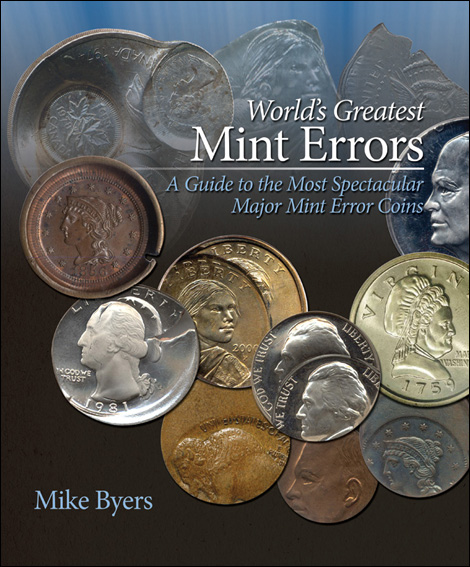
NLG award winning book,
World's Greatest Mint Errors.